

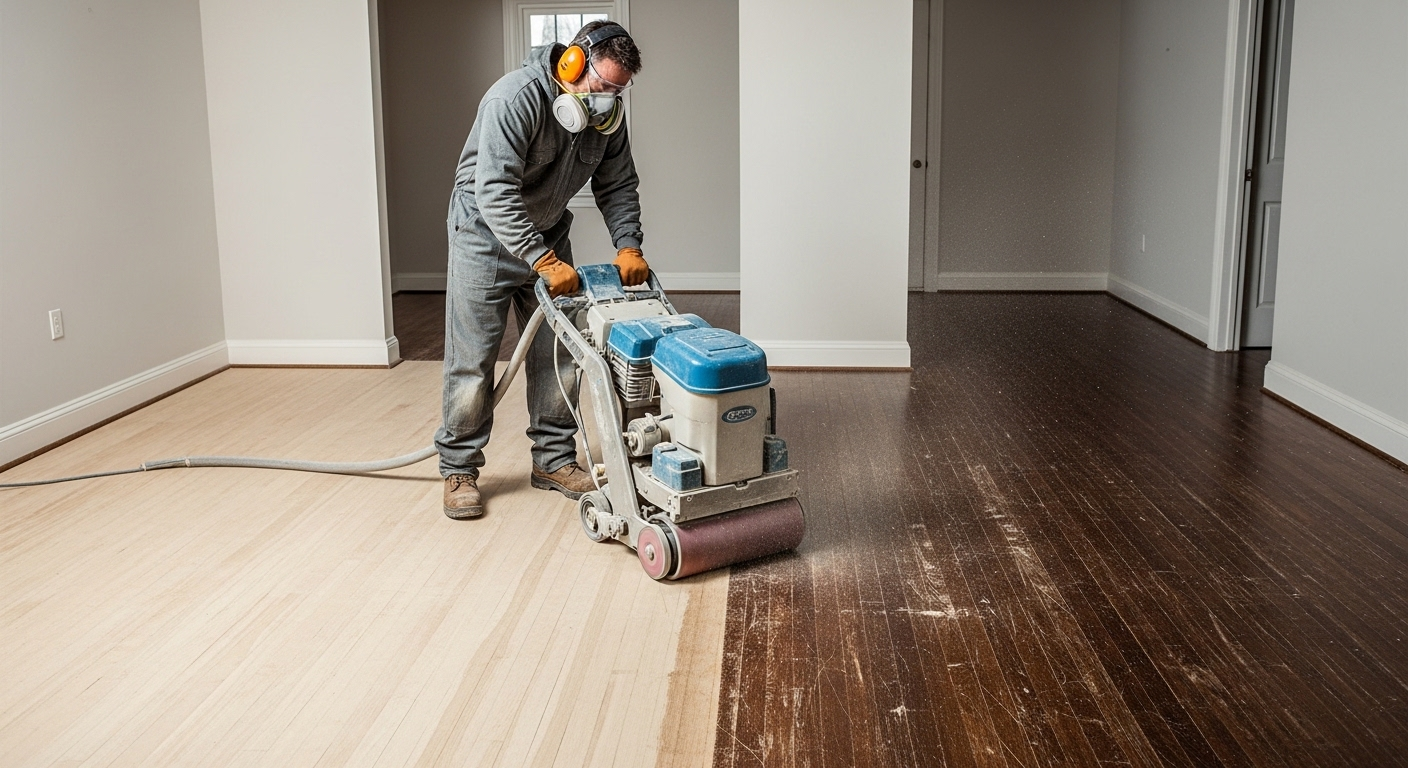
Did you know that a hardwood floor that is properly maintained can last 50 to 100 years — while the same floor, neglected, may need full replacement in as little as 15 years? The difference between a floor that ages beautifully and one that deteriorates prematurely comes down almost entirely to how you care for it. Knowing how to care for hardwood floors correctly is one of the most valuable pieces of knowledge any homeowner can have.
In this complete guide, you will learn the 10 most important hardwood floor care practices, the most common mistakes that shorten a floor’s lifespan, the right products and tools to use, and when to call a professional for maintenance that goes beyond daily cleaning. Whether your floors are solid oak, engineered white oak, or hickory, this guide applies to every wood species and finish type.
Continue reading to discover exactly how to care for hardwood floors and protect one of your home’s most valuable assets.
Do your hardwood floors need professional attention? Contact Prime Epoxy Flooring today for a free assessment — no obligation.
Why Knowing How to Care for Hardwood Floors Is a Critical Investment
Hardwood floors represent a significant financial investment — typically $6–$12 per square foot installed. For a 1,500-square-foot first floor, that is a $9,000–$18,000 investment. Proper care protects that investment directly, extending the floor’s lifespan and preserving its appearance and resale value.
The consequences of improper hardwood floor care are real and expensive:
- Surface scratches and finish degradation that require professional refinishing ($3–$5 per square foot)
- Moisture damage that causes warping, cupping, and structural failure (potentially requiring full replacement)
- Staining from improper cleaning products that penetrates the finish and discolors the wood
- Gapping between planks caused by humidity mismanagement
- Premature wear in high-traffic areas that cannot be reversed without sanding
Understanding how to care for hardwood floors correctly prevents all of these outcomes. The good news is that proper hardwood floor care is not complicated — it requires consistent habits, the right products, and periodic professional maintenance.
At Prime Epoxy Flooring, we install and maintain hardwood floors across Delaware and Pennsylvania, and we see firsthand how proper care transforms a floor’s long-term performance. The homeowners who follow the practices in this guide consistently have floors that look beautiful for decades.
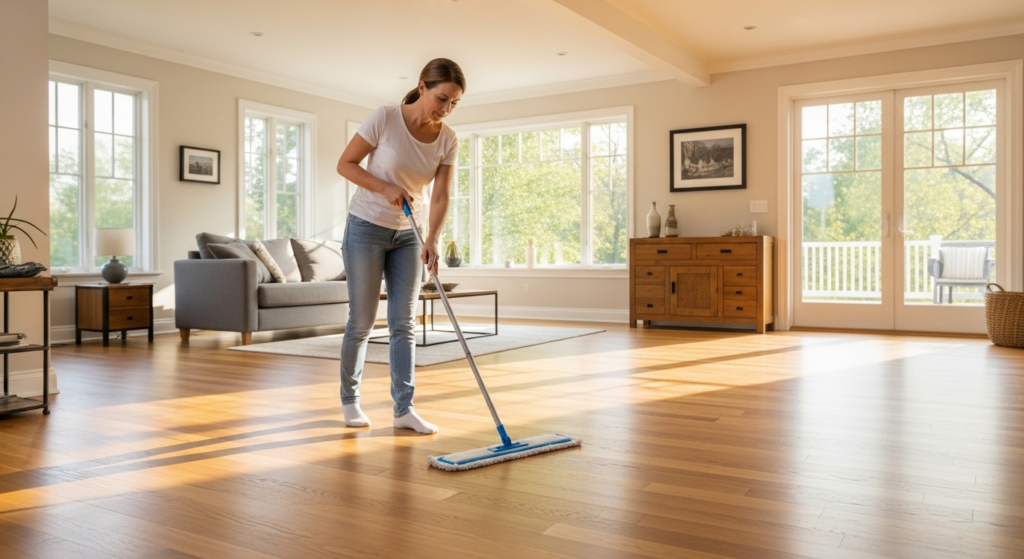
The Complete Guide: How to Care for Hardwood Floors in 10 Proven Steps
Here are the 10 most important practices for how to care for hardwood floors and maximize their lifespan:
- Sweep or vacuum daily to remove abrasive grit and debris
- Clean weekly with a pH-neutral hardwood floor cleaner
- Wipe up spills immediately — never allow standing water
- Maintain indoor humidity between 35–55% year-round
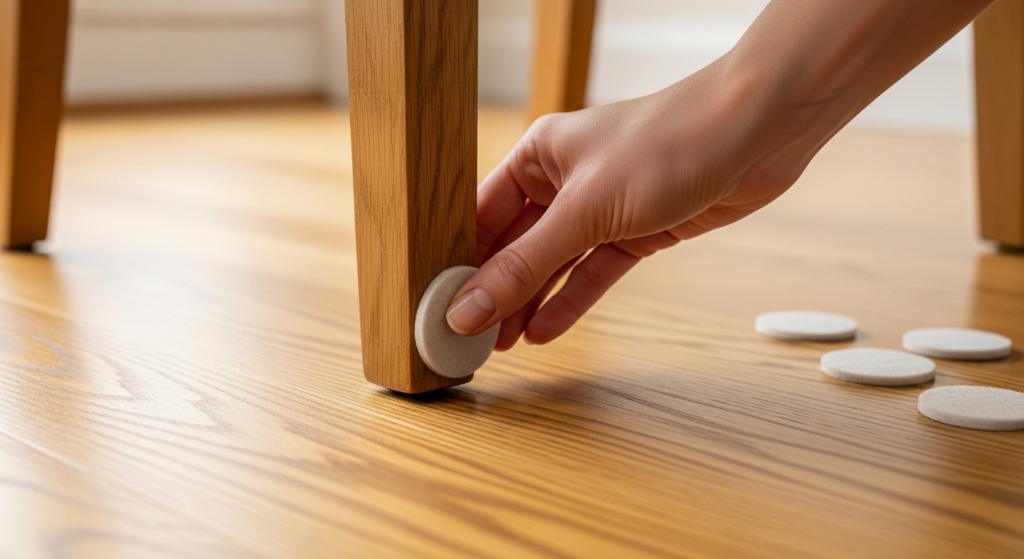
- Place felt pads under all furniture legs
- Use area rugs in high-traffic zones and entryways
- Avoid steam mops and wet mops entirely
- Trim pet nails regularly to minimize scratching
- Schedule a professional screen-and-recoat every 3–5 years
- Schedule a full professional refinishing when the finish shows significant wear
Each of these steps is explained in detail below, with practical guidance for homeowners in Delaware and Pennsylvania where seasonal humidity swings create specific challenges for hardwood floor care.
Step 1: Daily Sweeping and Vacuuming — The Foundation of How to Care for Hardwood Floors
The single most important daily habit for how to care for hardwood floors is removing grit, sand, and debris before they scratch the surface finish. Fine particles of dirt and sand act like sandpaper under foot traffic, gradually abrading the finish and eventually scratching the wood itself.
Best practices for daily cleaning:
- Use a soft-bristle broom or a microfiber dust mop for daily sweeping
- If vacuuming, use a vacuum with a hardwood floor setting that disengages the beater bar — rotating brushes scratch hardwood finishes
- Sweep or vacuum in the direction of the wood grain to capture debris from between planks
- Pay special attention to entryways, hallways, and kitchen areas where grit accumulates most rapidly
This step is particularly important for homeowners in Wilmington, DE and Newark, DE during winter months, when road salt and sand tracked in from outside can cause significant finish damage if not removed promptly.
Step 2: Weekly Cleaning With the Right Products
Knowing how to care for hardwood floors means knowing which cleaning products are safe and which ones cause damage. This is one of the most common areas where homeowners make costly mistakes.
Safe cleaning products for hardwood floors:
- pH-neutral hardwood floor cleaners (Bona, Method, or manufacturer-recommended products)
- Lightly dampened microfiber mop — the mop should be barely damp, not wet
- Diluted white vinegar solution (1/4 cup per gallon of water) for light cleaning — though manufacturer-approved cleaners are preferred
Products to avoid entirely:
- Steam mops — the heat and moisture penetrate the finish and damage the wood
- Wet mops — excess water causes swelling, warping, and finish damage
- Oil soaps (Murphy’s Oil Soap) — leave a residue that dulls the finish over time
- Ammonia-based cleaners — strip the finish and discolor the wood
- Bleach or harsh chemical cleaners — cause irreversible damage to both finish and wood
How to clean hardwood floors weekly:
- Sweep or vacuum to remove loose debris
- Dampen a microfiber mop with your chosen hardwood floor cleaner — wring it thoroughly so it is barely damp
- Mop in the direction of the wood grain
- Allow the floor to air dry completely — do not walk on it until dry
Step 3: Immediate Spill Response — The Most Urgent Aspect of How to Care for Hardwood Floors
The most urgent aspect of how to care for hardwood floors is responding to spills immediately. Water and liquid left on hardwood for more than a few minutes can penetrate the finish, swell the wood fibers, and cause permanent staining or warping. Always wipe up spills immediately with a dry or slightly damp cloth, then dry the area completely.
This rule applies to all liquids — water, juice, wine, coffee, pet accidents, and cleaning solution. Even small amounts of liquid that seep between planks can cause significant damage to the subfloor and the underside of the planks over time.
For pet owners in Middletown, DE, Bear, DE, and Smyrna, DE, pet accidents are one of the most common causes of hardwood floor damage. Address accidents immediately and use an enzymatic cleaner specifically formulated for hardwood floors to neutralize odors without damaging the finish.
Step 4: Humidity Management — The Most Important Environmental Factor
Humidity management is one of the most critical and most overlooked aspects of how to care for hardwood floors — particularly in Delaware and Pennsylvania, where seasonal humidity swings are significant.
Wood is a hygroscopic material — it absorbs and releases moisture from the surrounding air. When humidity is too high, wood expands. When humidity is too low, wood contracts. These repeated cycles of expansion and contraction cause:
- Gapping between planks in dry winter months
- Cupping (edges of planks rise higher than the center) in humid summer months
- Warping and buckling in extreme cases
- Finish cracking and peeling
Recommended humidity levels for hardwood floor care:
| Season | Recommended Indoor Humidity | Risk Without Control |
|---|---|---|
| Winter (heating season) | 35–45% | Gapping, cracking, finish damage |
| Summer (cooling season) | 45–55% | Cupping, swelling, warping |
| Year-round target | 35–55% | Minimal risk |
How to maintain proper humidity:
- Use a whole-home humidifier during winter heating season
- Use air conditioning or a dehumidifier during humid Delaware summers
- Monitor humidity with an inexpensive hygrometer placed near the floor
- Avoid placing large potted plants directly on hardwood floors — they release moisture
This is especially important for homeowners in Rehoboth Beach, DE and Edgemoor, DE, where coastal humidity creates year-round challenges for hardwood floor care.
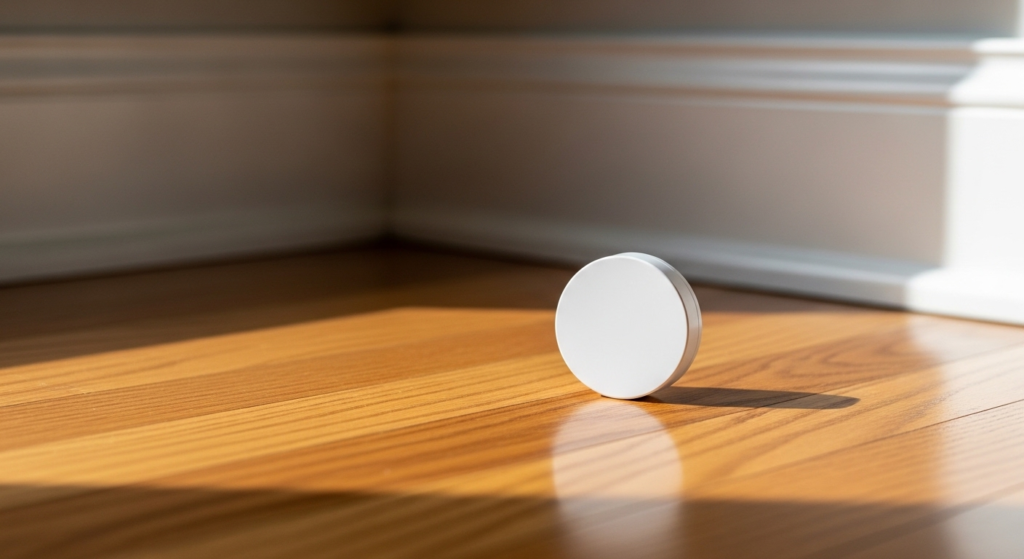
Step 5: Furniture Protection — Felt Pads and Proper Moving Techniques
Furniture is one of the leading causes of hardwood floor scratches and gouges. Learning how to care for hardwood floors means protecting them from the furniture that sits on them every day.
Furniture protection best practices:
- Apply self-adhesive felt pads to the bottom of all furniture legs — chairs, sofas, tables, beds, and cabinets
- Check and replace felt pads every 6–12 months, as they collect grit that can scratch the floor
- Use furniture coasters under heavy items like pianos, refrigerators, and large bookshelves
- When moving furniture, always lift it completely — never drag it across the floor
- Place a piece of cardboard or a moving blanket under furniture before sliding it during rearrangement
For dining room chairs — which are moved frequently — consider adding chair leg caps or using a large area rug under the dining table to protect the floor from repeated scratching.
Step 6: Area Rugs and Entry Mats — Strategic Protection for High-Traffic Zones
Area rugs and entry mats are one of the most effective and underutilized tools for how to care for hardwood floors in high-traffic areas. They intercept dirt, grit, and moisture before it reaches the floor surface.
Strategic placement of rugs and mats:
- Place a heavy-duty entry mat outside every exterior door to capture dirt and moisture before it enters
- Place a second mat inside every exterior door to capture what the outside mat misses
- Use area rugs in high-traffic hallways, living rooms, and dining areas
- Place a rug or mat in front of the kitchen sink, where water splashes are frequent
Important caution: Not all rugs are safe for hardwood floors. Avoid rugs with rubber or latex backing — these trap moisture and can discolor or damage the finish over time. Choose rugs with natural fiber backings or use a breathable rug pad designed specifically for hardwood floors.
Step 7: Avoiding Steam Mops and Excessive Moisture
This step deserves special emphasis because steam mops are widely marketed as a convenient cleaning solution — but they are one of the most damaging tools you can use on hardwood floors. Understanding this is essential to how to care for hardwood floors correctly.
Steam mops force hot moisture vapor directly into the wood and finish. Over time, this causes:
- Finish clouding and peeling
- Wood fiber swelling and warping
- Adhesive failure in engineered hardwood products
- Permanent discoloration of the wood
The same applies to wet mopping with a traditional string mop. Hardwood floors should never be cleaned with a soaking-wet mop. The mop should be barely damp — if you can wring water out of it, it is too wet.
Step 8: Pet Nail Maintenance for Hardwood Floor Protection
Pets are a joy in any home, but their nails are a significant source of hardwood floor scratches. Knowing how to care for hardwood floors in a home with pets requires specific attention to this issue.
Pet care practices for hardwood floor protection:
- Trim dog nails every 2–3 weeks to keep them short enough that they do not click on the floor
- Keep cat nails trimmed or use nail caps to prevent scratching
- Place area rugs in your pet’s favorite resting spots and along their most-traveled paths
- Choose harder wood species (hickory, hard maple, white oak) if you are installing new floors in a home with large dogs
For existing floors that have already sustained pet scratches, Prime Epoxy Flooring’s sanding and refinishing service can restore them to like-new condition, removing surface scratches and refreshing the finish.
Is Your Hardwood Floor Due for Professional Care?
Even with perfect daily maintenance, hardwood floors need professional attention periodically. If your floors are showing signs of wear, scratches, or finish degradation, the team at Prime Epoxy Flooring can restore them beautifully. Schedule your free assessment today — we serve homeowners across Delaware and Pennsylvania.
Step 9: Professional Screen-and-Recoat Every 3–5 Years
A screen-and-recoat is one of the most cost-effective professional maintenance services for how to care for hardwood floors over the long term. It involves lightly abrading the existing finish with a fine screen, then applying one or two fresh coats of polyurethane or oil-based finish.
Benefits of a professional screen-and-recoat:
- Refreshes the floor’s appearance without the cost and disruption of full sanding
- Extends the life of the existing finish by 3–5 years
- Fills in minor surface scratches and scuffs
- Costs $1–$3 per square foot — significantly less than full refinishing
- Can be completed in a single day for most residential projects
A screen-and-recoat is appropriate when the floor’s finish is showing light wear but the wood itself is not scratched or damaged. If the damage has penetrated through the finish into the wood, a full refinishing is required.
Prime Epoxy Flooring provides professional screen-and-recoat and full sanding and refinishing services across King of Prussia, PA, Media, PA, Norristown, PA, Glen Mills, PA, Broomall, PA, and Greenville, DE.
Step 10: Full Professional Refinishing When the Floor Needs It
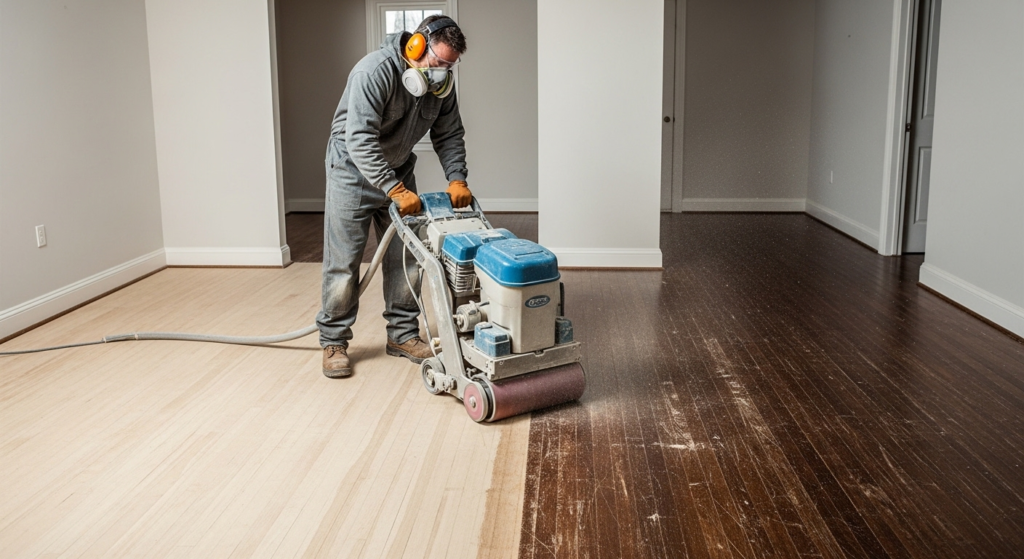
Full professional refinishing is the most comprehensive step in how to care for hardwood floors over their lifetime. It involves sanding the floor down to bare wood, applying stain if desired, and finishing with multiple coats of polyurethane or oil-based finish.
Signs that your hardwood floor needs full refinishing:
- Deep scratches that have penetrated through the finish into the wood
- Gray or black discoloration (indicating moisture damage or oxidation)
- Significant finish wear in high-traffic areas that a screen-and-recoat cannot address
- Staining that has penetrated the finish
- The floor looks dull and lifeless even after cleaning
Full refinishing cost: $3–$5 per square foot for most residential projects. For a 1,000-square-foot area, expect to invest $3,000–$5,000 for a professional refinishing that will restore the floor to like-new condition and extend its life by 10–15 years.
Solid hardwood can be refinished 5–10 times over its lifetime. Engineered hardwood can be refinished 1–3 times depending on veneer thickness. Either way, professional refinishing is far more cost-effective than full floor replacement.
How to Care for Hardwood Floors: Seasonal Maintenance Guide for Delaware and Pennsylvania
Delaware and Pennsylvania’s four distinct seasons create specific hardwood floor care challenges throughout the year. Here is a seasonal maintenance guide tailored to this region:
Spring Hardwood Floor Care
Spring is the ideal time for a thorough deep clean after winter. Salt, sand, and grit tracked in during winter months accumulate in corners and along baseboards. Spring is also when humidity begins to rise — monitor your hygrometer and prepare to run air conditioning or a dehumidifier as needed.
Spring checklist for how to care for hardwood floors:
- Deep clean the entire floor with a pH-neutral hardwood cleaner
- Inspect for winter damage — gapping, scratches, or finish wear
- Check and replace felt pads under furniture
- Schedule a professional screen-and-recoat if the floor is due
Summer Hardwood Floor Care
Delaware and Pennsylvania summers bring high humidity that causes wood to expand. Run air conditioning consistently to maintain indoor humidity below 55%. Avoid leaving windows open during humid days, and address any moisture intrusion from air conditioning condensation immediately.
Fall Hardwood Floor Care
Fall is the second peak renovation season and an excellent time to schedule professional refinishing before the holiday season. As heating systems activate, indoor humidity drops — prepare your humidifier for the heating season.
Winter Hardwood Floor Care
Winter heating creates very dry indoor air that causes wood to contract and gap. Run a whole-home humidifier to maintain humidity above 35%. Place extra entry mats at all exterior doors to capture road salt and moisture. Wipe up any snow or slush tracked in immediately.
How to Care for Hardwood Floors: Cleaning Products Comparison
| Product Type | Safe for Hardwood? | Notes |
|---|---|---|
| pH-neutral hardwood cleaner (Bona, Method) | Yes | Best choice for regular cleaning |
| Lightly dampened microfiber mop | Yes | Must be barely damp, not wet |
| Diluted white vinegar (1/4 cup per gallon) | Use with caution | May dull finish over time with repeated use |
| Murphy’s Oil Soap | No | Leaves residue that dulls finish |
| Steam mop | No | Causes finish damage and wood warping |
| Wet string mop | No | Excess moisture damages wood and finish |
| Ammonia-based cleaners | No | Strips finish and discolors wood |
| Bleach or harsh chemicals | No | Causes irreversible damage |
| Windex or glass cleaner | No | Contains ammonia — damages finish |
Real Customer Stories: How to Care for Hardwood Floors — Lessons From Delaware and Pennsylvania Homeowners
Hearing from homeowners who have experienced both the consequences of poor care and the rewards of proper maintenance brings this guide to life.
“We had our hardwood floors installed by Prime Epoxy Flooring three years ago and followed their care guide from day one. The floors still look brand new. The felt pads and humidity management tips made a huge difference — we had zero gapping this past winter.” — Angela R., Wilmington, DE
“I made the mistake of using a steam mop on my hardwood floors for two years before I realized the damage it was causing. Prime Epoxy Flooring refinished the floors and they look incredible now. I wish I had known how to care for hardwood floors properly from the start.” — Brian K., King of Prussia, PA
“We have three large dogs and I was worried about scratches. Prime Epoxy Flooring recommended hickory for its hardness and gave us a complete care routine. Two years in, the floors are holding up beautifully.” — Donna M., Media, PA
You can verify these reviews and find our location on Google Maps. Follow our work on Instagram and Facebook.
The Most Costly Mistakes Homeowners Make When Learning How to Care for Hardwood Floors
Understanding what not to do is just as important as knowing the right practices. These are the most common and costly mistakes in hardwood floor care:
Using a steam mop. This is the single most damaging mistake homeowners make. Steam mops cause finish damage, wood swelling, and adhesive failure in engineered products. Remove steam mops from your hardwood floor care routine entirely.
Ignoring humidity control. Seasonal humidity swings in Delaware and Pennsylvania are significant. Homeowners who do not manage indoor humidity consistently experience gapping in winter and cupping in summer — both of which are preventable with a humidifier and dehumidifier.
Using oil soap or wax-based cleaners. These products leave a residue that builds up over time, dulling the finish and making future refinishing more difficult. Always use pH-neutral cleaners specifically formulated for hardwood floors.
Delaying spill cleanup. Even a few minutes of standing water can cause permanent damage to hardwood floors. Immediate spill response is non-negotiable in how to care for hardwood floors correctly.
Skipping professional maintenance. Many homeowners wait until their floors look severely damaged before calling a professional. A screen-and-recoat every 3–5 years prevents the need for full refinishing and extends the floor’s life significantly.
Dragging furniture. Even a single instance of dragging a heavy piece of furniture across a hardwood floor can cause deep scratches that require professional refinishing to repair. Always lift furniture completely when moving it.
Using the wrong vacuum. Vacuums with rotating beater bars scratch hardwood finishes. Always use a vacuum with a hardwood floor setting or a dedicated hardwood floor attachment.
How to Care for Hardwood Floors: When to Call a Professional
Knowing when professional intervention is needed is an important part of how to care for hardwood floors over the long term. Here are the situations that require professional attention:
Call a professional for screen-and-recoat when:
- The floor looks dull despite regular cleaning
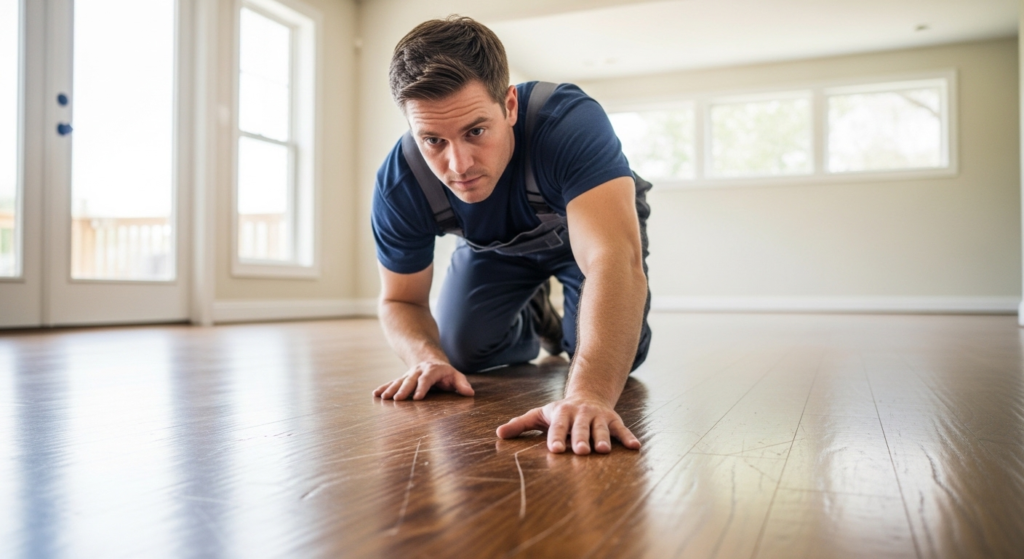
- Light surface scratches are visible in raking light
- The finish is 3–5 years old and showing wear in high-traffic areas
Call a professional for full refinishing when:
- Deep scratches have penetrated through the finish into the wood
- Gray or black discoloration is visible (moisture damage or oxidation)
- The finish is peeling or flaking
- Significant staining has penetrated the finish
- The floor has not been refinished in 10+ years and shows significant wear
Call a professional for assessment when:
- Planks are cupping, warping, or showing significant gapping
- Squeaking has developed in multiple areas
- You notice soft spots or springiness in the floor
Prime Epoxy Flooring provides professional hardwood floor assessments, screen-and-recoat services, and full refinishing across Delaware and Pennsylvania. Our service areas include Wilmington, Newark, Townsend, Smyrna, Rehoboth Beach, and all surrounding communities.
How to Care for Hardwood Floors vs. Other Flooring Types: Maintenance Comparison
Understanding how hardwood floor care compares to alternatives helps homeowners make informed decisions about their next flooring project.
| Flooring Type | Daily Care | Moisture Sensitivity | Professional Maintenance | Lifespan With Care |
|---|---|---|---|---|
| Solid Hardwood | Sweep/vacuum | High | Refinishing every 10–15 years | 50–100 years |
| Engineered Hardwood | Sweep/vacuum | Moderate | Refinishing every 15–20 years | 25–50 years |
| Laminate | Sweep/vacuum | Moderate | None (not refinishable) | 15–25 years |
| Luxury Vinyl Plank | Sweep/mop | Very Low | None (not refinishable) | 20–30 years |
| Tile | Sweep/mop | Very Low | Grout resealing | 50+ years |
If you are considering alternative flooring options that require less maintenance, Prime Epoxy Flooring installs laminate flooring, luxury vinyl plank and tile, and tile flooring across Delaware and Pennsylvania. Our team can help you evaluate the right product for your lifestyle and maintenance preferences.
How to Care for Hardwood Floors
How often should hardwood floors be professionally refinished? Hardwood floors should be professionally refinished every 10–15 years under normal residential use, or sooner if significant scratches, staining, or finish wear is visible. A screen-and-recoat every 3–5 years can extend the time between full refinishing cycles.
What is the best way to clean hardwood floors daily? The best daily cleaning method for hardwood floors is sweeping with a soft-bristle broom or microfiber dust mop to remove grit and debris. For weekly cleaning, use a barely damp microfiber mop with a pH-neutral hardwood floor cleaner. Never use a wet mop or steam mop.
Can you use vinegar to clean hardwood floors? Diluted white vinegar (1/4 cup per gallon of water) can be used occasionally for light cleaning, but it is not recommended for regular use. Repeated use of vinegar can dull the finish over time. A pH-neutral hardwood floor cleaner is the safer, more effective choice for regular maintenance.
How do you fix scratches on hardwood floors without refinishing? Minor surface scratches can be addressed with a hardwood floor touch-up marker or crayon in a matching color, or with a small amount of floor wax applied to the scratch. For deeper scratches that have penetrated the finish, professional refinishing is the only effective solution.
What humidity level is best for hardwood floors? The ideal indoor humidity level for hardwood floors is 35–55% year-round. In Delaware and Pennsylvania, this requires running a humidifier during the dry winter heating season and air conditioning or a dehumidifier during the humid summer months. Consistent humidity management is one of the most important aspects of how to care for hardwood floors in this region.
FAQ
Q: How do you care for hardwood floors on a daily basis? A: Daily hardwood floor care involves sweeping with a soft-bristle broom or microfiber dust mop to remove grit and debris that scratches the finish. Place felt pads under furniture, wipe up spills immediately, and avoid walking on the floor with outdoor shoes that track in abrasive particles.
Q: What products should you avoid when caring for hardwood floors? A: Avoid steam mops, wet string mops, oil soaps, ammonia-based cleaners, bleach, and wax-based products. These products damage the finish, cause moisture penetration, or leave residue that dulls the floor’s appearance. Use only pH-neutral cleaners specifically formulated for hardwood floors.
Q: How often should you professionally maintain hardwood floors? A: Schedule a professional screen-and-recoat every 3–5 years to refresh the finish and address light surface wear. Schedule a full professional refinishing every 10–15 years, or sooner if deep scratches, staining, or significant finish wear is present. Regular professional maintenance is essential for how to care for hardwood floors over the long term.
Q: How does humidity affect hardwood floors in Delaware and Pennsylvania? A: Delaware and Pennsylvania’s seasonal humidity swings cause hardwood floors to expand in humid summers and contract in dry winters. Without humidity management, this leads to gapping, cupping, and warping. Maintain indoor humidity between 35–55% year-round using a humidifier in winter and air conditioning or a dehumidifier in summer.
Q: When should I call a professional to care for my hardwood floors? A: Call a professional when you notice deep scratches penetrating the finish, gray or black discoloration, finish peeling or flaking, significant staining, cupping or warping of planks, or when the floor has not been refinished in 10+ years. Prime Epoxy Flooring provides free assessments for homeowners across Delaware and Pennsylvania.
Conclusion: How to Care for Hardwood Floors and Protect Your Investment for Decades
Knowing how to care for hardwood floors correctly is the difference between a floor that lasts a lifetime and one that requires costly replacement within a decade. Here is a summary of the 10 essential practices you have learned:
Daily sweeping removes abrasive grit before it scratches the finish. Weekly cleaning with pH-neutral products maintains the floor’s appearance without damaging the finish. Immediate spill response prevents moisture damage. Humidity management between 35–55% prevents gapping, cupping, and warping. Felt pads and area rugs protect the floor from furniture and foot traffic. Avoiding steam mops and wet mops prevents moisture damage. Pet nail maintenance reduces scratching. Professional screen-and-recoat every 3–5 years extends the finish life. Full professional refinishing every 10–15 years restores the floor completely.
These practices apply to every hardwood species and finish type — whether your floors are solid red oak, engineered white oak, hickory, walnut, or any other species. The investment in proper care pays dividends in preserved beauty, extended lifespan, and maintained resale value.
At Prime Epoxy Flooring, we are committed to helping homeowners across Delaware and Pennsylvania get the most from their hardwood floor investment — from installation to long-term maintenance. Whether you need a professional assessment, a screen-and-recoat, or a full refinishing, our team is ready to help.
Ready to give your hardwood floors the professional care they deserve? Contact Prime Epoxy Flooring today for your free, no-obligation assessment. Call us at +1 (302) 600-2835, email info@primeepoxyflooring.com, or fill out our contact form here. We are available Monday–Friday 8AM–5PM and Saturday 8AM–12PM.
Company Information
Prime Epoxy Flooring 300 Cassidy Dr Ste 305, Wilmington, DE 19804, United States Phone: +1 (302) 600-2835 Email: info@primeepoxyflooring.