

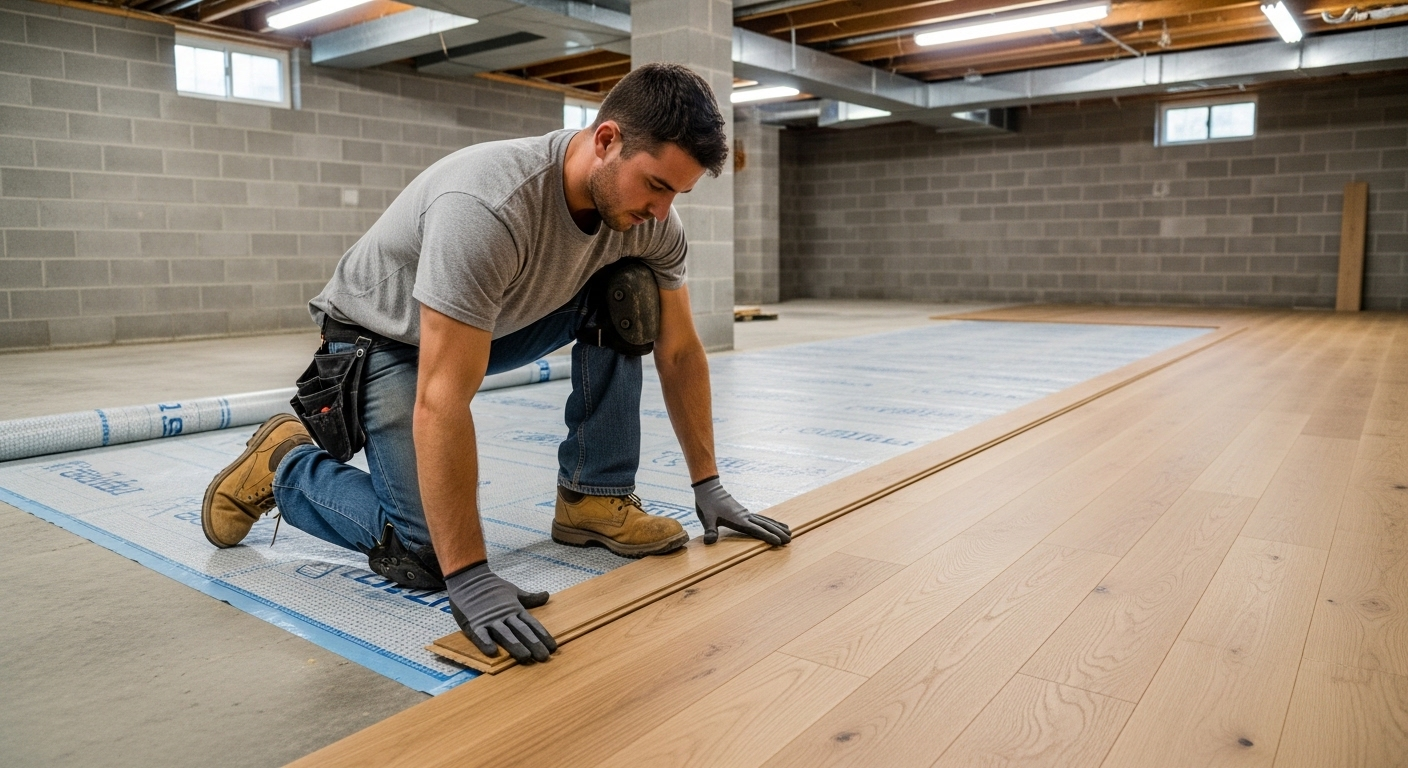
Which flooring choice will you regret in ten years — and which one will still look stunning? When homeowners across Delaware and Pennsylvania face the decision between hardwood vs engineered wood flooring, the answer is rarely simple. Both options deliver real wood beauty, but they perform very differently depending on your home’s conditions, your lifestyle, and your long-term goals.
In this complete guide, you will learn exactly how hardwood vs engineered wood flooring compare across every factor that matters: durability, lifespan, moisture resistance, cost, installation, and resale value. By the end, you will know precisely which option is right for your home — and how to avoid the costly mistake of choosing the wrong one.
Continue reading to discover the 7 key differences that will make your decision clear and confident.
Not sure which flooring is right for your home? Talk to the experts at Prime Epoxy Flooring today — free consultation, no obligation.
What Is the Real Difference Between Hardwood and Engineered Wood Flooring?
Before comparing performance, it is important to understand what each product actually is. Many homeowners assume engineered wood is a synthetic or artificial product — it is not. When evaluating hardwood vs engineered wood flooring, both options contain real wood, but they are constructed very differently, and that construction difference determines everything about how they perform in your home.
What Is Solid Hardwood Flooring?
Solid hardwood flooring is milled from a single, solid piece of natural wood — typically 3/4 inch thick from top to bottom. Every plank is 100% wood, which means it can be sanded and refinished multiple times over its lifetime. Common species include red oak, white oak, maple, hickory, and walnut.
Because it is a natural material, solid hardwood expands and contracts with changes in temperature and humidity. This makes it sensitive to moisture-rich environments like basements, bathrooms, and kitchens.
What Is Engineered Wood Flooring?
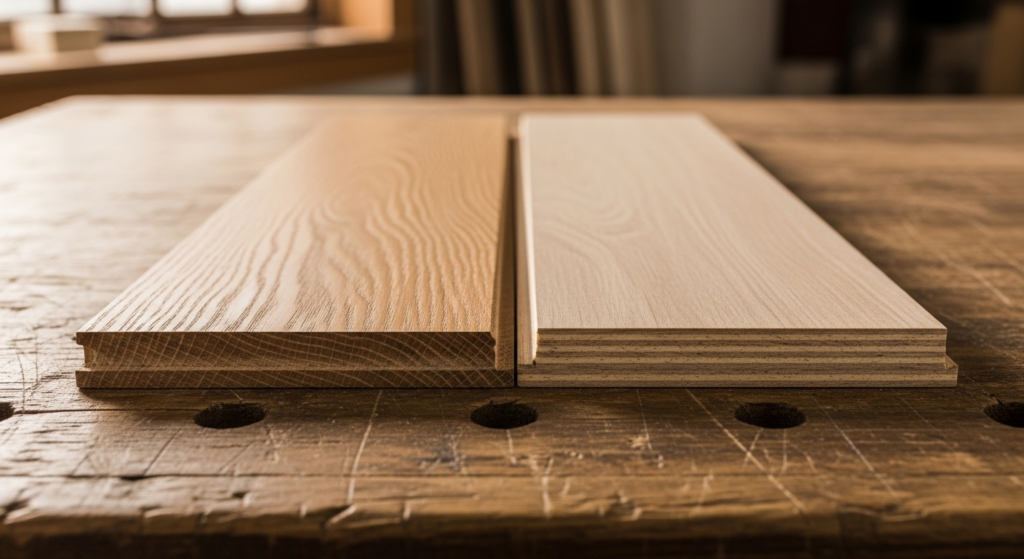
Engineered wood flooring is constructed with a real hardwood veneer on top — typically 2–6mm thick — bonded to multiple layers of high-density plywood or fiberboard beneath. The cross-ply construction makes it significantly more dimensionally stable than solid hardwood, meaning it resists warping, cupping, and expansion caused by moisture and temperature fluctuations.
The top veneer is genuine wood, so engineered flooring looks identical to solid hardwood once installed. Depending on the veneer thickness, it can be sanded and refinished one to three times.
At Prime Epoxy Flooring, we install both solid and engineered hardwood across Delaware and Pennsylvania, and we help every homeowner choose the right product for their specific subfloor, room conditions, and budget.
Hardwood vs Engineered Wood Flooring: 7 Powerful Differences Every Homeowner Must Know
Here is a direct side-by-side comparison of the most important factors homeowners consider when choosing between hardwood vs engineered wood flooring:
| Factor | Solid Hardwood | Engineered Wood |
|---|---|---|
| Construction | 100% solid wood | Real wood veneer + plywood core |
| Thickness | 3/4 inch | 3/8 – 9/16 inch |
| Lifespan | 50–100+ years | 25–50 years |
| Refinishable | Yes, 5–10 times | Yes, 1–3 times |
| Moisture Resistance | Low | Moderate to High |
| Installation Methods | Nail/staple down | Nail, glue, or float |
| Average Cost (Installed) | $6–$12 per sq ft | $5–$10 per sq ft |
| Best Rooms | Living rooms, bedrooms | Basements, kitchens, over concrete |
| Resale Value Impact | Very High | High |
| DIY Friendly | Moderate | Yes |
This table gives you a clear starting point, but each factor deserves a deeper look to understand how it applies to your specific situation.
1. Durability and Lifespan: Which Hardwood vs Engineered Wood Flooring Option Lasts Longer?
Solid hardwood flooring has a potential lifespan of 50 to 100 years or more when properly maintained. Because it is a thick, solid piece of wood, it can be sanded and refinished repeatedly — removing scratches, stains, and surface wear to restore its original appearance. Engineered wood flooring typically lasts 25 to 50 years, with refinishing limited to 1–3 times depending on veneer thickness.
In the hardwood vs engineered wood flooring durability debate, solid hardwood wins on raw longevity — but only in the right conditions. In environments with high humidity, temperature swings, or moisture exposure, solid hardwood can warp, cup, or crack, dramatically shortening its lifespan. Engineered wood, by contrast, maintains its structural integrity in those same conditions, often outlasting solid hardwood in challenging environments.
The practical takeaway: if you are installing in a climate-controlled living room or bedroom in a home like those found throughout Wilmington, DE, solid hardwood can last a lifetime. If you are installing in a basement, over a radiant heat system, or in a coastal property like those near Rehoboth Beach, engineered wood is the smarter long-term choice.
Prime Epoxy Flooring serves homeowners in Rehoboth Beach, Wilmington, Newark, and across the region — and our team assesses every home’s specific conditions before recommending a product.
2. Moisture Resistance: The Most Critical Factor in Hardwood vs Engineered Wood Flooring
Moisture is the single biggest threat to any wood floor. Delaware’s humid summers and Pennsylvania’s variable climate make moisture resistance a critical consideration for homeowners in this region — and it is one of the clearest differentiators in the hardwood vs engineered wood flooring comparison.
Solid hardwood is highly vulnerable to moisture. It absorbs humidity from the air and releases it as conditions change, causing the planks to expand and contract. In rooms with fluctuating humidity — or any room below grade — solid hardwood is not recommended without extensive moisture mitigation.
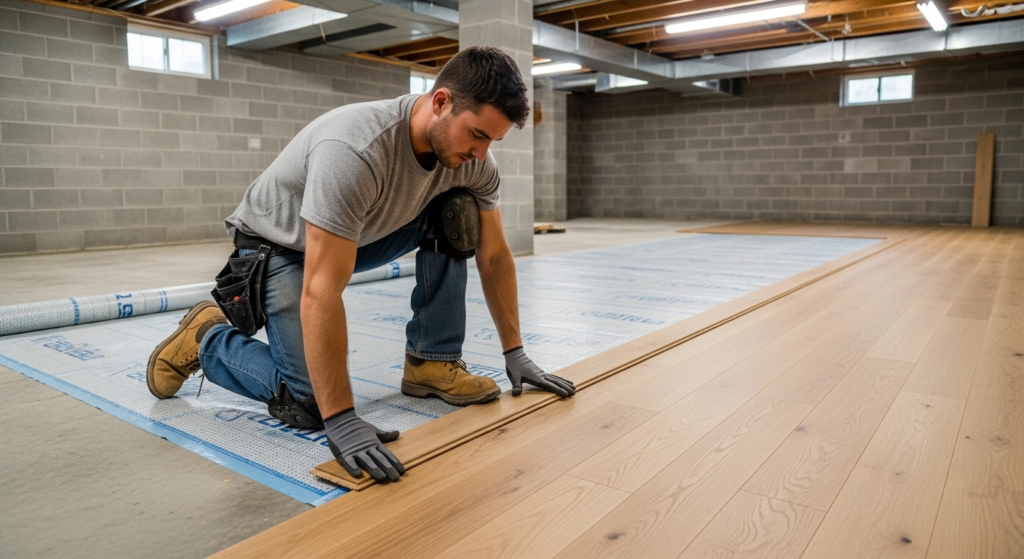
Engineered wood flooring handles moisture significantly better. Its cross-ply plywood core resists the expansion and contraction that damages solid hardwood. This makes it suitable for installation over concrete subfloors, in basements, and in kitchens — areas where solid hardwood would fail within a few years.
For homeowners in Middletown, DE, Bear, DE, and Smyrna, DE — where older homes often have concrete slab foundations — engineered wood is frequently the recommended solution.
3. Cost Comparison: Hardwood vs Engineered Wood Flooring Prices in 2026
Cost is one of the most common deciding factors when comparing hardwood vs engineered wood flooring. Here is how the two options compare in 2026:
| Cost Category | Solid Hardwood | Engineered Wood |
|---|---|---|
| Materials Only | $4–$10 per sq ft | $3–$9 per sq ft |
| Labor (Installation) | $3–$8 per sq ft | $2–$6 per sq ft |
| Total Installed Cost | $6–$12 per sq ft | $5–$10 per sq ft |
| Refinishing Cost (Future) | $3–$5 per sq ft | $3–$5 per sq ft |
| Replacement Frequency | Once per lifetime | Every 25–50 years |
Engineered wood is generally $1–$3 per square foot less expensive to install than solid hardwood. The savings come from both lower material costs and faster installation — engineered planks can be floated or glued, which requires less labor time than the nail-down method required for solid hardwood.
However, when you factor in the long-term cost of replacement, solid hardwood often delivers better value over a 50-year horizon. A solid hardwood floor installed today may never need to be replaced in your lifetime, while engineered wood may require replacement after 25–40 years.
For a detailed breakdown of installation costs in your area, explore our hardwood and engineered wood flooring services or contact Prime Epoxy Flooring for a personalized quote.
4. Installation Methods: How Hardwood vs Engineered Wood Flooring Are Installed Differently
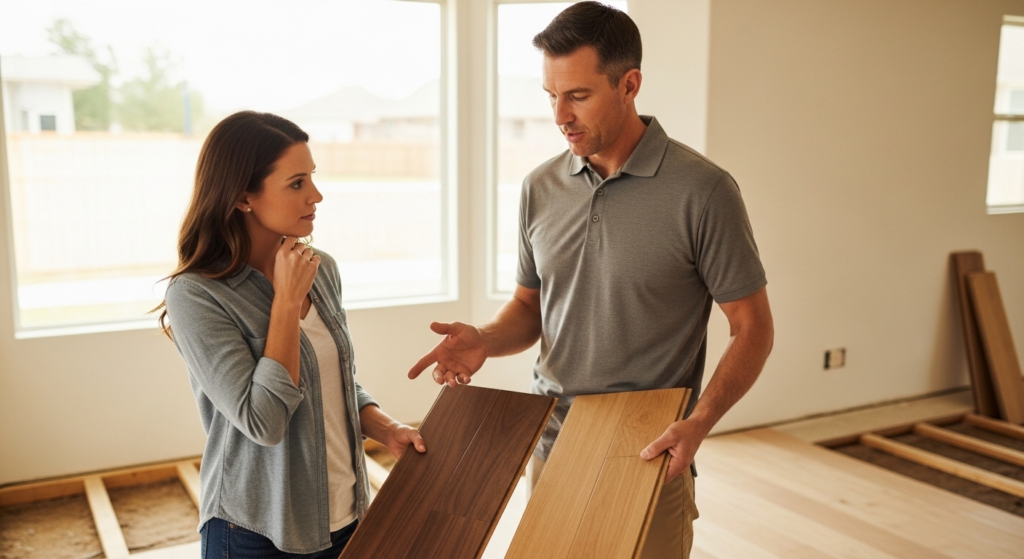
Installation flexibility is one of the strongest practical advantages of engineered wood over solid hardwood. Understanding the installation differences between hardwood vs engineered wood flooring helps you evaluate contractor quotes more accurately and plan your project timeline.
Solid Hardwood Installation Methods:
- Nail-down: Planks are nailed or stapled to a wood subfloor. This is the most common and durable method for solid hardwood.
- Glue-down: Used in specific applications, though less common for solid hardwood.
Engineered Wood Installation Methods:
- Nail-down: Same as solid hardwood, suitable over wood subfloors.
- Glue-down: Ideal for concrete subfloors, providing a firm, stable bond.
- Floating: Planks click together and rest on top of the subfloor without adhesive or fasteners. This is the fastest and most DIY-friendly method.
The floating installation method makes engineered wood significantly more accessible for homeowners who want to reduce labor costs. However, for the best long-term results — particularly in high-traffic areas — professional installation is always recommended.
Prime Epoxy Flooring’s installation teams are experienced with all three methods and serve King of Prussia, PA, Media, PA, Norristown, PA, Glen Mills, PA, Broomall, PA, and Greenville, DE.
5. Refinishing Potential: A Key Advantage in the Hardwood vs Engineered Wood Flooring Decision
The ability to refinish a floor is one of the most significant long-term advantages of wood flooring over alternatives like laminate or luxury vinyl. But there is an important difference between solid and engineered options in the hardwood vs engineered wood flooring comparison.
Solid hardwood can be sanded and refinished 5–10 times over its lifetime, depending on the thickness of the plank. Each refinishing cycle removes a thin layer of wood, so thicker planks allow more refinishing cycles. This means a solid hardwood floor installed today can be restored to like-new condition multiple times over the next 50–100 years.
Engineered wood can typically be refinished 1–3 times, depending on the thickness of the top veneer layer. Thicker veneer (4–6mm) allows more refinishing cycles, while thinner veneer (2mm) may only allow one light sanding.
If your existing floors — solid or engineered — are showing signs of wear, scratches, or discoloration, professional refinishing is often the most cost-effective solution. Prime Epoxy Flooring offers expert sanding and refinishing services that can restore your floors at a fraction of the cost of full replacement.
6. Appearance and Aesthetics: Can You See the Difference Between Hardwood and Engineered Wood Flooring?
One of the most common questions homeowners ask when researching hardwood vs engineered wood flooring is whether engineered wood looks as good as solid hardwood. The honest answer: in most cases, you cannot tell the difference once the floor is installed.
Both solid and engineered hardwood are available in the same species, stain colors, plank widths, and surface textures. The top veneer of engineered wood is genuine hardwood, so the grain patterns, natural variations, and visual warmth are identical to solid hardwood.
The main aesthetic difference is that solid hardwood can develop a deeper patina over decades of use and multiple refinishing cycles, which many homeowners find adds character and value. Engineered wood, with its limited refinishing potential, may show more wear over time in high-traffic areas.
For homeowners who want to see real examples of both options installed in homes across Delaware and Pennsylvania, visit the Prime Epoxy Flooring gallery for project photos.
7. Resale Value: Which Option Wins in the Hardwood vs Engineered Wood Flooring Comparison?
According to the National Association of Realtors, hardwood floors are among the top features that increase home resale value. Both solid and engineered hardwood add measurable value compared to carpet, laminate, or luxury vinyl — but there are important nuances in the hardwood vs engineered wood flooring resale value comparison.
Solid hardwood generally commands a slight premium in resale value because buyers perceive it as the more premium, longer-lasting option. However, engineered hardwood installed in appropriate areas — particularly in basements or over radiant heat — is viewed positively by buyers who understand its advantages.
The key insight: choosing the wrong product for the wrong room can actually reduce resale value. A solid hardwood floor that has warped or cupped due to moisture exposure is a red flag for buyers. A well-maintained engineered floor that is properly installed is a genuine selling point.
Real Customer Stories: Choosing Between Hardwood vs Engineered Wood Flooring in Delaware and Pennsylvania
Hearing from homeowners who have faced the same hardwood vs engineered wood flooring decision can be more valuable than any specification sheet. Here is what customers of Prime Epoxy Flooring have shared:
“We were torn between solid hardwood and engineered for our open-plan first floor. The team at Prime Epoxy Flooring assessed our subfloor — which had some moisture variability — and recommended engineered white oak. Two years later, the floors look perfect and we have had zero issues. Best decision we made.” — Michael D., Wilmington, DE
“I wanted solid hardwood throughout my home, but my basement family room made that impossible. Prime Epoxy Flooring installed engineered hickory downstairs and solid oak upstairs. The two floors look seamless together. I could not be happier with the result.” — Patricia K., Newark, DE
“We compared several contractors and Prime Epoxy Flooring stood out because they actually explained the difference between the products and helped us understand what would work best for our home — not just what was most expensive. The installation was flawless.” — Robert A., King of Prussia, PA
You can read more verified reviews and find our location on Google Maps. Follow our latest projects on Instagram and Facebook.
Let an Expert Help You Choose the Right Floor
Still weighing hardwood vs engineered wood flooring for your home? The team at Prime Epoxy Flooring has helped hundreds of homeowners across Delaware and Pennsylvania make the right choice for their specific conditions and budget. Schedule your free in-home consultation today — we will assess your subfloor, discuss your goals, and give you an honest recommendation.
Which Rooms Are Best for Hardwood vs Engineered Wood Flooring?
Room selection is one of the most practical ways to apply the hardwood vs engineered wood flooring comparison. The right product in the right room is the foundation of a successful flooring project. Here is a room-by-room guide:
Living Rooms and Bedrooms: Where Solid Hardwood Shines
Both solid and engineered hardwood perform excellently in living rooms and bedrooms. These rooms typically have stable temperature and humidity levels, making them ideal for solid hardwood. If you want the maximum lifespan and refinishing potential, solid hardwood is the preferred choice for these spaces.
Kitchens: Where Engineered Wood Flooring Has the Advantage
Kitchens present moderate moisture risk from spills, steam, and cleaning. In the hardwood vs engineered wood flooring debate for kitchens, engineered wood is the clear recommended choice. Its dimensional stability handles the occasional moisture exposure that would damage solid hardwood over time.
Basements: Why Engineered Wood Flooring Always Wins Below Grade
Basements are below grade and typically have higher humidity levels and potential for moisture intrusion. Solid hardwood should never be installed in a basement. Engineered wood, with proper moisture mitigation, is the appropriate choice for below-grade installations — and this is one of the most decisive factors in the hardwood vs engineered wood flooring comparison.
Stairs: A Strong Application for Both Options
Both solid and engineered hardwood can be installed on stairs, though solid hardwood is often preferred for its durability under heavy foot traffic. Prime Epoxy Flooring offers dedicated stair flooring services for homeowners who want a cohesive wood floor look throughout their home.
Over Radiant Heat Systems: Engineered Wood Flooring Is the Only Safe Choice
Engineered wood is strongly preferred over radiant heat systems. The heat and temperature fluctuations from underfloor heating systems cause solid hardwood to expand and contract excessively, leading to gaps and structural damage. Engineered wood’s cross-ply construction handles these conditions without issue.
Costly Mistakes Homeowners Make When Choosing Hardwood vs Engineered Wood Flooring
Avoiding these mistakes can save you thousands of dollars and years of frustration when deciding between hardwood vs engineered wood flooring:
Installing solid hardwood in moisture-prone areas. This is the most common and costly mistake in the hardwood vs engineered wood flooring decision. Solid hardwood in a basement, kitchen, or bathroom will warp, cup, and fail — often within a few years. Always match the product to the environment.
Choosing engineered wood with a thin veneer to save money. Budget engineered products with 2mm veneers cannot be refinished and show wear quickly. Invest in a product with at least a 4mm veneer for long-term performance.
Ignoring subfloor preparation. Whether you choose solid or engineered hardwood, the subfloor must be clean, level, and dry. Skipping proper subfloor preparation is the leading cause of installation failures for both product types.
Assuming engineered wood is inferior to solid hardwood. This misconception leads many homeowners to choose the wrong product in the hardwood vs engineered wood flooring comparison. In the right application, engineered wood outperforms solid hardwood and delivers equal or better long-term value.
Not acclimating the material before installation. Both solid and engineered hardwood must acclimate to the room’s temperature and humidity for 3–7 days before installation. Skipping this step causes expansion, contraction, and gapping after installation.
Choosing based on price alone. The cheapest option is rarely the best value. Consider the total cost of ownership — including refinishing, maintenance, and eventual replacement — when comparing hardwood vs engineered wood flooring options.
How to Maintain Hardwood and Engineered Wood Floors for Maximum Lifespan
Proper maintenance extends the life of both flooring types and protects your investment, regardless of which side of the hardwood vs engineered wood flooring comparison you choose.
Daily Care:
- Sweep or vacuum regularly to remove grit and debris that scratches the surface finish.
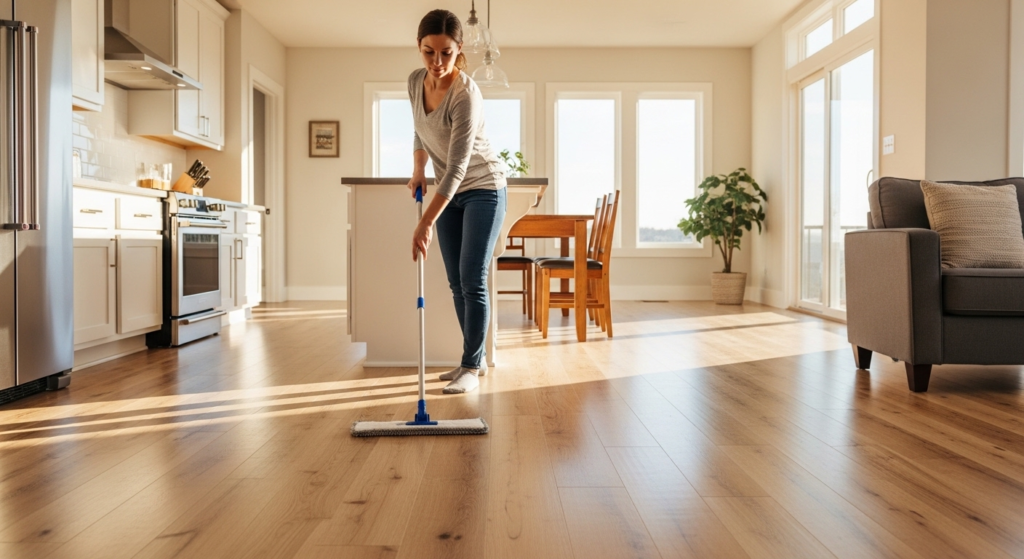
- Use a microfiber mop for dust collection — avoid wet mops on either product type.
- Place felt pads under furniture legs to prevent scratching.
Weekly Care:
- Clean with a pH-neutral hardwood floor cleaner. Avoid steam mops, which force moisture into the wood.
- Wipe up spills immediately — standing water is damaging to both solid and engineered wood.
Annual Care:
- Inspect the floor for scratches, gaps, or areas of wear.
- Consider a professional screen-and-recoat every 3–5 years to refresh the finish without a full sanding.
- For floors showing significant wear, schedule a professional refinishing with Prime Epoxy Flooring’s sanding and refinishing service.
Environmental Control:
- Maintain indoor humidity between 35–55% year-round using a humidifier in winter and air conditioning or dehumidifier in summer.
- This is particularly important in Delaware and Pennsylvania, where seasonal humidity swings are significant.
Hardwood vs Engineered Wood Flooring Alternatives Worth Considering
If neither solid nor engineered hardwood fits your needs after reviewing the hardwood vs engineered wood flooring comparison, there are strong alternatives worth exploring:
Luxury Vinyl Plank (LVP): Offers the look of wood with 100% waterproof performance. Ideal for bathrooms, laundry rooms, and high-moisture areas where neither hardwood option is appropriate. Prime Epoxy Flooring installs luxury vinyl plank and tile across Delaware and Pennsylvania, including in Greenville, DE, King of Prussia, PA, Media, PA, Norristown, PA, Broomall, PA, and Glen Mills, PA.
Laminate Flooring: A budget-friendly option that mimics the look of wood. Not refinishable, but durable and easy to maintain. Explore Prime Epoxy Flooring’s laminate flooring services for more information.
Tile Flooring: The most durable and moisture-resistant option for kitchens, bathrooms, and entryways. Prime Epoxy Flooring installs tile across multiple locations including Greenville, DE, Media, PA, Glen Mills, PA, Norristown, PA, King of Prussia, PA, and Broomall, PA.
Hardwood vs Engineered Wood Flooring
Is engineered hardwood as good as solid hardwood? Engineered hardwood is not inferior to solid hardwood — it is designed for different conditions. In the hardwood vs engineered wood flooring comparison, engineered wood outperforms solid hardwood in moisture-prone or below-grade environments. In stable, above-grade rooms, solid hardwood offers a longer lifespan and more refinishing cycles.
Does engineered hardwood add value to a home? Yes. Engineered hardwood adds significant resale value compared to carpet, laminate, or vinyl. While solid hardwood may command a slight premium in buyer perception, properly installed engineered hardwood is viewed positively by real estate professionals and buyers alike.
Can engineered hardwood be refinished? Yes, but with limitations. Engineered hardwood can be refinished 1–3 times depending on the veneer thickness. Products with a 4–6mm veneer allow more refinishing cycles. Always check the manufacturer’s specifications before scheduling a refinishing service.
What is the best hardwood flooring for a basement? Engineered hardwood is the recommended choice for basements. Its cross-ply construction resists the moisture and humidity fluctuations common in below-grade spaces. In the hardwood vs engineered wood flooring comparison for basements, solid hardwood should never be installed below grade.
How long does engineered hardwood last compared to solid hardwood? Solid hardwood can last 50–100+ years with proper maintenance and refinishing. Engineered hardwood typically lasts 25–50 years. In challenging environments, engineered wood may outlast solid hardwood by decades due to its superior moisture resistance.
FAQ
Q: What is the main difference between hardwood and engineered wood flooring? A: Solid hardwood is milled from a single piece of wood and can be refinished many times, lasting 50–100+ years. Engineered wood has a real wood veneer over a plywood core, offering better moisture resistance and installation flexibility, with a lifespan of 25–50 years.
Q: Which is more expensive — solid hardwood or engineered wood flooring? A: Solid hardwood typically costs $6–$12 per square foot installed, while engineered wood costs $5–$10 per square foot installed. Solid hardwood is generally $1–$3 more per square foot, but its longer lifespan can make it more cost-effective over decades.
Q: Can you install engineered wood flooring over concrete? A: Yes. Engineered wood can be glued or floated over concrete subfloors with proper moisture mitigation. Solid hardwood is not recommended over concrete due to its high sensitivity to moisture from the slab.
Q: Which flooring is better for homes with pets and children? A: Both options are durable, but harder wood species like hickory or white oak are recommended for homes with pets and children. Engineered wood with a thick veneer and aluminum oxide finish offers excellent scratch resistance. Regular maintenance and felt pads under furniture help protect both types.
Q: How do I know if my home needs solid hardwood or engineered wood? A: The key factors are subfloor type, room location, and moisture levels. Above-grade rooms with wood subfloors and stable humidity are ideal for solid hardwood. Below-grade rooms, concrete subfloors, kitchens, or areas with humidity fluctuations are better suited for engineered wood. A professional assessment from Prime Epoxy Flooring can give you a definitive answer for your specific home.
Conclusion: Making the Right Hardwood vs Engineered Wood Flooring Decision for Your Home
The hardwood vs engineered wood flooring debate does not have a single winner — it has a right answer for each specific situation. Here is what you have learned in this guide:
Solid hardwood offers unmatched longevity, refinishing potential, and resale value in above-grade, climate-controlled rooms. Engineered wood delivers superior moisture resistance, installation flexibility, and cost efficiency in basements, kitchens, and over concrete subfloors.
The most important decision factors in the hardwood vs engineered wood flooring comparison are your room’s location, subfloor type, moisture levels, and long-term goals. Choosing the wrong product for the wrong environment is the most expensive mistake you can make in flooring — and it is entirely avoidable with the right professional guidance.
At Prime Epoxy Flooring, we have helped hundreds of homeowners across Wilmington, Newark, Middletown, Bear, Smyrna, Townsend, Edgemoor, Rehoboth Beach, King of Prussia, Media, Norristown, Glen Mills, Broomall, and Greenville make the right flooring choice for their homes. Our team provides honest, expert assessments — not sales pitches — so you can invest with confidence.
Ready to choose the perfect floor for your home in Delaware or Pennsylvania? Contact Prime Epoxy Flooring today for your free, no-obligation consultation. Call us at +1 (302) 600-2835, email info@primeepoxyflooring.com, or fill out our contact form here. We are here Monday–Friday 8AM–5PM and Saturday 8AM–12PM.
Company Information
Prime Epoxy Flooring 300 Cassidy Dr Ste 305, Wilmington, DE 19804, United States Phone: +1 (302) 600-2835 Email: info@primeepoxyflooring.