

Start With Photos and the Coating Name
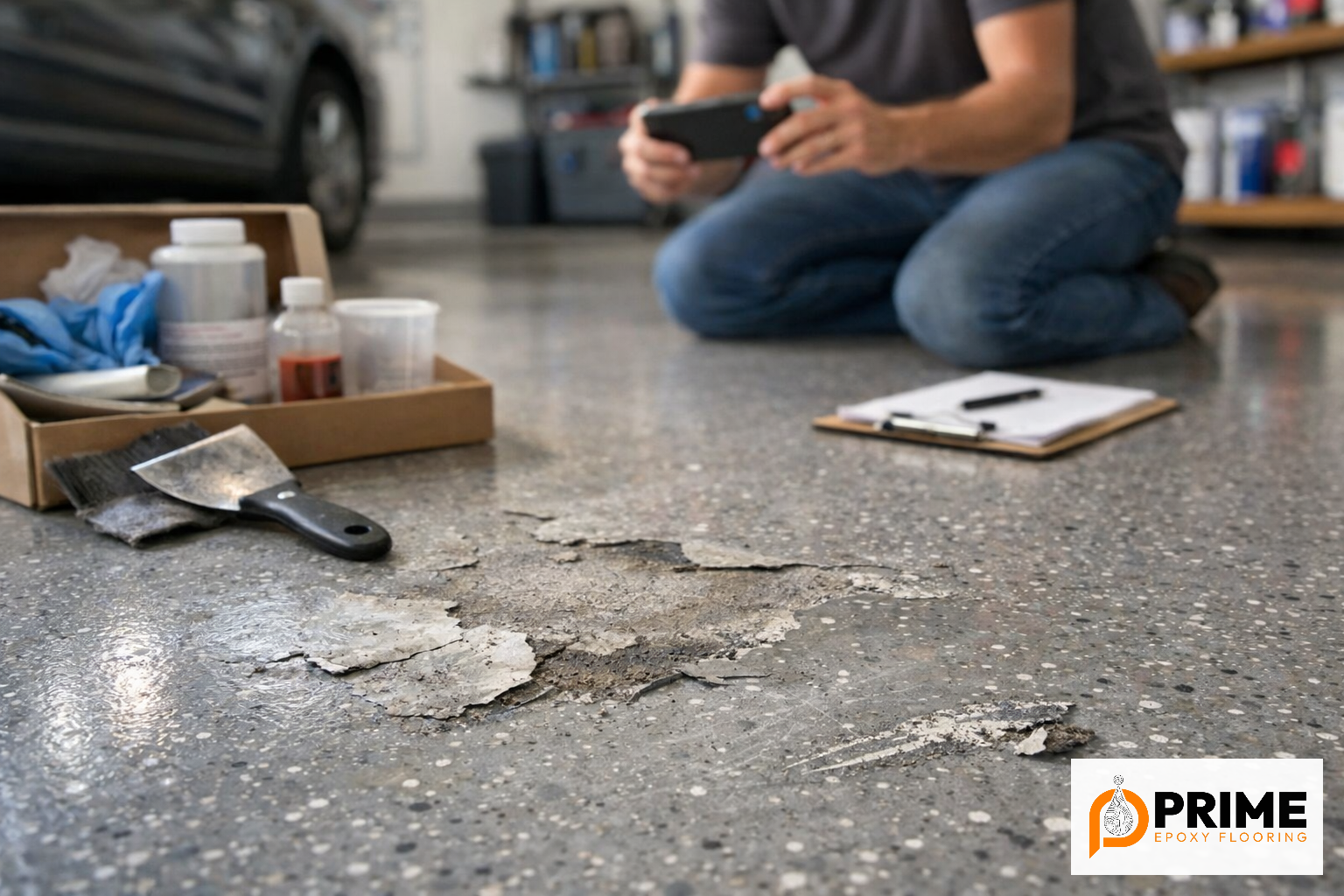
Before using a repair kit, photograph the damage and find out which coating is on the floor. A scratch, a chip and a peeling patch may need different responses. If the cause is unclear or the coating is lifting, ask the original installer to assess it before covering the area.
What to Send the Installer
Take one photo of the whole affected area and close-ups that show its size and edges. Find the coating name and installation date in your paperwork, if available. Note when you first saw the damage, where it appeared, and any recent spills, cleaning changes, heavy loads or water exposure. Send that information to the installer.
Describe the Damage Without Guessing the Cause
Describe what you can see without assuming a cause: a scratch, an exposed patch, raised edges, bubbles or a change in color. Sherwin-Williams notes that moisture or soluble salts can contribute to blistering and delamination in its concrete evaluation guidance. Those possibilities justify investigation; a photograph alone does not establish which condition caused this floor's damage.
Will a Repair Kit Suit This Floor?
Check the Existing Coating and Repair Material
Find the original coating name in your invoice, product paperwork or installer records. Then ask which material is proposed for the repair and why it is suitable for that coating. A package labeled epoxy does not identify every surface it can bond to. If the coating is unknown, make that clear at the start so the installer can explain what needs to be checked.
Find Out Why the Coating Is Lifting
A patch should address the findings, not just hide the visible damage. If there are damp-looking areas, bubbles or lifting edges, ask how the installer will assess moisture and the surrounding coating. The proposed system determines which tests and limits apply. Request an explanation of any preparation or treatment needed before the area is covered again.
Keep the Product Instructions Together
Keep the current technical and care documents for the existing coating and proposed repair material with your installation paperwork. Ask which instructions apply to preparation, application and use afterward. If you are discussing a project with Prime, its epoxy floor coatings page describes the service; compatibility still needs to be confirmed for the actual floor.

When an Inspection Is the Next Step
Peeling, Bubbles or Recurring Damage
Contact the installer when peeling, bubbling, recurring damage or unexplained discoloration leaves the cause uncertain. Share any recent spill, cleaning change or water exposure. Ask which conclusions can be drawn from your photos and which require an inspection. The answer should also explain whether the surrounding coating will be assessed, rather than treating only the most visible spot.
What a Repair Proposal Should Explain
A useful professional proposal identifies the affected area, materials and preparation, and explains why they fit the findings. Sherwin-Williams' surface preparation guidance discusses removing loose material and contamination and addressing relevant substrate conditions. Ask separately about appearance: acceptable repair performance does not promise an invisible color, sheen or texture match. Request the expected outcome in writing.
| Question to ask | What a useful answer should clarify |
|---|---|
| What do the photos show? | Observations and what still requires inspection |
| Is the surrounding coating firmly attached? | Whether the proposed work covers the affected area |
| Does this system require moisture testing? | Applicable method, responsible person and how results guide the work |
| Which repair material is compatible? | Product name and supporting documentation |
| What preparation is included? | Materials to remove and conditions to address |
| What should I expect afterward? | Appearance, care and product-specific return-to-use instructions |
Care After the Repair
Use the Installed System's Care Guide
Follow the repair material's instructions together with the care guide for the complete floor. Confirm the cleaner, tools, mats and furniture protection that suit the installed surface. During normal cleaning, compare the repaired area with your earlier photographs and report any new lifting, bubbles or changes in color.
Confirm When the Floor Can Be Used Again
Before work starts, get separate instructions for walking on the area, returning vehicles or equipment, and cleaning it. Ask whether those times depend on the conditions during the repair. Also clarify what to do if the repaired area changes afterward, so you have a named contact and the relevant product details ready.
Send Prime the Details of Your Floor
To discuss a garage floor problem with Prime, contact the team with your photos, product information and a short account of what changed. Include who installed the floor and when, if known. Those details provide a useful starting point for deciding whether a repair kit, an inspection or a different scope of work makes sense.