

In this guide:
- Why Do Delaware Driveways Crack During Winter?
- When Should You Seal Concrete Driveway Before Winter?
- The Sealing Mistake That Traps Winter Damage
- How to Prepare Your Driveway Before Sealing
- Which Sealer Type Handles Delaware Winters Best?
- Where Professional Sealing Makes the Biggest Difference (and Where It Doesn’t)
- How Long Does Driveway Sealer Take to Cure Before the First Freeze?
- Is sealing a concrete driveway the same as asphalt sealcoating?
- Can you seal a concrete driveway once temperatures are already near freezing?
- How often does a concrete driveway need to be resealed in Delaware?
- Why does water freezing in a crack cause so much damage?
- What factors affect the cost of sealing a concrete driveway?
- What should you ask a contractor before hiring them to seal your driveway?
Direct Answer: To seal concrete driveway before winter surfaces successfully, clean the slab, patch every crack, and apply a penetrating sealer while daytime temperatures hold above 50°F for at least two full days before rain or frost arrives.
If you’ve searched for a driveway sealer and landed on ads for a black, tar-like coating, you found asphalt sealcoating, not what your poured concrete needs. Concrete and asphalt cure and seal differently, and mixing them up wastes a weekend and a full container of the wrong product.
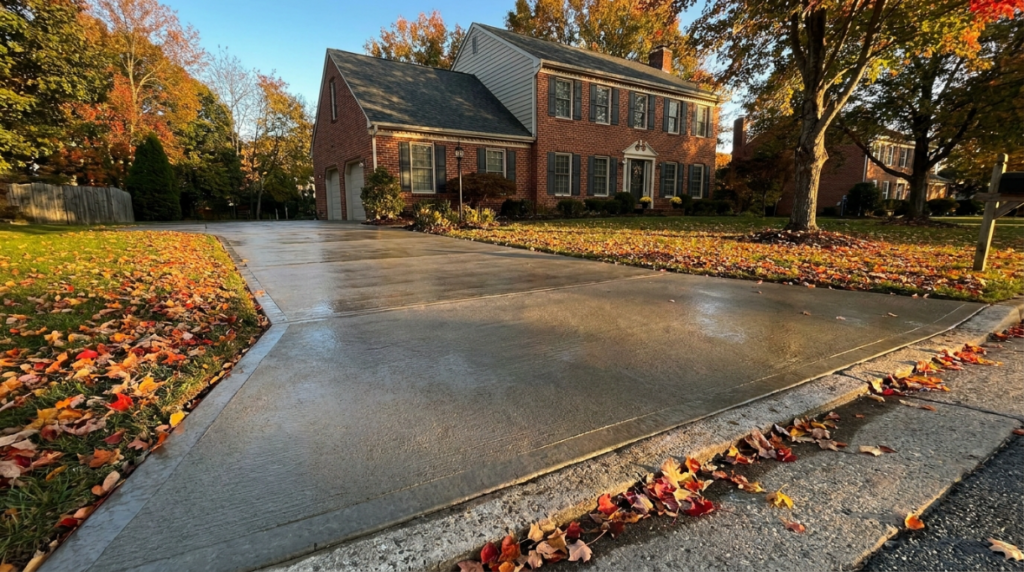
Homeowners from Wilmington to Rehoboth Beach ask us the same question every October: is it too late, or too early, to seal concrete driveway before winter sets in? The honest answer depends on your driveway’s current condition, the sealer you pick, and how close you are to the season’s first hard freeze.
This guide covers why Delaware winters are so hard on concrete, the narrow window you actually have to seal a driveway before winter arrives, and how to prep the surface so the sealer holds through freeze-thaw season instead of peeling by March. If your driveway already has visible cracking or standing water, don’t wait: the goal is still to seal concrete driveway before winter turns a small crack into a much bigger repair, so feel free to schedule a free driveway inspection before reading further.
Why Do Delaware Driveways Crack During Winter?
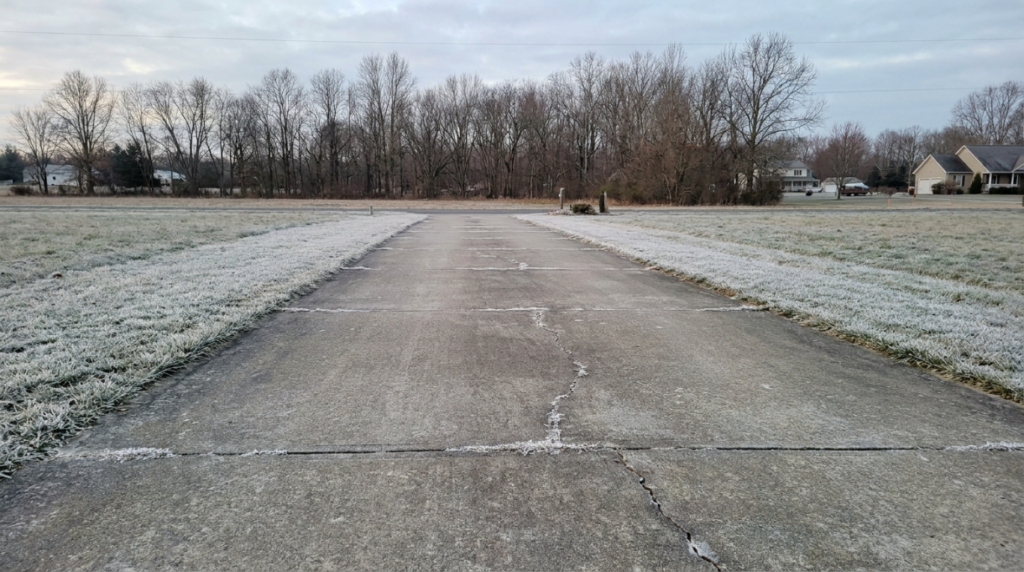
Delaware driveways crack in winter because water gets into hairline cracks and the small pores of the concrete, then expands by roughly nine percent in volume every time it freezes. That expansion pushes outward against the surrounding concrete, and each freeze-thaw cycle widens the crack a little more.
Delaware’s winters make this worse than a straightforward hard freeze would. January’s average low sits around 21°F, but the average high climbs back to roughly 35°F, so temperatures swing above and below freezing repeatedly instead of settling into one long freeze. A single hard freeze does limited damage. A week of freezing and thawing back and forth does the real damage.
Deicing salt adds another layer of stress. Rock salt lowers the freezing point of water sitting on the surface, which sounds helpful, but it also pulls that saltwater deeper into the concrete’s pores before it eventually freezes anyway, a process that speeds up surface scaling and pitting.
None of this means concrete is a poor choice for a Delaware driveway. It means unsealed or unprepared concrete is vulnerable during the exact months when Delaware’s weather is least forgiving.
When Should You Seal Concrete Driveway Before Winter?
The best time to seal concrete driveway before winter is during a stretch of dry fall days when daytime temperatures hold above 50°F and nighttime lows don’t drop below 45°F for at least 48 hours after you apply it.
In Delaware, that window usually falls somewhere between early October and mid-November, though it shifts a bit between the milder coast around Dewey Beach and the cooler inland stretches near Newark and Middletown. Check the extended forecast, not just tomorrow’s, since most sealers need two full days without rain to cure properly.
Sealing too early has its own downside. Poured concrete needs a minimum of 28 to 30 days to cure before any sealer goes on, and if you rush that, trapped moisture underneath can cause cloudiness or peeling well before winter even arrives.
Waiting until the first frost is too late. Rushing the job in August heat isn’t ideal either. The sweet spot is narrower than most homeowners expect, which is exactly why fall bookings for professional sealing fill up fast.
The Sealing Mistake That Traps Winter Damage
The single biggest mistake homeowners make is sealing directly over a dirty surface or an unrepaired crack. Whatever you do, don’t seal concrete driveway before winter over dirt, oil, or a crack you meant to get to later, because whatever is trapped underneath the new sealer stays trapped.
That trapped moisture still freezes every time the temperature drops. Instead of protecting the driveway, the new sealer layer can work against you: it holds moisture against the concrete longer than an unsealed surface would, and the crack widens from underneath where you can’t see it happening until spring.
A few things reduce this risk:
- Power wash the entire slab and let it dry fully, generally 24 to 48 hours, before sealing.
- Fill every visible crack with a concrete patch product, not just the widest ones.
- Skip sealing altogether if the surface is already spalling, flaking, or crumbling; a sealer can’t fix structural damage, only slow new damage.
- If you’re not sure the concrete is dry enough, test a small section first rather than sealing the whole driveway at once.
Before you hire anyone, ask a direct question: “Will you repair cracks before sealing, or seal over what’s already there?” A contractor who skips crack repair to save a step is setting your driveway up to fail by the time the ground thaws.
How to Prepare Your Driveway Before Sealing
Clean the Surface
Sweep the driveway, then power wash it at a moderate setting to lift dirt, oil stains, and the fine grit that builds up over a Delaware summer. Dirt and oil act as bond breakers, meaning the sealer can’t grip the concrete underneath them, no matter how good the product is. Let the surface dry completely, ideally for a full 24 to 48 hours, before moving to the next step.
Repair Cracks and Holes
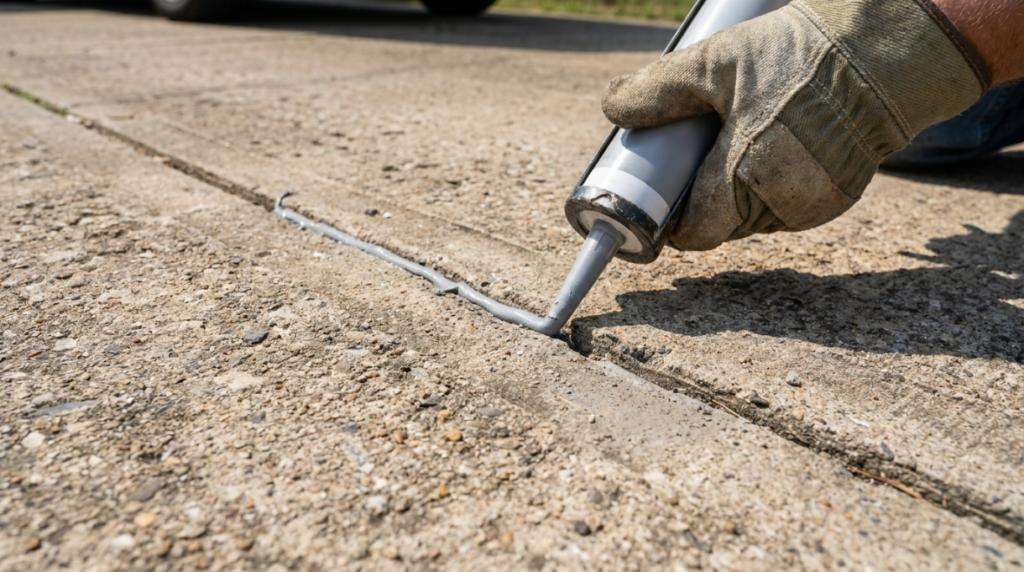
Clean out any crack with a wire brush or shop vac so the patch material can bond properly. Use a concrete crack filler rated for exterior use, and give it the full cure time listed on the product before sealing over it. Small hairline cracks matter just as much as the obvious ones; they’re often the first place water gets in once winter arrives.
Apply the Sealer
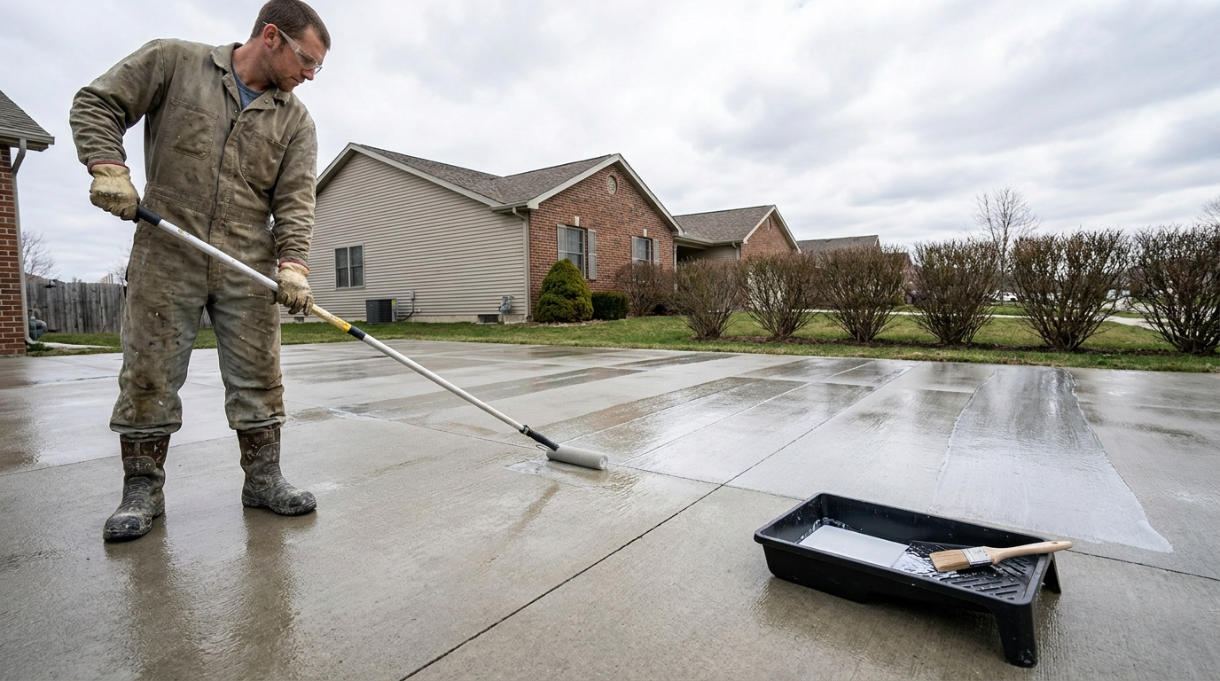
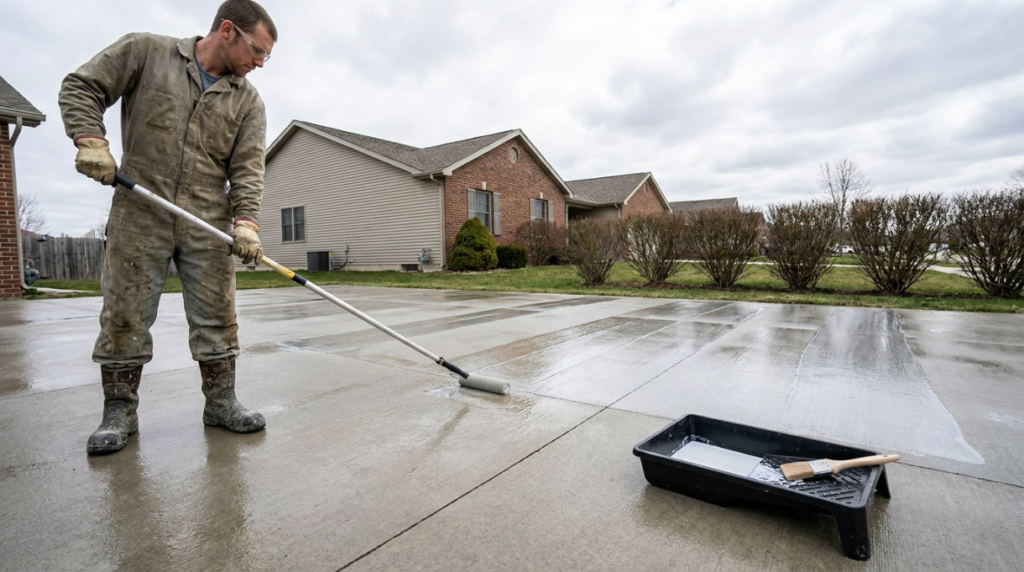
This final step is what actually lets you seal concrete driveway before winter instead of scrambling once the first freeze warning hits. Apply the sealer in thin, even coats with a roller or low-pressure sprayer, working in sections so you don’t leave overlap marks. Most products need a second thin coat about an hour after the first. Keep vehicles and foot traffic off the surface for at least 24 hours, and check the product label for the full cure window before parking a car on it.
If crack repair sounds like more than a weekend project, our crews handle prep and sealing together so nothing gets missed. Get in touch before the fall booking window closes.
Which Sealer Type Handles Delaware Winters Best?
The right sealer depends on how much traffic your driveway sees and how much you care about changing its appearance. Here’s how the three main options compare for a Delaware climate:
| Sealer Type | Best For | Common Mistake to Avoid | Typical Reapplication |
|---|---|---|---|
| Penetrating (Silane/Siloxane) | Exterior driveways facing repeated freeze-thaw cycles and road salt; keeps the natural concrete look | Applying it too thick, which leaves a hazy film instead of soaking in | Every 3 to 5 years |
| Acrylic (Film-Forming) | Homeowners who want a “wet look” sheen or richer color on decorative concrete | Skipping the non-slip additive, which leaves the surface slick in icy weather | Every 1 to 2 years |
| Epoxy or Polyaspartic Coating | Driveways that double as extra living or work space, or see heavy vehicle traffic | Applying over concrete less than 28 to 30 days old, trapping curing moisture underneath | Every 5 to 10 years |
Penetrating sealers are the most common recommendation for Delaware driveways specifically because they’re breathable: water vapor can still escape from inside the concrete even after the surface is sealed, which matters when the ground freezes and thaws repeatedly. Acrylic sealers look great initially but wear faster under ice scrapers and repeated deicing salt exposure. Whichever sealer you choose, the goal is the same: seal concrete driveway before winter arrives and the freeze-thaw cycle begins, not after.
Where Professional Sealing Makes the Biggest Difference (and Where It Doesn’t)
Professional help matters most when you need to seal concrete driveway before winter under tight timing constraints, coastal salt exposure, or on a shared driveway where the margin for error is small.
Along the coast in Rehoboth Beach and Dewey Beach, salt air adds a constant low-level dose of chloride exposure on top of whatever deicing salt gets tracked in during winter, exactly the combination penetrating sealers are built to resist. Inland, in older neighborhoods around Wilmington and New Castle, driveways are often narrower and shared with a neighbor, so uneven sealing on one half versus the other becomes obvious fast.
One homeowner in New Castle County, for example, had a driveway poured that August and wanted it sealed before the first frost. Because the concrete was still inside its 28-day cure window in early October, waiting three more weeks instead of sealing on the original schedule meant the sealer bonded properly instead of trapping moisture from day one.
Sealing isn’t the right move in every situation, though. Skip it, or wait, if:
- The concrete was poured within the last 28 to 30 days.
- The slab already has active heaving or large structural cracks; that points to a drainage or base problem sealer won’t solve.
- Rain is forecast within 48 hours of your planned application date.
How Long Does Driveway Sealer Take to Cure Before the First Freeze?
Cure time depends on the sealer type: most penetrating sealers are dry to the touch within a few hours but need about 24 hours before foot traffic and 48 to 72 hours before vehicles. Acrylic sealers often need a similar window, sometimes a bit longer in cooler fall air since the film needs time to fully harden.
Full cure, meaning the sealer has reached its maximum protective strength, usually takes closer to 30 days for any sealer type. That doesn’t mean your driveway is unprotected before then. It means the protection builds gradually, so the earlier you seal concrete driveway before winter and the season’s first hard freeze, the more of that cure window happens on your side rather than the weather’s.
As a rule of thumb, aim to finish sealing at least three to four weeks before your area’s typical first freeze date, giving the sealer the best possible head start.
Frequently Asked Questions
Is sealing a concrete driveway the same as asphalt sealcoating?
No. Asphalt sealcoating is a thick, tar-based product made for asphalt driveways. Concrete sealing uses a different product, usually a clear penetrating sealer or thin acrylic coating. Using the wrong one won’t bond correctly and can trap moisture underneath.
Can you seal a concrete driveway once temperatures are already near freezing?
It’s not recommended. Most sealers need the surface to stay above 50°F for at least 24 to 48 hours to cure properly. Near-freezing temperatures don’t give the product enough time to bond, which usually causes a cloudy finish or early failure. If the window has closed, wait for a milder stretch.
How often does a concrete driveway need to be resealed in Delaware?
Most Delaware driveways need resealing every 3 to 5 years with a penetrating sealer, or every 1 to 2 years with acrylic. Coastal salt air and heavy traffic wear sealer faster. A quick test: if water soaks in instead of beading up, it’s time to reseal.
Why does water freezing in a crack cause so much damage?
Water expands roughly nine percent in volume when it freezes. Inside a crack, that expansion pushes outward with enough force to widen it. Repeat that cycle over a Delaware winter, and a hairline crack can become a real problem by spring.
What factors affect the cost of sealing a concrete driveway?
The main factors are driveway size, the sealer type chosen, and how much crack repair or prep the surface needs. Heavier cracking or staining means more prep work. Access, like a steep slope or a shared driveway, can affect the scope too.
What should you ask a contractor before hiring them to seal your driveway?
Ask whether they repair cracks before sealing, or seal over what’s already there, since that detail affects how long the job lasts. Ask what sealer type they use and whether it handles freeze-thaw climates. Also ask how they plan around the weather forecast.
Getting Your Driveway Ready Before the First Freeze
Waiting until the ground is already frozen to seal concrete driveway before winter isn’t just less effective, it can mean starting over in spring after a season of cracks you could have prevented. Clean the surface, repair every crack you can find, choose a sealer suited to Delaware’s freeze-thaw cycle, and give it time to cure before the first hard freeze.
Homeowners who’ve worked with Prime Epoxy Flooring generally point to the same thing: showing up on schedule and doing the crack repair properly instead of skipping straight to the sealer. If you’d rather have a local crew handle prep, timing, and application in one visit, contact Prime Epoxy Flooring for a free driveway inspection before this year’s sealing window closes. You can also browse our full concrete services, check our FAQ page for scheduling questions, or find us on Instagram and Google to see recent driveway work around Delaware.