

Table of Contents
- What Hardwood Floor Refinishing Actually Fixes
- Signs Your Greenville Home Needs Hardwood Floor Refinishing
- Screen and Recoat vs. Full Refinish: Which Fits Your Floor
- Hardwood Floor Refinishing in Greenville, DE: What the Process Involves
- The Trade Off Most Companies Won’t Mention
- Where Hardwood Floor Refinishing Makes Sense in Greenville
- How Long a Refinished Floor Lasts
- Frequently Asked Questions
- What’s the difference between screen and recoat and a full hardwood floor refinish?
- Can engineered hardwood floors be refinished?
- How often should hardwood floors in Delaware homes be refinished?
- Why do some hardwood floors turn an odd color after refinishing?
- What factors affect the cost of hardwood floor refinishing?
- What should you ask a contractor before hiring them for refinishing?
- Ready to Refinish Your Floors
Direct Answer: Hardwood floor refinishing Greenville DE homeowners request most often comes down to two options, a full sand and refinish or a lighter screen and recoat, each restoring worn or scratched wood floors while protecting the surface for years to come.
Search “hardwood floor refinishing” and you’ll run into terms that don’t always mean what people think. DIY kits like Bona’s Traffic HD refresher only work on light wear, not the deep scratches or water stains common in older Greenville homes. Confusing a light recoat with a full sand and refinish is one of the most common mistakes homeowners make before calling a contractor.
This guide breaks down what hardwood floor refinishing actually involves, how to tell which type your floor needs, and where the process makes the most sense across Greenville’s older neighborhoods.
Prime Epoxy Flooring has handled sanding and refinishing work throughout Wilmington, Newark, and Greenville long enough to know every floor tells a different story once the old finish comes off.
What Hardwood Floor Refinishing Actually Fixes
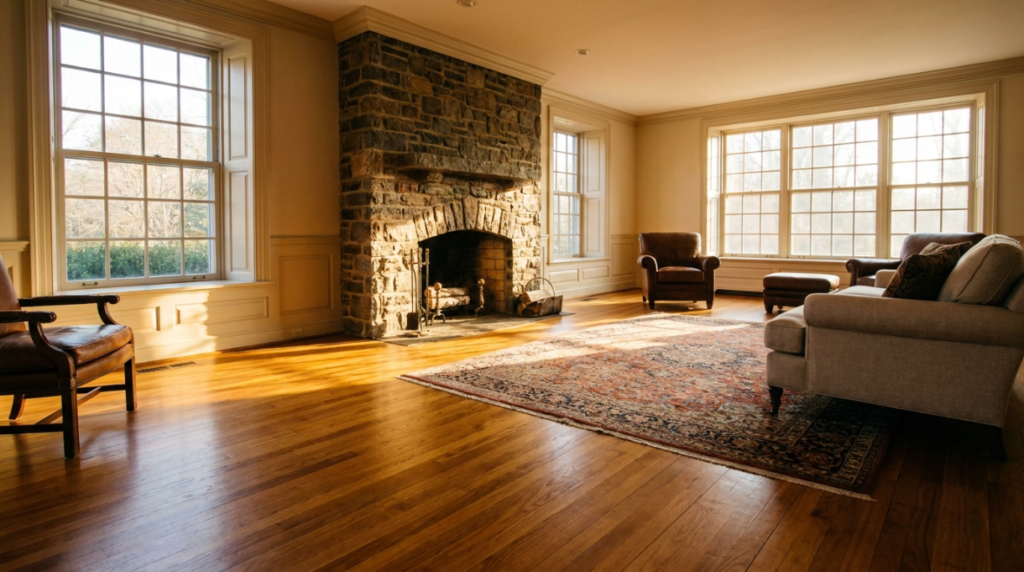
Hardwood floor refinishing removes the worn top layer of a wood floor’s finish and rebuilds it from there. It fixes surface scratches, dulled color, water spots, and light unevenness from years of foot traffic.
It won’t fix structural problems. Cupped boards from long term moisture, rotted subflooring, or planks separated by more than a hairline gap need repair before refinishing starts.
Refinishing brings back the wear layer, the solid wood above the tongue and groove joint that can still be sanded safely. Most 3/4 inch solid hardwood carries enough wear layer for 5 to 7 refinishes across its lifetime.
If you’re not sure which category your floor falls into, reach out to our Greenville team and we’ll walk through it with you.
Signs Your Greenville Home Needs Hardwood Floor Refinishing
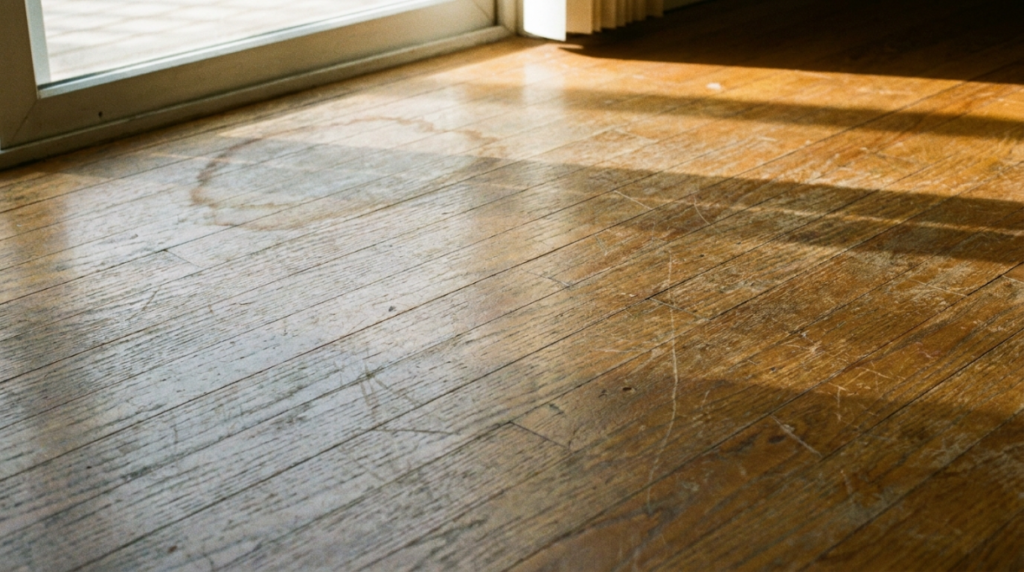
Dull, scratched, or unevenly colored wood floors are the clearest sign it’s time to look into hardwood floor refinishing in Greenville. Delaware’s humid summers and dry winter heating both take a toll on finish over time, so floors here tend to wear a little faster than in milder climates.
Check these before deciding between a light recoat and a full refinish:
- Water test: Drop water on the floor. If it beads up, the finish is still working. If it soaks in within a minute, the protective layer is gone.
- Traffic lane wear: Hallways and entryways usually dull first. Compare that wear against a spot under a rug or piece of furniture.
- Gray or black staining: Usually means water has reached bare wood. Left alone, it spreads and can eventually require board replacement.
- Scratches through the color coat: Light scuffs can often be screened and recoated. Scratches deep enough to show raw wood usually need a full sand.
- Finish age: Most finishes hold up 10 to 20 years depending on traffic and sun exposure. Past a decade untouched, it’s worth an inspection even without obvious damage.
None of these signs mean your floor needs replacement. Refinishing solves nearly all of them.
Screen and Recoat vs. Full Refinish: Which Fits Your Floor
Screen and recoat and full refinish solve different problems, and mixing them up is the most common source of disappointment homeowners run into. A screen and recoat scuffs the existing finish and adds a fresh topcoat. A full refinish sands down to bare wood and rebuilds the finish from scratch.
Screen and recoat takes about a day with very little dust. A full refinish usually takes three to five days once you count sanding, staining, and cure time between coats. That time difference is usually the deciding factor for hardwood floor refinishing in Greenville, DE.
| Factor | Screen and Recoat | Full Refinish |
|---|---|---|
| Best for | Light surface wear, dull finish, minor scuffs | Deep scratches, discoloration, gray or black staining |
| Can change stain color | No | Yes |
| Removes deep scratches | No | Yes |
| Typical time to complete | 1 day | 3 to 5 days |
| Dust generated | Minimal | Significant, unless dust contained equipment is used |
| How often it’s needed | Every 3 to 5 years on high traffic floors | Every 7 to 10 years, or when damage runs deep |
If your floor still has its original color and just looks tired, a recoat probably solves it. If you’re seeing raw wood through the finish or want a different stain altogether, plan on the full process instead.
Hardwood Floor Refinishing in Greenville, DE: What the Process Involves
Every full hardwood floor refinishing project follows the same three phases: sanding, staining, and finishing. Each one has its own equipment, and each one goes wrong fast if it’s rushed.
- Rough sanding (36-60 grit): Removes the old finish and levels unevenness between boards. Skipping grit steps here shows up later as visible scratch patterns.
- Medium sanding (80-100 grit): Smooths marks left by the rough pass and preps the wood to accept stain evenly.
- Fine sanding (100-120 grit): Creates the surface the stain and finish bond to. Finer than about 150 grit can stop stain from absorbing properly, a mistake DIY kits rarely warn you about.
- Staining (optional): Applied after vacuuming and tack clothing the floor, then dried for roughly 24 hours before finish goes on.
- Finish coats: Two to three coats of polyurethane or water based finish, each needing dry time before the next layer.
Full cure takes up to two weeks even after the floor feels dry to the touch. Moving furniture and rugs back too early is one of the most common post-refinish mistakes, and it can leave permanent marks in a finish that hasn’t fully hardened.
Our guide on sanding and refinishing breaks down the equipment and prep steps our crews follow on every project, if you want the fuller technical picture.
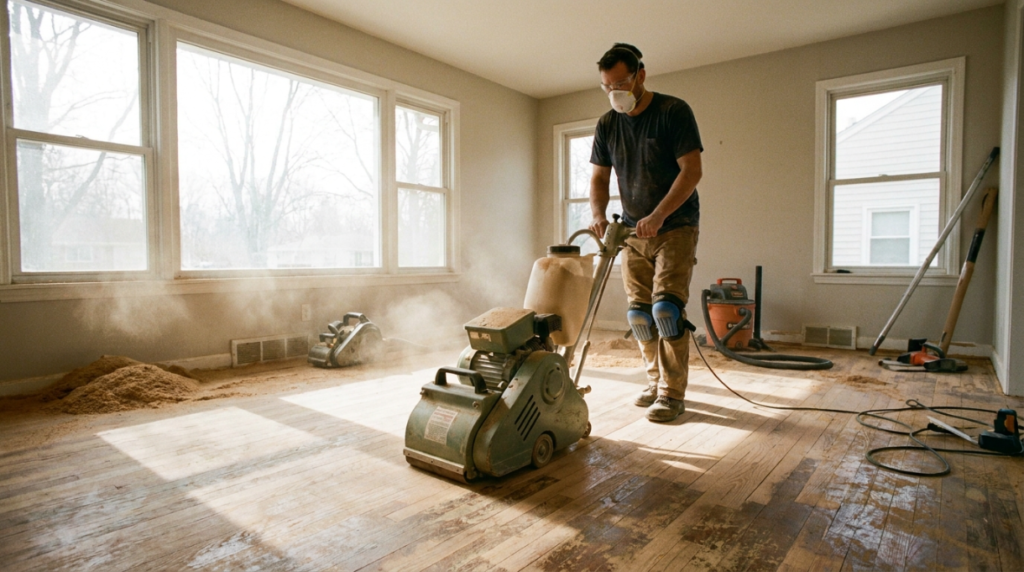
Not sure which grit sequence or finish your floor needs? Contact Prime Epoxy Flooring and we’ll assess it in person before recommending a plan.
The Trade Off Most Companies Won’t Mention
The most overlooked trade off in hardwood floor refinishing is how certain wood species react to modern finishes. Water based polyurethane dries clear and fast, but on oak and other high tannin species it can pull a faint greenish or gray cast into the finish, especially right after sanding.
This isn’t a defect. It’s a chemical reaction between the tannins in oak and the finish itself, and it shows up more on lighter stain choices.
The fix is straightforward if it’s caught before the final coats go down:
- Apply a dedicated sealer coat before the finish coats, which blocks the tannin reaction from reaching the topcoat.
- Test the stain and finish combination on a hidden section, like inside a closet, before committing to the whole floor.
- Ask your contractor which finish chemistry they use and whether your wood species is prone to this reaction.
Before you hire anyone for hardwood floor refinishing in Greenville, DE, ask them directly how they prevent this issue on oak floors. A contractor who can answer without hesitation has likely dealt with it before.
Where Hardwood Floor Refinishing Makes Sense in Greenville
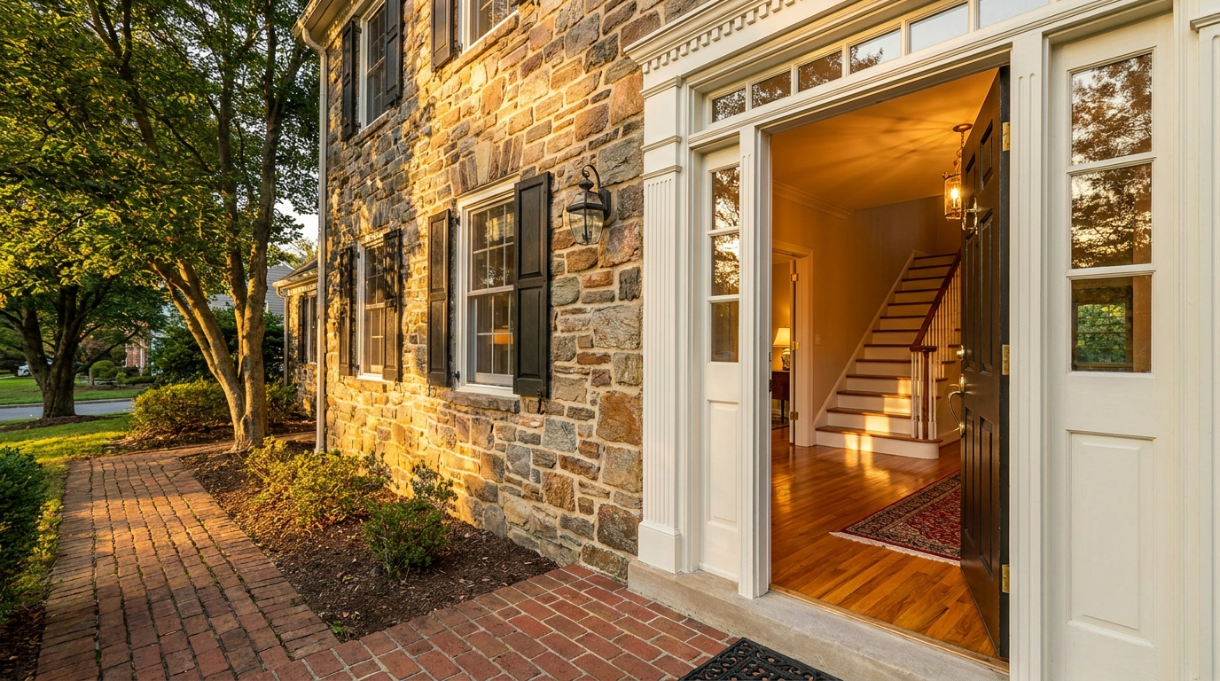
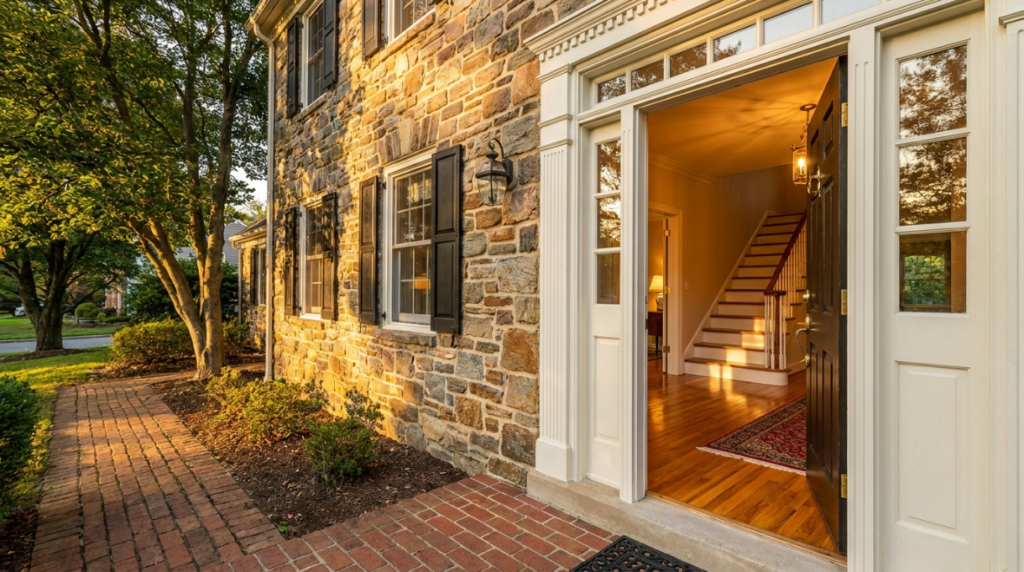
Greenville’s older neighborhoods carry some of the best candidates for refinishing rather than replacement. Homes in Westover Hills, many built in the 1920s and 1930s with stone and brick construction, still have their original solid hardwood with plenty of wear layer left for another round of hardwood floor refinishing.
A typical example: a 1930s stone colonial in Westover Hills with wide plank oak floors never refinished since the home was built. Foot traffic near the front hall and staircase had worn the finish to bare wood in places, while closed-off rooms kept their original luster. A full sand and refinish brought the whole floor back to one even color without replacing a single board.
Barley Mill Court’s brick ranchers, most built in the 1980s, tend to need the same attention as their original finish ages out. Sedgely Farms homes, many with hardwood laid under later carpet, are common candidates too once that carpet comes up.
Refinishing makes less sense in a few cases. Engineered hardwood with a veneer thinner than 2mm shouldn’t be sanded, since there isn’t enough wood above the plywood core to remove safely. A floor already refinished 5 to 7 times is nearing the point where sanding risks the tongue and groove joint. A screen and recoat, or replacement, is the safer call in both situations.
Homeowners across the area mention in their Google reviews how much cleaner our crews leave a job site compared to past refinishing experiences elsewhere, which matters most in occupied homes.
How Long a Refinished Floor Lasts
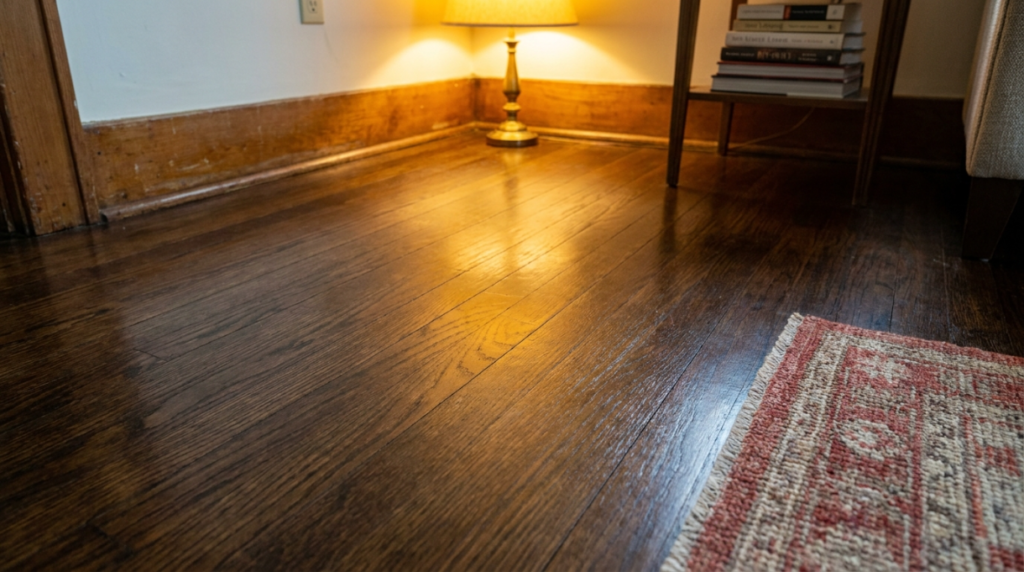
A full refinish typically holds up for 7 to 10 years before it needs attention again, though heavy traffic homes with kids or large dogs sometimes see wear closer to the 3 to 5 year mark. A screen and recoat in between full refinishes can stretch that timeline considerably.
Light wear floors in low traffic rooms can go a decade or more between refinishes. Heavy wear floors near entryways or kitchens hold up better with a recoat scheduled every few years instead of waiting for a full sand each time.
Simple habits extend that timeline further: felt pads under furniture legs, mats at exterior doors, and prompt cleanup of spills before they soak into open grain wood.
Frequently Asked Questions
What’s the difference between screen and recoat and a full hardwood floor refinish?
Screen and recoat scuffs the existing finish and adds a new topcoat, usually in a day. A full refinish sands to bare wood, allows a new stain color, and removes deep scratches. Pick recoat for dullness, full refinish for deep damage or a color change.
Can engineered hardwood floors be refinished?
It depends on the veneer thickness on engineered floors. A veneer of 3mm or more can usually handle one light sanding. Anything under 2mm should only be screened and recoated, never sanded, since there isn’t enough wood to remove safely.
How often should hardwood floors in Delaware homes be refinished?
Most solid hardwood needs a full refinish every 7 to 10 years, sooner with pets or heavy traffic. Delaware’s humid summers and dry winter heat both stress finish faster than average. A screen and recoat between full refinishes stretches that interval further.
Why do some hardwood floors turn an odd color after refinishing?
Oak and other high tannin species can react with water based polyurethane, pulling a faint greenish tint into the finish. It’s a chemical reaction with the wood, not a product flaw. A sealer coat applied first prevents most of this reaction.
What factors affect the cost of hardwood floor refinishing?
Square footage and whether you need a full sand or just a recoat are the biggest factors. Staining adds time versus a clear finish, and board repairs add more scope. A contractor can only give an accurate range after seeing the floor in person.
What should you ask a contractor before hiring them for refinishing?
Ask how much wear layer your floor has left and whether they measure it first. Ask which finish they use on oak to avoid discoloration. Ask about dust containment, since standard sanding can spread dust through your HVAC system.
Ready to Refinish Your Floors?
Whether your floor needs a quick screen and recoat or a full sand down to bare wood, getting an honest assessment first saves you from guessing. Prime Epoxy Flooring has handled hardwood floor refinishing Greenville DE homeowners have trusted for years, from historic Westover Hills colonials to newer homes throughout the area.
Contact our team to schedule an in-person assessment, or browse everything we handle across Greenville before you decide. You can also see recent work on our Instagram or check reviews on our Google Business Profile.
Considering new hardwood instead of restoring what you have? Our guide on hardwood installation in Greenville compares that option against refinishing so you can weigh both before deciding.