
Table of Contents
- Why Does Epoxy Garage Floor Cost Vary So Much Online?
- What Actually Determines Epoxy Garage Floor Cost?
- The Cost Factor Most Online Estimates Skip
- DIY vs. Professional: Where the Real Difference Comes From
- How Do You Get an Accurate Number for Your Garage?
- Is Epoxy Cheaper Than Polyaspartic or Other Garage Flooring?
- Does a Small Garage Always Cost Less to Coat?
- Does Maintenance Affect Epoxy Garage Floor Cost Over Time?
- Why Do Contractor Estimates Vary So Much for the Same Garage?
- What’s Usually Included in an Epoxy Garage Floor Cost Quote?
- What Should You Check Before Accepting a Quote?
Direct Answer: Epoxy garage floor cost depends on garage square footage, how much concrete prep is needed, the coating system you choose, and how detailed the finish is, which is why no single number applies to every garage.
Search “epoxy garage floor cost” and you’ll get a different answer from every source. One site quotes a national average, a forum thread from someone three states away swears by a completely different figure, and a contractor’s estimator tool spits out yet another range. None of them are wrong exactly, they’re just answering a question about someone else’s garage.
This guide covers what actually moves epoxy garage floor cost up or down, the one factor most online estimates skip entirely, when DIY genuinely makes sense versus when it costs you more in the long run, and how to get a number that’s actually about your space.
If you’d rather skip straight to a real answer, reach out to our team and we’ll walk your garage in person.
Why Does Epoxy Garage Floor Cost Vary So Much Online?
Epoxy garage floor cost varies so much online because most published figures are national averages, not estimates for any specific garage. A number pulled from thousands of jobs across dozens of states tells you almost nothing about a two-car garage with a cracked, oil-stained slab in New Castle County.
Regional labor rates shift the number too. A crew’s time costs differently depending on where you live, and that difference alone can separate two garages of identical size and condition.
Then there’s scope. One quote might include grinding and crack repair, another might assume a perfectly prepped slab that doesn’t exist. Comparing them side by side without knowing what’s included is comparing two different projects, not two prices for the same job.
What Actually Determines Epoxy Garage Floor Cost?
Five factors drive epoxy garage floor cost more than anything else: square footage, concrete condition, the coating system, finish complexity, and any add-on work. Here’s what each one changes and where homeowners tend to get surprised.
- Square footage: a single-car garage runs roughly 200 to 240 square feet, a two-car garage closer to 400 to 480, and a three-car garage 600 or more. Material volume and application time scale directly with that number. Common misconception: doubling the square footage doesn’t always double the labor, since setup and cleanup stay fixed regardless of size.
- Concrete condition: a smooth, crack-free slab needs light grinding and goes fast. A slab with cracks, previous coatings, or moisture issues needs diamond grinding, patching, or a moisture test before anything gets applied. Common misconception: painting over an old sealer without removing it, which almost always leads to peeling within a year or two.
- Coating system: a single-coat water-based product is the simplest system. A multi-coat build with a 100% solids epoxy base and a polyaspartic topcoat takes longer to apply but holds up to daily vehicle traffic far better. Common misconception: assuming all “epoxy” products are the same formulation.
- Finish complexity: a solid color goes down in fewer steps than a full flake broadcast or a metallic marbled finish, both of which need extra time to apply and seal correctly. Common misconception: thinking flakes are purely decorative, when a broadcast layer also adds slip resistance.
- Add-on work: baseboard coving, drain repair, and vapor barrier treatments aren’t part of a basic coating job, but they solve real problems that show up during inspection. Common misconception: expecting these to be automatically included in a base estimate.
| Factor | Keeps It Simpler | Adds Time and Materials |
|---|---|---|
| Concrete condition | Smooth, crack-free slab | Cracks, old coatings, moisture present |
| Coating system | Single-coat water-based product | Multi-coat epoxy plus polyaspartic topcoat |
| Finish | Solid color | Full flake broadcast or metallic finish |
| Scope | Coating only | Crack repair, coving, moisture barrier included |
The Cost Factor Most Online Estimates Skip
Almost every online guide stops at the price of the first job. Almost none of them mention how often you’ll be paying for it again.
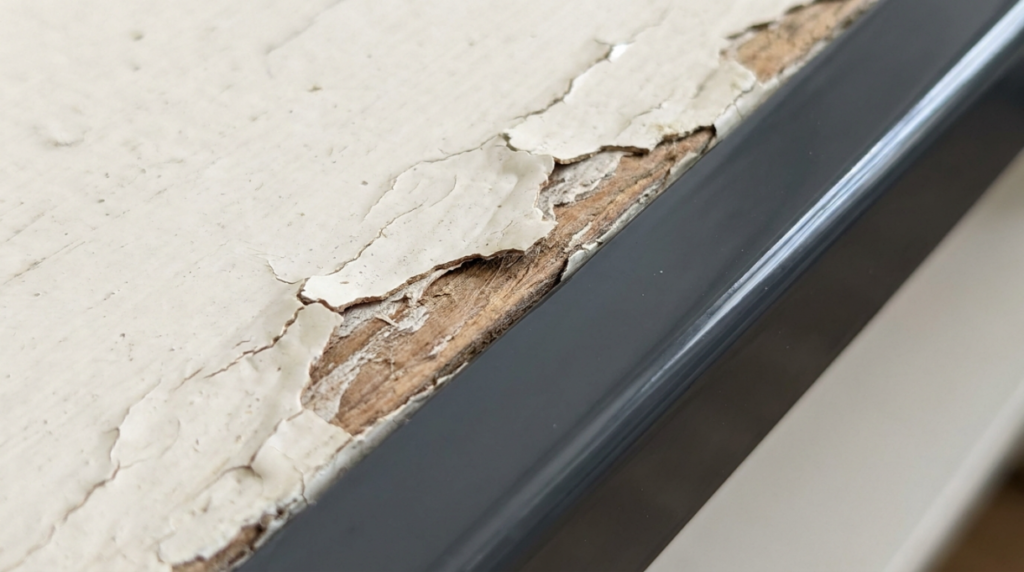
A basic water-based kit is the least expensive way to get a coated floor, but it’s also the least durable, often needing a full recoat within two to three years under regular vehicle traffic. A professional-grade 100% solids or polyaspartic system costs more upfront in time and materials, but many hold up for eight to twelve years or longer before they need attention again.
Total cost of ownership changes the comparison entirely. A few habits help you evaluate it honestly:
- Ask what the solids content of the product actually is, since a lower percentage usually means a thinner, shorter-lived coating.
- Ask what warranty length the installer offers and what voids it.
- Factor in your own time if you’re considering DIY, not just the cost of the kit.
- Ask how the floor performs under daily car traffic specifically, not just foot traffic.
Before you decide based on the lowest number you find, ask yourself one question: how many times do you actually want to redo this floor over the next decade?
DIY vs. Professional: Where the Real Difference Comes From
We hear a version of the same story often. A homeowner picks up a water-based kit from a home improvement store, gets a decent-looking floor for a few months, and then watches it start lifting at the tire paths where the car parks every day. By the time they call a professional crew, the old coating has to be ground off before anything new can go down, adding a step that wouldn’t have existed with a proper system the first time.
DIY can genuinely make sense in the right situation. A workshop or storage space with light use, a homeowner willing to recoat every couple of years, or a small area where mistakes are cheap to fix are all reasonable places to try it yourself.
Professional installation earns its place when the garage sees daily vehicle traffic, when you want the job done once instead of every other year, or when the concrete itself needs real diagnostic work like moisture testing before anything gets applied. A DIY kit takes a weekend. A properly prepped professional system takes longer up front and holds up through years of tires, salt, and oil that a thin DIY coat usually can’t.
How Do You Get an Accurate Number for Your Garage?
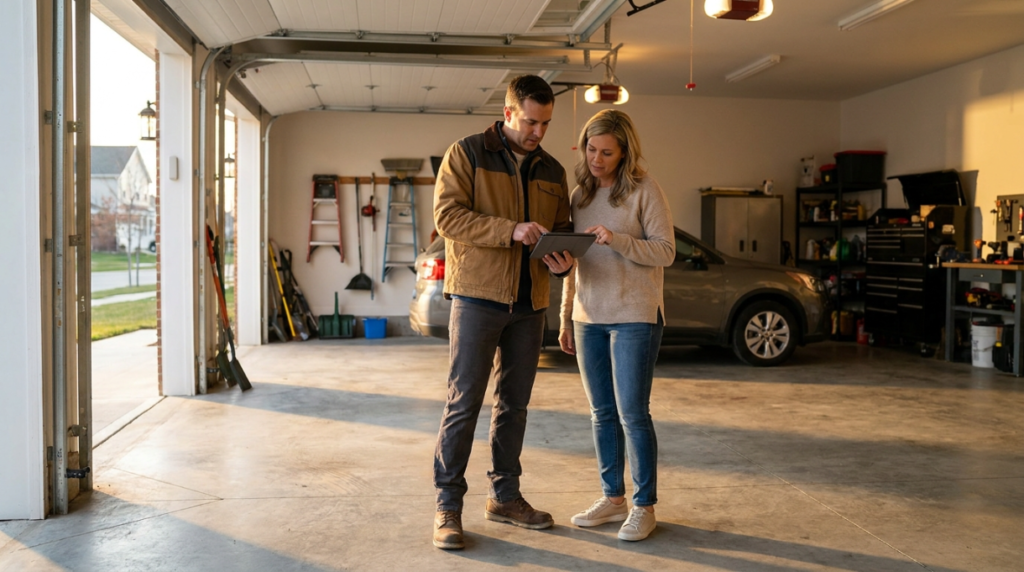
An accurate number starts with someone measuring your actual garage, not applying a national average to it. A proper walkthrough covers square footage, a visual and sometimes moisture-based inspection of the concrete, and a conversation about which system and finish fit how you use the space.
Bring any specific concerns to that conversation. Oil stains, hairline cracks near the garage door, or a slab that’s felt damp after heavy rain all change what prep work the job actually needs, and none of that shows up in a generic online range.
Our customers frequently mention in reviews how much clearer things felt once they saw their own garage assessed in person instead of guessing from an online range. Get in touch with our team and we’ll walk your space and explain exactly what your project involves before you commit to anything.
Frequently Asked Questions
Is Epoxy Cheaper Than Polyaspartic or Other Garage Flooring?
Epoxy is typically the lower entry point among professional systems, while polyaspartic costs more per coat but cures faster. Many installations combine both, using epoxy as a base layer and polyaspartic as the topcoat. The right mix depends more on how you use the garage than on either product alone.
Does a Small Garage Always Cost Less to Coat?
Not always. Setup and minimum job requirements stay fairly fixed regardless of size, so a small garage can carry a similar per-square-foot rate to a mid-sized one. Concrete condition often matters more than raw square footage. A small garage needing crack repair can take more attention than a larger garage in good shape.
Does Maintenance Affect Epoxy Garage Floor Cost Over Time?
Yes, consistent maintenance extends how long a coating performs before it needs attention again. Sweeping away grit and wiping up spills promptly reduces the wear that leads to early recoating. Skipping maintenance shortens a thinner, lower-grade coating’s lifespan the most, since it has less material to wear through.
Why Do Contractor Estimates Vary So Much for the Same Garage?
Estimates vary because contractors often bundle different scopes under the same basic description. One quote might cover grinding, crack repair, and a warranty, while another assumes a perfect slab with no guarantee. Asking each contractor to itemize what’s included is the only reliable way to compare them.
What’s Usually Included in an Epoxy Garage Floor Cost Quote?
A thorough quote covers surface prep, the specific coating system and number of coats, labor, and warranty terms. It should also specify how existing damage, like cracks or moisture, gets handled. If a quote never mentions prep work, that’s usually a sign it’s leaving out a real part of the job.
What Should You Check Before Accepting a Quote?
Confirm the quote lists square footage, the exact coating system, and what surface prep is included. Ask about warranty length and what would void it. Also ask how long the floor needs to cure before you can park on it, since that timeline affects how you plan the project.
Conclusion
There isn’t one true epoxy garage floor cost, there’s a set of factors specific to your garage that adds up to one. Square footage, concrete condition, the coating system, finish complexity, and any add-on work all play a part, and total cost of ownership matters just as much as the number on day one.
If you want a real answer instead of another national average, contact Prime Epoxy Flooring and we’ll assess your garage in person. Planning around a winter timeline instead? Our guide to epoxy garage floor winter installation breaks down how cold weather changes the process. You can also see recent projects on our Instagram or check current reviews on our Google Business Profile, and browse more answers on our FAQ page.