

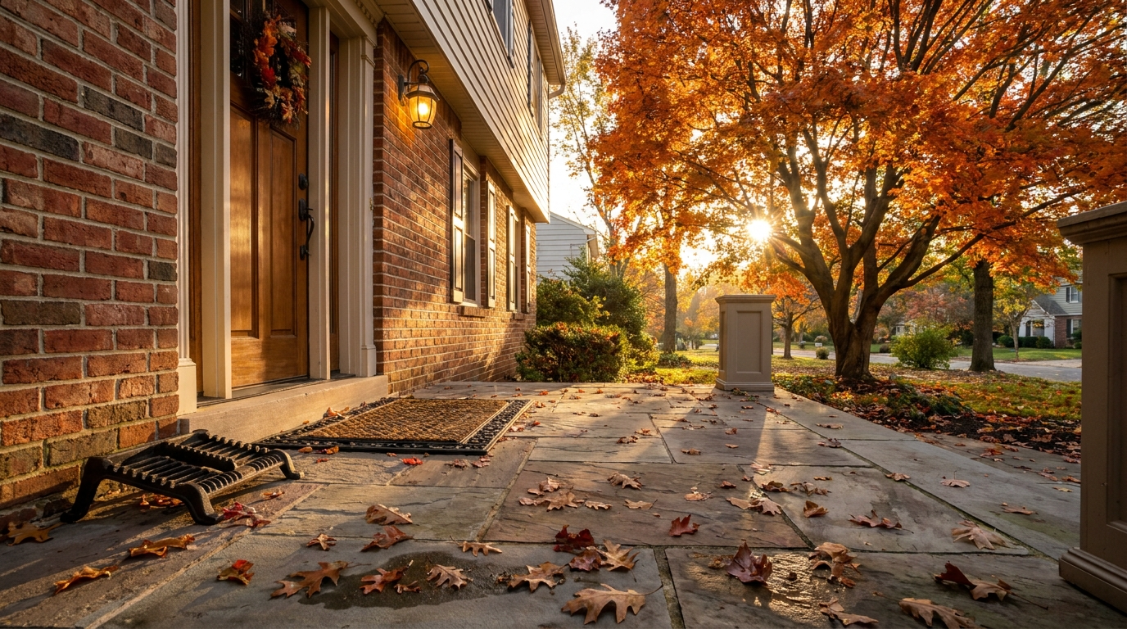
- Why Fall Weather in Delaware, Pennsylvania, and New Jersey Is Hard on Floors
- The Fall Flooring Maintenance Checklist: 6 Steps to Take Before Winter
- Fall Care by Flooring Type
- The Gap Problem Nobody Explains Properly
- Quick Reference: Flooring Type Comparison
- Where a Fall Flooring Checklist Matters Most (and Where It Doesn’t)
- Humidifier or Dehumidifier: Which Do You Need in the Fall?
- Do Luxury Vinyl Floors Need the Same Fall Care as Hardwood?
- How Often Should You Check Indoor Humidity in Fall and Winter?
- Why Do Hardwood Floors Get Small Gaps Every Fall?
- What Affects the Cost of Fall Floor Maintenance or Repair?
- What Should You Ask a Flooring Contractor Before Fall Maintenance?
Direct Answer: A fall flooring maintenance checklist for Delaware, Pennsylvania, and New Jersey homes means monitoring indoor humidity, protecting entryways from salt and moisture, and giving hardwood, tile, luxury vinyl, and epoxy floors type-specific care before winter’s dry, cold air sets in.
If you spent all summer running a dehumidifier, fall is the month homeowners across Delaware, Pennsylvania, and New Jersey most often forget to switch gears. A fall flooring maintenance checklist exists for exactly that reason: the same humidity swing that made a basement feel damp in July starts pulling moisture out of floors by late September, and the fix is the opposite of what worked all summer.
This guide covers three things. First, why the Mid-Atlantic’s fall humidity drop affects hardwood, tile, luxury vinyl, epoxy, and laminate floors differently. Second, a practical winter floor prep checklist to work through in an afternoon. Third, when a seasonal gap or squeak is normal, and when it’s worth calling a professional. If you’d rather skip ahead and talk to someone directly, you can reach our team here at any point.
Why Fall Weather in Delaware, Pennsylvania, and New Jersey Is Hard on Floors
Wood absorbs and releases moisture depending on the humidity around it. During a Mid-Atlantic summer, indoor relative humidity often sits above 55%, and hardwood, engineered wood, and laminate floors swell slightly to match it. Once heating systems switch on in October and November, indoor air dries out fast, sometimes dropping below 30% relative humidity on the coldest days. Wood gives up that summer moisture and contracts, which is the root cause of most of the seasonal issues a fall flooring maintenance checklist is meant to catch early.
This isn’t unique to any single town on our service map. We see it in older homes with original oak floors in Greenville and West Chester just as often as in newer construction in Broomall or Media. What changes is how fast the swing happens and how dry a particular home’s heating system makes the air, which is why step one of any seasonal flooring maintenance routine is measuring what’s happening indoors before assuming anything is wrong.
The Fall Flooring Maintenance Checklist: 6 Steps to Take Before Winter
Work through these six fall flooring maintenance checklist steps in order, ideally before the heating system runs for more than a few hours a day.
- Set up entry protection. Add a slip-resistant mat outside and inside every exterior door, plus a boot scraper if you have one. Wet leaves, mud, and eventually road salt are the fastest way to scratch or stain any floor finish, and stopping them at the door is easier than cleaning them off hardwood or grout later.
- Measure indoor humidity. A basic hygrometer costs less than a takeout dinner and tells you exactly where you stand. Most flooring manufacturers recommend keeping relative humidity between 35% and 55% year-round.
- Adjust humidification, not just the thermostat. If a hygrometer shows a reading below 35% once the heat kicks on, a portable or whole-home humidifier does more for floors than turning the temperature up or down.
- Walk every room and look down, not just around. Check for new gaps between hardwood or laminate boards, cracked grout lines, or lifting edges on vinyl plank. Small changes are easiest to address before winter, not after.
- Clean before sealing dirt in for the season. A deep clean in October, matched to the floor type, means less grit gets ground into the finish during the months when everyone tracks in more debris.
- Book a professional check if anything looks off. A gap wider than a credit card, a soft spot underfoot, or grout that’s crumbling rather than just discolored are worth having someone experienced look at before winter makes small problems bigger.
Fall Care by Flooring Type
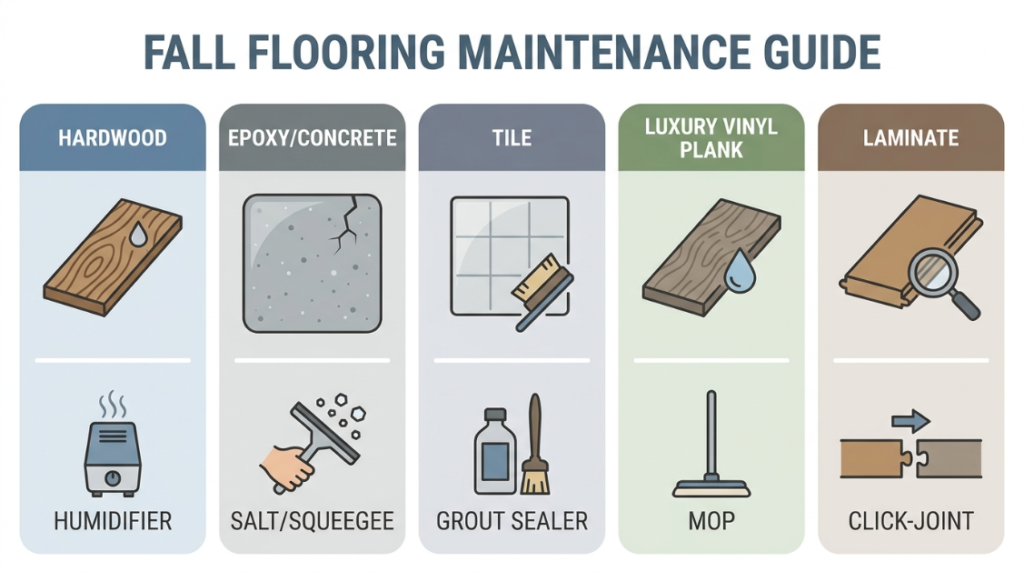
A fall flooring maintenance checklist isn’t identical for every surface. Here’s how the priorities shift by material.
- Hardwood & Engineered Wood. Keep humidity in the 35 to 55% range and expect narrow, fairly uniform gaps to open between boards as the season goes on. That’s normal wood movement, not a defect. The common mistake is aiming a space heater directly at one section of floor, which dries that area faster than the rest of the room and causes uneven gapping. If a floor needs more than seasonal care this year, our hardwood and engineered wood flooring team can take a look, and a sanding and refinishing pass is often the right fix for a finish that’s worn thin after a full summer of traffic.
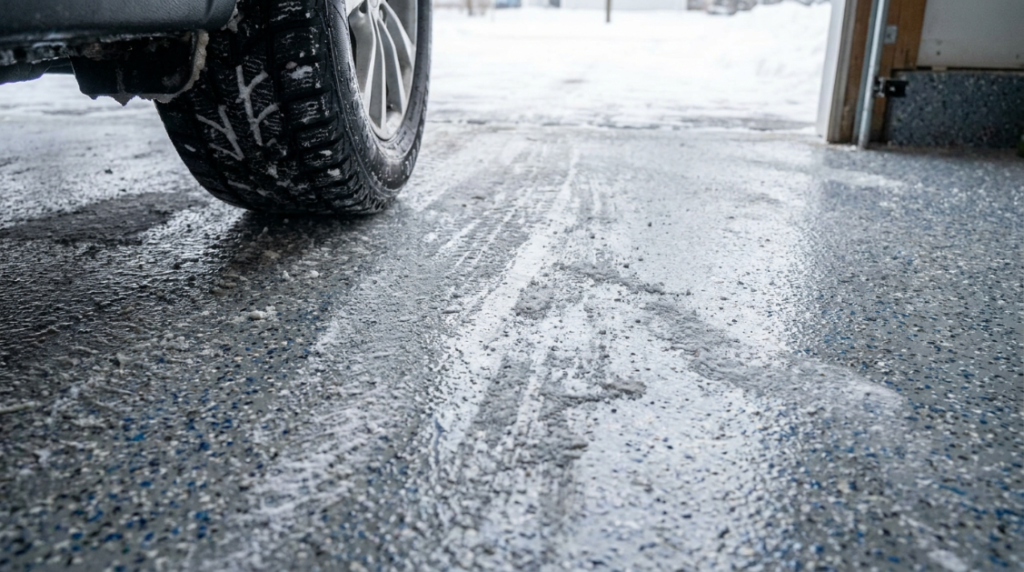
- Epoxy & Concrete (Garage Floors). The real fall risk isn’t the epoxy itself, it’s what road salt and calcium chloride do once tracked in and left to sit. Squeegee melt water and rinse with warm water every few weeks once salt season starts. The common mistake is letting brine dry into a white film and scrubbing it dry, which grinds abrasive salt crystals into the coating instead of removing them.
- Tile & Grout. Reseal grout lines before winter if it’s been more than a year, since sealed grout resists tracked-in salt and moisture far better than bare grout. The common mistake is skipping entry mats on tile because “it’s waterproof anyway,” which ignores how slippery wet tile gets and how much salt residue can dull grout over a season.
- Luxury Vinyl Plank & Tile. LVP handles snowmelt and salt better than almost any other flooring type, since it’s built to resist moisture. The common mistake is steam mopping it before winter guests arrive; the heat and moisture can damage the wear layer and void some manufacturer warranties.
- Laminate. Expect the same kind of small end-gaps hardwood gets, especially in high-traffic hallways, since laminate is a floating floor that relies on humidity-sensitive click joints. The common mistake is forcing gapped boards back together before checking whether low humidity, not a bad joint, is the actual cause.
The Gap Problem Nobody Explains Properly
Most homeowners who call us in November are worried about something that isn’t actually a problem: a handful of hairline gaps that showed up between hardwood or laminate boards sometime after Halloween. Here’s the part most winter floor prep checklists skip. Those gaps are wood physically shrinking as it releases the moisture it absorbed all summer, and in a typical Mid-Atlantic home, that shrinkage can open gaps of a millimeter or two across an entire room without anything being wrong with the installation.
What turns a normal seasonal gap into an actual problem is usually one of these:
- Running the heat aggressively with no humidification, which pushes relative humidity well below the 35% floor manufacturers recommend
- Placing a floor vent, radiator, or wood stove close enough to one section of floor that it dries faster than the rest
- A subfloor or slab that already had moisture issues before the season changed, which a hygrometer alone won’t catch
None of these mean new floors are needed. They mean the moisture balance in that specific room needs attention before spring, when the same boards will swell back and close most of those gaps on their own. Before agreeing to any repair this fall, ask the contractor how they distinguish a seasonal gap from a genuine subfloor or moisture problem, since the fix for one is a humidifier and the fix for the other is real repair work.
Quick Reference: Flooring Type Comparison
Use this chart alongside the fall flooring maintenance checklist above as a fast reference for what each floor type needs most this season.
| Flooring Type | Main Fall/Winter Risk | Priority Action This Fall | Common Mistake |
|---|---|---|---|
| Hardwood & Engineered Wood | Shrinkage gaps from low humidity | Maintain 35–55% relative humidity | Space heater aimed at one area |
| Epoxy/Concrete Garage | Salt brine and freeze-thaw damage | Squeegee and rinse salt residue regularly | Scrubbing dry salt crystals |
| Tile & Grout | Salt staining, slick surfaces | Reseal grout, add entry mats | Skipping mats because tile is waterproof |
| Luxury Vinyl Plank/Tile | Wear-layer damage from steam heat | Wipe up melt water promptly | Steam mopping before winter |
| Laminate | End-gap separation in high-traffic areas | Monitor click joints, control humidity | Forcing gapped boards together |
Where a Fall Flooring Checklist Matters Most (and Where It Doesn’t)
A fall flooring maintenance checklist matters most in homes with a mix of older, original hardwood and a finished basement or garage that sees winter traffic. Picture a 1990s two-story in Media or Broomall: oak floors upstairs, an unheated mudroom off the garage, and a driveway that gets salted every storm. That’s exactly the combination where entry mats, a hygrometer, and a fall grout reseal make a visible difference by February.
It matters less if a home already runs a whole-house humidification system tied into central HVAC, since that system handles the humidity steps automatically. It also matters less in spaces that are entirely epoxy or sealed concrete with no wood or laminate nearby, since those floors care about salt and moisture rather than humidity swings, so most of the hardwood-specific steps above simply don’t apply. And if a property sits empty over winter, like a shore home in Rehoboth Beach or Dewey Beach, the right prep looks more like full winterization than a standard seasonal checklist.
Consider a fairly typical example. A homeowner in Newark, DE with red oak floors installed in the early 2000s starts noticing gaps in mid-October and assumes the installation failed. After setting up a hygrometer and a portable humidifier once indoor humidity dipped under 30%, most of the gapping closes back down by the following spring, with no refinishing needed. Homes that skip that step tend to see the same gaps every year, sometimes wide enough that debris starts collecting in them, which is when a professional look becomes worth scheduling. If gaps at your place look wider than that, reach out for a quick evaluation before assuming the worst.
It’s a pattern that shows up in a lot of the Google reviews we get too, homeowners mentioning that our crews pointed out a small maintenance habit rather than just handling the installation itself. That kind of ongoing advice is part of what separates a one-time installer from a flooring contractor working the same region year after year. You can see recent project photos on our Instagram or read what clients say on our Google Business Profile.
Conclusion
Winter in Delaware, Pennsylvania, and New Jersey is hard on floors in ways that have nothing to do with how well they were installed. A fall flooring maintenance checklist built around measuring humidity, protecting entryways, and giving each floor type its specific care is usually the difference between a home that sails through the season and one fielding the same gap complaint every January. If the steps above still leave something looking off, our team can walk the floors and give an honest read on whether it’s seasonal movement or something worth fixing now. Get in touch here before the first hard freeze.
Frequently Asked Questions
Humidifier or Dehumidifier: Which Do You Need in the Fall?
Switch from a dehumidifier to a humidifier once the heating system runs regularly, usually by mid-to-late October in this region. Running a dehumidifier into winter makes gapping worse. Check a hygrometer first: the right device depends on whether the home currently reads above or below 35–55% relative humidity.
Do Luxury Vinyl Floors Need the Same Fall Care as Hardwood?
No. LVP and LVT don’t shrink or gap like hardwood and laminate, since their core isn’t wood-based. They still benefit from entry mats and prompt salt cleanup, but skip steam mopping, since the heat and moisture can damage the wear layer.
How Often Should You Check Indoor Humidity in Fall and Winter?
Check a hygrometer weekly once the heat runs daily, since indoor humidity can shift fast during a cold snap. Many smart thermostats show humidity alongside temperature, which makes this an easy habit. If a reading stays below 35% for more than a few days, add or adjust a humidifier.
Why Do Hardwood Floors Get Small Gaps Every Fall?
Hardwood absorbs moisture from humid summer air, then releases it once heating season dries indoor air out, and the wood physically shrinks. This creates small, fairly uniform gaps that typically close back up by late spring. It’s normal seasonal movement, not a sign of a bad installation.
What Affects the Cost of Fall Floor Maintenance or Repair?
Scope is the biggest factor: a humidity fix and a few resealed grout lines cost far less than refinishing hardwood or replacing laminate boards. Flooring type, square footage, and whether an issue is seasonal or points to a subfloor problem all affect an estimate, which a contractor can only give accurately in person.
What Should You Ask a Flooring Contractor Before Fall Maintenance?
Ask how a contractor tells normal seasonal gapping apart from an actual moisture or subfloor issue, since that changes the scope of work. Ask if they’re licensed and insured in your state, and for a plain-language explanation of what a fall visit includes.