
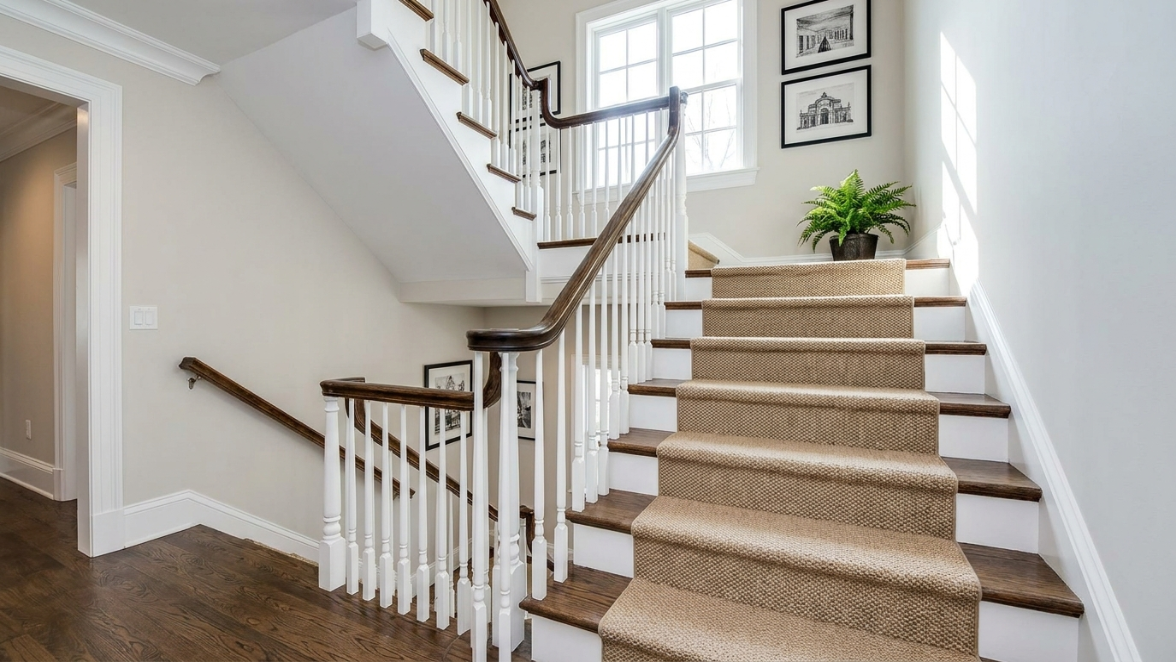
Choosing the right material for your staircase is one of the trickiest flooring decisions a homeowner can make. Stairs get more daily abuse than almost any other surface in the house, and the wrong choice can mean noise, slips, or an expensive redo within a few years. That’s why so many Wilmington-area homeowners search for a clear carpet vs hardwood vs LVP stairs comparison before committing to a material.
If you’ve been going back and forth between soft, warm carpet, classic hardwood, and budget-friendly luxury vinyl plank, you’re not alone. This guide breaks down every angle of the decision cost, durability, safety, maintenance, and resale value so you can make a confident choice for your Delaware or Pennsylvania home. Keep reading to see exactly how each option stacks up.
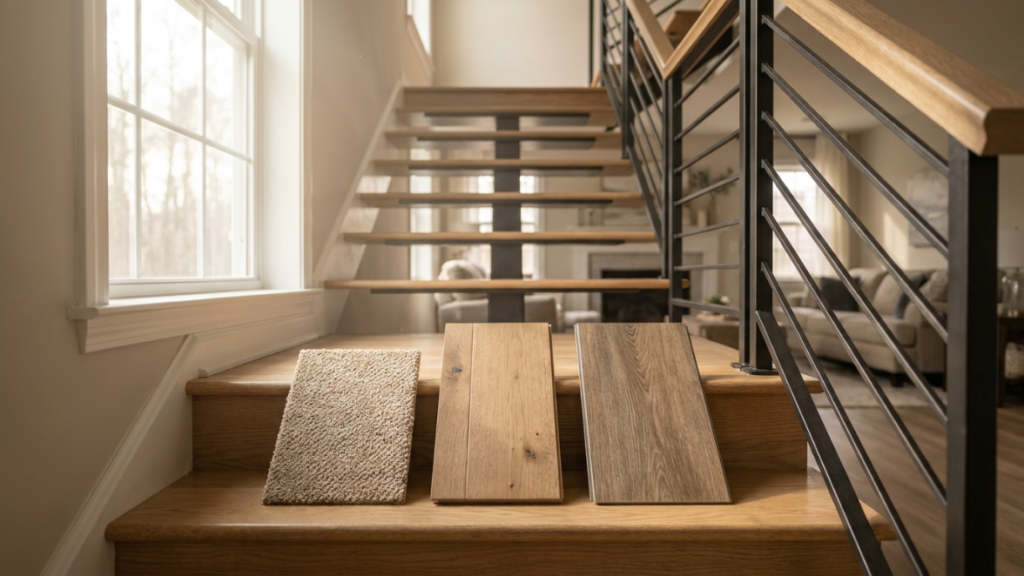
The Full Carpet vs Hardwood vs LVP Stairs Comparison at a Glance
Before diving into details, it helps to see the big picture. A quick carpet vs hardwood vs LVP stairs comparison shows that each material excels in a different category:
- Carpet wins on comfort, noise reduction, and slip resistance
- Hardwood wins on resale value, elegance, and long-term durability
- LVP wins on water resistance, budget, and low maintenance
According to HomeAdvisor’s flooring cost guide, material choice is one of the top three factors homeowners weigh when planning a staircase renovation, alongside installation labor and long-term maintenance. None of these materials is universally “best” the right pick depends on your household, your budget, and how your staircase gets used day to day.
Carpet for Stairs: Where It Fits in the Comparison
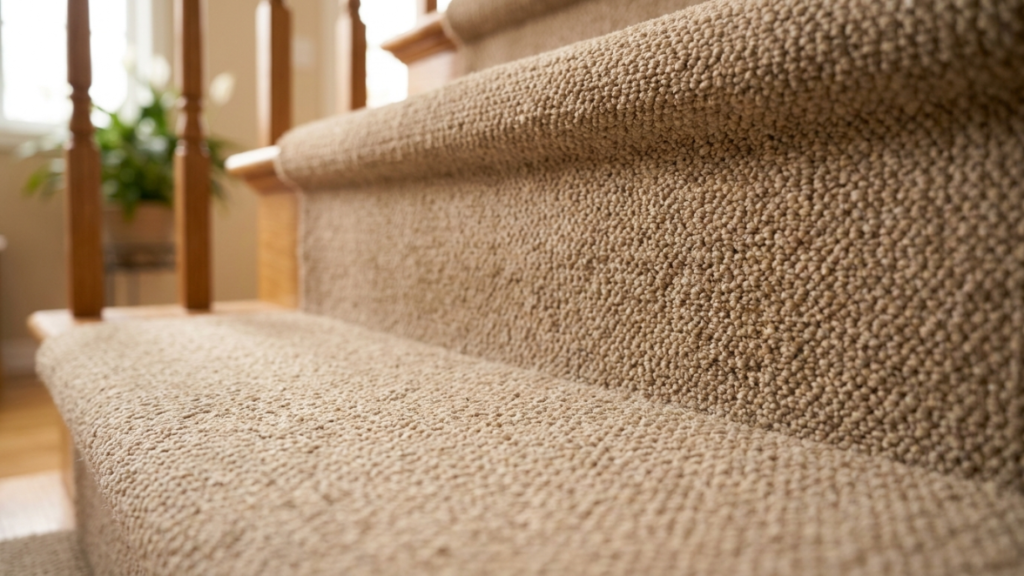
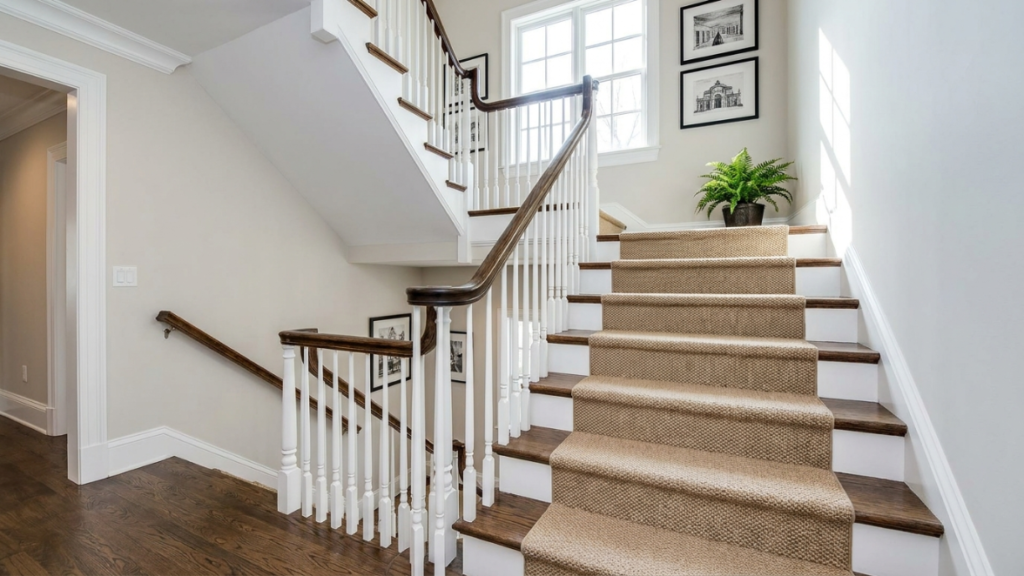
Carpet has long been the default choice for staircases, and for good reason. It muffles footsteps, feels warm underfoot, and provides natural grip that reduces slipping, a major consideration for households with young kids, seniors, or pets.
In any carpet vs hardwood vs LVP stairs comparison, carpet consistently scores highest for safety and sound absorption. Installers at Prime Epoxy Flooring frequently recommend a low-pile carpet or carpet runner for stairs in multi-level homes where noise between floors is a concern.
Carpet pros:
- Soft, cushioned feel underfoot
- Excellent slip resistance
- Reduces noise between floors
- Lower upfront material cost than hardwood
Carpet cons:
- Wears out faster on high-traffic stairs (5–10 years)
- Traps dust, allergens, and pet hair
- Stains from spills are hard to remove
- Doesn’t add resale value the way hardwood does
Hardwood for Stairs: Where It Fits in the Comparison
Hardwood stairs are the gold standard for elegance and long-term value. Solid or engineered wood treads bring warmth and character that few other materials can match, and they tend to be the feature buyers notice first when touring a home.
When homeowners run their own carpet vs hardwood vs LVP stairs comparison, hardwood usually wins on longevity, a well-maintained hardwood staircase can last 25+ years and be refinished multiple times rather than replaced. The team at Prime Epoxy Flooring installs hardwood stairs throughout Wilmington, Newark, and the surrounding Delaware and Pennsylvania suburbs. Industry data consistently shows hardwood as the top choice among buyers evaluating resale-ready homes.
Hardwood pros:
- Adds the most resale value of the three options
- Extremely durable when properly finished
- Can be sanded and refinished instead of replaced
- Timeless look that matches most home styles
Hardwood cons:
- Highest upfront installation cost
- Can be slippery without stair treads or runners
- Prone to scratching from pets and furniture
- Sound carries more (footsteps echo)
LVP for Stairs: Where It Fits in the Comparison
Luxury vinyl plank (LVP) has become the fastest-growing stair flooring option over the past several years, and for budget-conscious homeowners, it’s often the deciding factor in a carpet vs hardwood vs LVP stairs comparison. LVP mimics the look of real hardwood at a fraction of the price, while standing up to moisture, scratches, and heavy foot traffic far better than either carpet or solid wood.
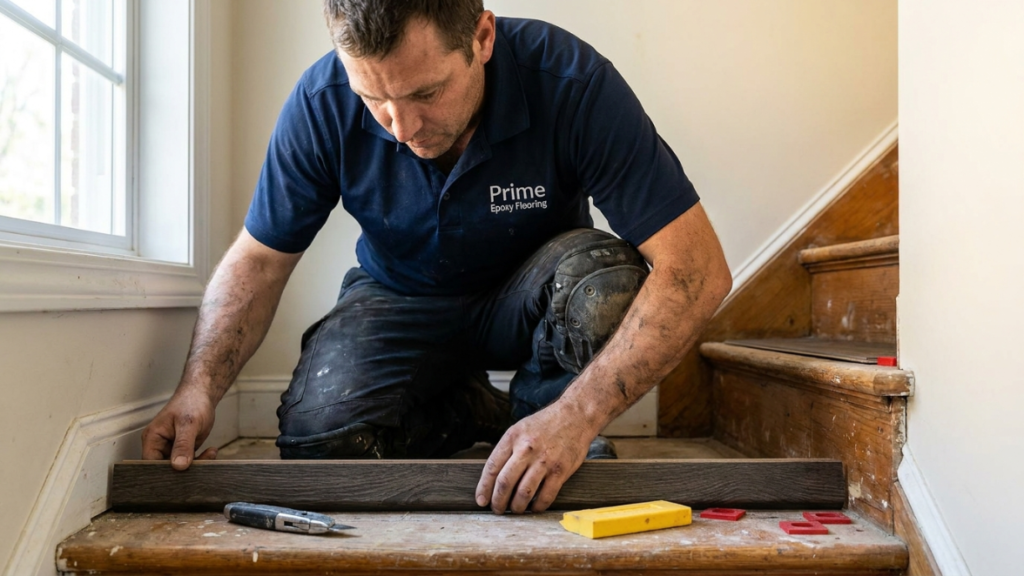
Prime Epoxy Flooring installs LVP stair treads and risers across Delaware and Pennsylvania, using stair-nose profiles specifically designed to handle the wear that regular LVP flooring doesn’t encounter. For homeowners comparing quotes, it’s worth understanding typical regional pricing before booking a project.
LVP pros:
- Waterproof and highly scratch-resistant
- Much lower cost than hardwood
- Easy to clean, no staining like carpet
- Wide range of wood-look finishes
LVP cons:
- Can feel and sound hollow underfoot
- Slightly less “premium” than real hardwood for resale
- Requires proper stair-nose installation to look finished
- Lower-grade products can look artificial
Cost Breakdown: Carpet vs Hardwood vs LVP Stairs Comparison
Budget is usually the first question homeowners ask, so here’s a straightforward cost comparison for a typical 12–14 step staircase in Delaware and Pennsylvania:
| Material | Cost Per Step (Installed) | Typical Total (13 Steps) | Lifespan |
|---|---|---|---|
| Carpet | $30–$60 | $390–$780 | 5–10 years |
| LVP | $40–$80 | $520–$1,040 | 15–20 years |
| Hardwood | $70–$150 | $910–$1,950 | 25+ years |
This is the part of the carpet vs hardwood vs LVP stairs comparison where LVP often surprises people, it lands in the middle price-wise but outlasts carpet by a wide margin, making it a strong long-term value even though the upfront cost is higher than carpet alone.
Durability and Safety in the Carpet vs Hardwood vs LVP Stairs Comparison
Safety deserves its own section because stairs are one of the most common places for household falls. Here’s how the three materials compare:
- Carpet: Best slip resistance, softest landing if someone trips
- LVP: Moderate grip, especially with textured finishes; can be slippery when wet
- Hardwood: Lowest natural grip; strongly recommend adding stair treads or a runner
For households with young children, older adults, or pets, this part of the carpet vs hardwood vs LVP stairs comparison often tips the decision toward carpet or a carpeted runner over hardwood or LVP treads. If aesthetics matter more than slip resistance, hardwood or LVP paired with a runner offers a solid middle ground.
Maintenance Differences in This Carpet vs Hardwood vs LVP Stairs Comparison
Upkeep is where the three materials diverge the most:
Carpet needs regular vacuuming, periodic deep cleaning, and quick attention to spills before they set into stains. It’s also the most likely to show visible wear patterns on the “nose” of each step within a few years.
Hardwood requires occasional refinishing (every 7–10 years depending on traffic), avoiding standing water, and using furniture pads to prevent scratches.
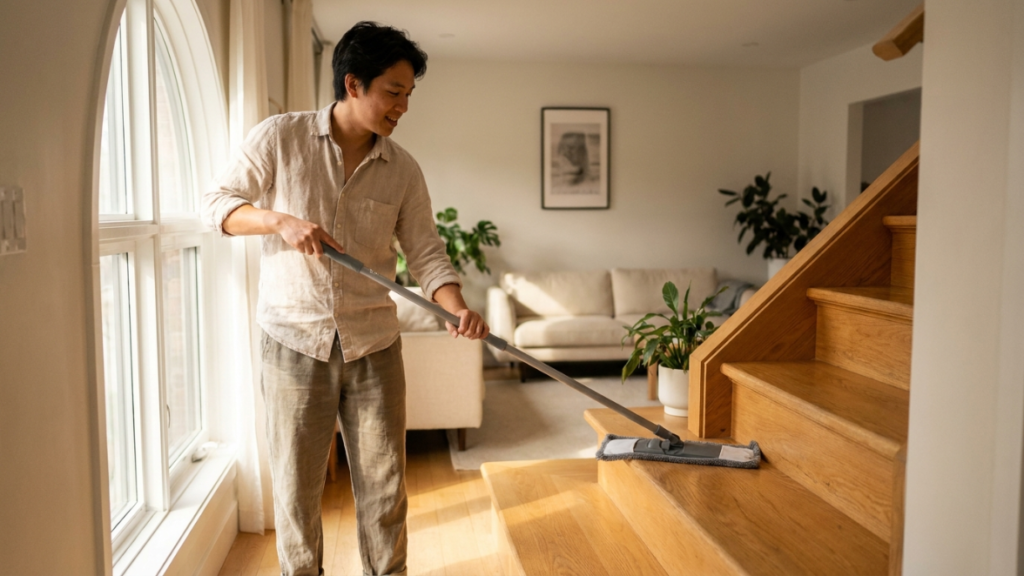
LVP is by far the lowest-maintenance option in this carpet vs hardwood vs LVP stairs comparison, a damp mop and occasional sweeping is typically all it needs, with no risk of water damage or staining.
How Wilmington Homeowners Approach the Carpet vs Hardwood vs LVP Stairs Comparison
Local climate and home style both play a role in this decision. Many Wilmington-area homes have engineered hardwood flooring throughout the main level, and homeowners often want their stairs to match, which pushes them toward hardwood or a wood-look LVP.
In homes with finished basements or families with young children, Prime Epoxy Flooring frequently sees carpet chosen purely for safety and sound control between floors. For rental properties or homes preparing for resale, LVP tends to be the practical middle ground in the carpet vs hardwood vs LVP stairs comparison durable, attractive, and budget-friendly.
Customer story: A homeowner in Newark, DE recently reached out to Prime Epoxy Flooring after her carpeted stairs showed heavy wear near the edges after just six years. After walking through a full carpet vs hardwood vs LVP stairs comparison with our team, she chose engineered hardwood with a non-slip runner down the center, combining the safety benefits of carpet with the long-term durability of wood. The project was completed in two days, and she later left a five-star Google review praising the crew’s attention to detail and clean installation.
Common Mistakes to Avoid When Choosing Stair Flooring
- Skipping slip resistance: Choosing hardwood or LVP without treads or a runner on a steep staircase
- Ignoring household needs: Picking a material based on looks alone without considering pets, kids, or elderly residents
- Underestimating installation complexity: Stair installation requires different skills than flat flooring, always work with an experienced installer
- Choosing the cheapest LVP: Low-grade vinyl can feel hollow and wear out faster on stair edges, which see more impact than flat floors
Frequently Asked Questions
Which is safest for stairs: carpet, hardwood, or LVP?
Carpet offers the best natural slip resistance. If you prefer hardwood or LVP, adding a runner or stair treads closes most of the safety gap in this carpet vs hardwood vs LVP stairs comparison.
What lasts longest on stairs?
Hardwood typically lasts the longest, 25 years or more, followed by LVP at 15–20 years, with carpet needing replacement every 5–10 years on high-traffic stairs.
Is LVP a good compromise between carpet and hardwood?
Yes. LVP offers much of hardwood’s look and durability at a lower price point, making it a popular middle choice in this comparison for homeowners who want value without sacrificing style.
Does stair flooring affect home resale value?
Hardwood adds the most resale value, followed by high-quality LVP. Carpeted stairs are generally viewed as needing replacement soon by buyers, especially if worn.
Conclusion
There’s no single winner in the carpet vs hardwood vs LVP stairs comparison, the right choice depends on your priorities. If safety and comfort matter most, carpet is hard to beat. If you want long-term value and timeless style, hardwood is the investment that pays off. And if you want durability and easy maintenance without the hardwood price tag, LVP offers the best of both worlds.
Whatever direction you lean, working with an experienced local installer makes all the difference in how the final staircase looks and performs. Ready to get started? Contact Prime Epoxy Flooring today for a free consultation on your stair flooring project in Wilmington, Newark, or the surrounding Delaware and Pennsylvania area.
Prime Epoxy Flooring
300 Cassidy Dr Ste 305, Wilmington, DE 19804
Phone: +1 (302) 600-2835 | Email: info@primeepoxyflooring.com
Hours: 8AM–5PM Mon–Fri, 8AM–12PM Sat