

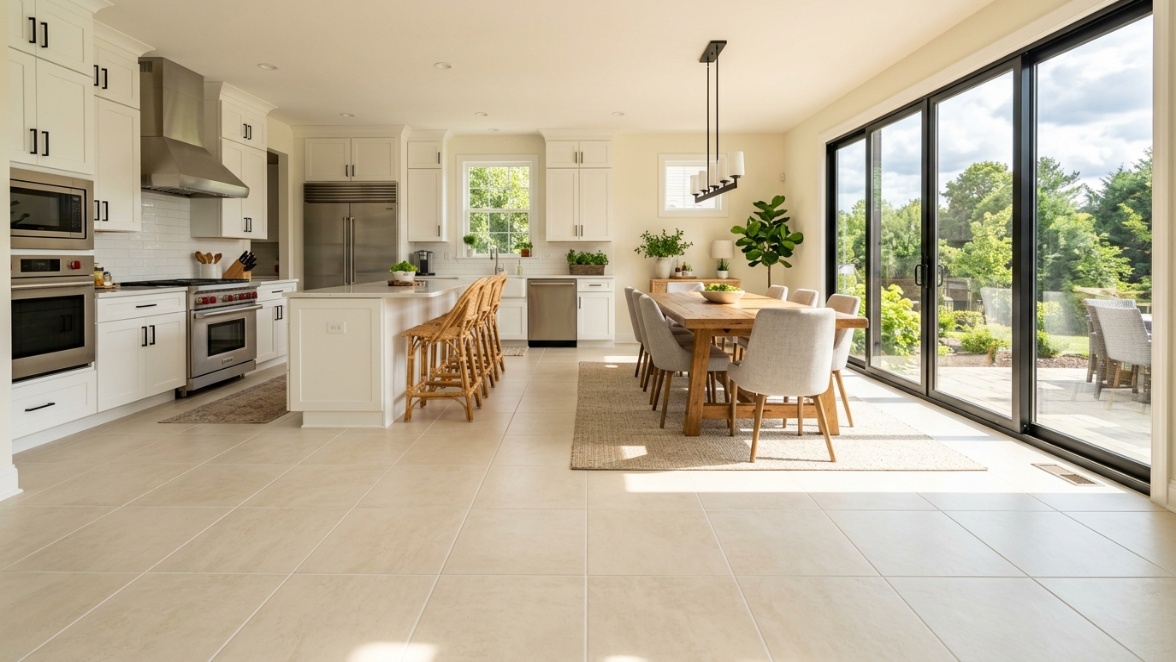
Are you tired of looking at worn, outdated flooring and wondering if you really need a full tear-out before laying new tile? Thousands of Delaware homeowners face this exact question every year. The good news is that you can install tile over existing floors Delaware homes successfully — saving real time and real money when done right.
This guide covers every scenario: when an overlay works, when it does not, what the process looks like, what it costs, and which mistakes to avoid. Keep reading to make the smartest flooring decision for your home.
Ready to get started? Request your free estimate from Prime Epoxy Flooring today.
What It Means to Install Tile Over Existing Floors Delaware Homeowners Should Know
To install tile over existing floors Delaware style means laying new ceramic, porcelain, or stone tile directly on top of a surface that is already in place — no demolition required. This approach eliminates disposal fees, reduces labor hours, and keeps mess to a minimum.
However, the existing surface must meet specific structural and moisture criteria before any tile goes down. Cutting corners here leads to cracked grout, uneven surfaces, and complete tile failure within months. Getting the assessment right upfront is what separates a 20-year floor from a 6-month disaster.
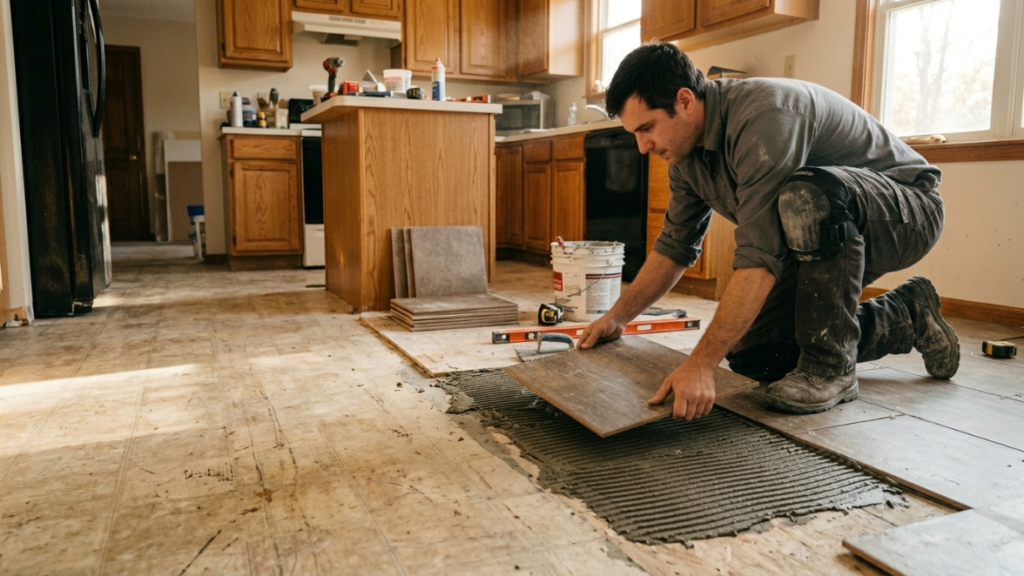
Can You Always Install Tile Over Existing Floors Delaware Properties Have?
Not always. Before any contractor can safely install tile over existing floors Delaware homes contain, several critical factors must be evaluated. Skipping this assessment is the leading cause of overlay failures in the state.
Subfloor Height and Door Clearances
A new tile layer raises the finished floor height between half an inch and three-quarters of an inch. In Delaware homes — especially older construction in Wilmington, Newark, and Bear — this can conflict with door clearances, HVAC transitions, and adjacent hallway flooring. If raising the floor creates problems at any of these points, a full tear-out becomes the better path.
Structural Integrity of the Existing Surface
Tile is rigid. If the floor beneath it flexes, the tile will crack without exception. Any contractor who agrees to install tile over existing floors Delaware properties sit on must first confirm that subfloor deflection does not exceed L/360, that no soft spots or water damage exist, and that the existing floor is firmly bonded with no hollow areas.
Floor Type Compatibility
| Existing Floor Type | Can Tile Go Over It? | Notes |
|---|---|---|
| Concrete slab | Yes | Ideal base; test for moisture first |
| Ceramic or porcelain tile | Yes (one layer only) | Must be fully bonded and level |
| Vinyl / LVP (glued down) | Often yes | Never over a floating installation |
| Hardwood | Rarely recommended | Requires backerboard; flex risk |
| Carpet | Never | Must be fully removed first |
| Plywood or OSB subfloor | Yes with backerboard | Prep is mandatory |
7 Steps to Successfully Install Tile Over Existing Floors Delaware Contractors Follow
This is the proven process that Prime Epoxy Flooring uses on every overlay project across Delaware.
Step 1: Complete a Professional Floor Assessment
A thorough inspection is non-negotiable when you plan to install tile over existing floors Delaware wide. The team checks height restrictions, subfloor flex, moisture levels, and existing adhesion quality. This step alone prevents the majority of overlay failures seen on Delaware job sites every year.
Step 2: Clean and Degrease the Entire Surface
All wax, grease, adhesive residue, and loose debris must be completely removed. Any contamination left behind breaks the mortar bond and leads to tile failure over time. Surface prep frequently takes as long as the installation itself — and should never be rushed.
Step 3: Install Cement Backerboard Where Required
For any surface with flex — plywood subfloors, single-layer vinyl — cement backerboard like Durock or HardieBacker goes down first. This creates the rigidity and bonding surface that thinset mortar needs. When professionals install tile over existing floors Delaware wood-frame homes contain, this step is almost always required.
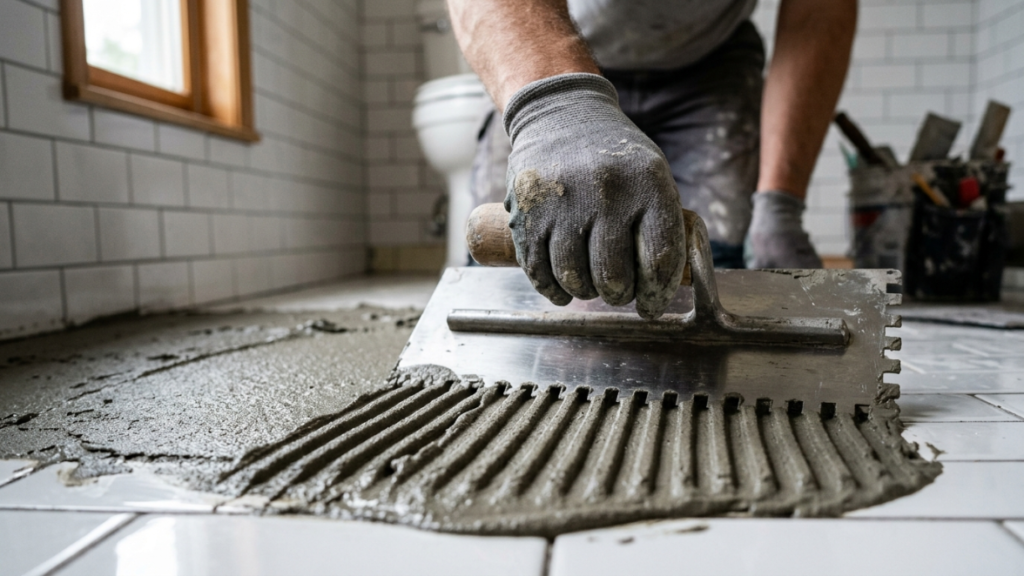
Step 4: Apply Polymer-Modified Thinset Mortar
Standard mastic is not appropriate for overlay work. A polymer-modified thinset is the minimum requirement. An uncoupling membrane like Schluter Ditra is used when tiling over existing tile or heated floor systems. The thinset type must match the specific overlay combination being used.
Step 5: Lay Tile From Center Outward With Proper Spacing
Layout always starts from the center of the room and works toward the walls. Spacers maintain consistent grout lines and a level is used constantly to prevent lippage. To properly install tile over existing floors Delaware homes have, all existing irregularities must be corrected before tiling begins — they telegraph directly through the new surface if left in place.
Step 6: Allow Full Cure Time Before Grouting
Thinset requires a minimum of 24 hours to cure. During Delaware winters — November through February — that window extends to 48 hours. Walking on uncured tile destroys the bond. This waiting period protects every dollar invested in the project.
Step 7: Grout, Clean, and Seal
Once thinset has fully cured, grout is applied with a rubber float and worked into every joint. After 72 hours, a penetrating sealer protects the grout from moisture and staining — critical in Delaware kitchens, bathrooms, and coastal homes where humidity is a year-round factor.
What Does It Cost to Install Tile Over Existing Floors Delaware Homeowners Budget For?
Cost is always a primary concern. Here is a realistic breakdown of what Delaware homeowners pay when they install tile over existing floors Delaware properties require renovating.
| Cost Factor | Estimated Range (Delaware) |
|---|---|
| Labor (overlay only) | $4 – $8 per square foot |
| Ceramic tile material | $1 – $5 per square foot |
| Porcelain tile material | $3 – $10 per square foot |
| Cement backerboard | $0.50 – $1.50 per sq ft |
| Thinset and grout | $0.75 – $1.25 per sq ft |
| Total average (200 sq ft room) | $1,200 – $3,500 |
Overlay projects cost 20 to 30 percent less than full demolition and replacement because disposal fees and demo labor are eliminated entirely. On a mid-size Delaware renovation, that is a significant difference.
When You Should NOT Install Tile Over Existing Floors Delaware Homes
Knowing when not to install tile over existing floors Delaware is just as important as knowing when you can. An honest contractor will flag these situations immediately.
Multiple Existing Layers Already Present
Delaware building codes generally limit hard floor buildup to two layers. If your home already has tile installed over vinyl, a third layer creates dangerous height transitions and structural problems no amount of skilled labor can correct.
Active Moisture Intrusion
Delaware’s mid-Atlantic climate — especially in coastal areas near Rehoboth Beach — creates elevated moisture risk. If the existing floor shows signs of moisture coming up from below, no overlay solves the problem. The source must be fixed before any tile work starts. Our team also serves Rehoboth Beach area hardwood flooring projects where moisture management is always a priority.
Significant Existing Damage
Cracked, hollow, or delaminating tile must be repaired or removed before any overlay begins. Tiling over damage transfers every flaw directly into the new surface. There is no exception to this rule when you install tile over existing floors Delaware properties require.
Delaware-Specific Factors That Affect Every Overlay Project
Humidity and Moisture Testing
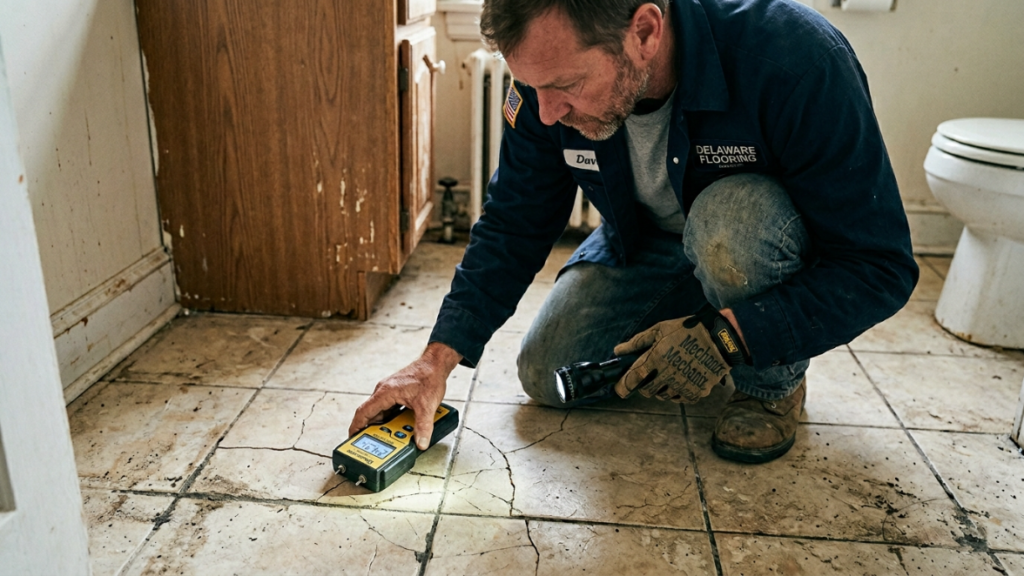
Delaware’s seasonal humidity swings are significant. Professional crews always run a calcium chloride moisture test on concrete slabs before proceeding. Emissions above 5 lbs per 1,000 square feet per 24 hours require a moisture barrier — no exceptions.
Older Homes in Wilmington, Newark, and Bear
Homes built between 1940 and 1980 in Wilmington, Newark, Bear, and Middletown often have original hardwood subfloors or older vinyl tiles beneath later layers. Pre-1980 homes may contain asbestos-bearing vinyl tiles that require licensed abatement professionals — not a step to skip when you install tile over existing floors Delaware older properties contain.
Greenville and the Brandywine Valley
High-end residential properties in Greenville and the Brandywine Valley frequently pursue tile overlay projects during kitchen and bath renovations. The area’s thicker subfloor assemblies often provide excellent stability for overlays when properly evaluated.
Real Delaware Client Story: Wilmington Bathroom Saved $2,500
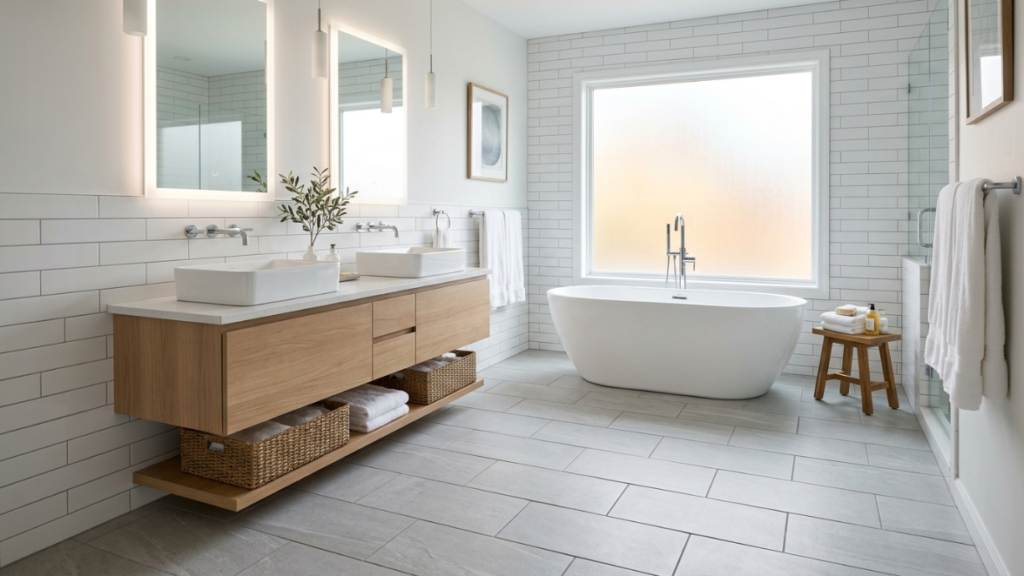
A Brandywine Hundred homeowner contacted Prime Epoxy Flooring after three contractors quoted full tear-out at $3,800 to $4,600. After a proper assessment, the Prime Epoxy Flooring team confirmed the existing floor was an ideal candidate to install tile over existing floors Delaware renovation projects can benefit from. The project used 12×24 porcelain tile with an uncoupling membrane, came in at $2,100, and finished two days ahead of the competing quotes.
Most Common Mistakes When You Install Tile Over Existing Floors Delaware Projects See
Skipping the Moisture Test
The single most common failure point. Moisture migrating up through a slab breaks the thinset bond over time, causing tiles to pop and grout to crack across the entire floor.
Wrong Adhesive Product
Polymer-modified thinset is mandatory. Standard mastic voids most tile manufacturer warranties immediately and is not rated for overlay applications.
No Plan for Height Transitions
Every doorway and floor transition must be accounted for before you install tile over existing floors Delaware homes require. Raised thresholds without proper transition strips create trip hazards and an unfinished appearance.
Tiling Over a Floating Floor
Floating vinyl plank or laminate moves with temperature and humidity. Tile bonded to a floating surface will crack within weeks. The floating floor must be removed completely before any tile work begins.
Grout Lines Aligned Over Existing Joints
New grout lines placed directly over old joints concentrate stress at a single point. Offset the new layout from the existing pattern to distribute load properly.
Tools Required to Install Tile Over Existing Floors Delaware Professionals Use
- Moisture meter and calcium chloride test kit
- Floor grinder or belt sander for leveling
- Notched trowel matched to tile format
- Cement backerboard and screws
- Polymer-modified thinset mortar
- Uncoupling membrane where needed
- Tile spacers and leveling system
- Rubber mallet and wet saw with diamond blade
- Grout float, sponge, and penetrating sealer
For most homeowners, professional-grade tool rental costs more than the labor savings from DIY. One failed installation eliminates all savings entirely. Hiring Prime Epoxy Flooring ensures the job is done right the first time. Browse the full services page or check the FAQ page for more detail.
Overlay vs. Full Replacement: The Honest Comparison
When you install tile over existing floors Delaware conditions allow, you save 20 to 30 percent versus full replacement. When conditions do not allow it — damaged subfloors, multiple existing layers, active moisture — a full replacement delivers better long-term value. The honest answer depends entirely on what your specific floor looks like after a proper assessment.
Considering alternatives? Luxury vinyl plank flooring installs as a floating floor over most surfaces with fewer requirements. Laminate flooring works well in lower-traffic rooms. Flake epoxy flooring is ideal for garages and basements. Explore completed work in the gallery.
Not sure which option fits your home? Contact Prime Epoxy Flooring for a free no-obligation consultation.
Why Delaware Homeowners Trust Prime Epoxy Flooring
Prime Epoxy Flooring operates from 300 Cassidy Dr Ste 305, Wilmington, DE 19804, serving all of Delaware and parts of southeastern Pennsylvania. Every overlay project starts with an honest assessment — no pressure, no upselling, just a clear recommendation based on what your floor actually needs.
Service areas include Smyrna, Townsend, Edgemoor, Wilmington, King of Prussia PA, Media PA, Norristown PA, Broomall PA, and Glen Mills PA. Additional flooring services include hardwood and engineered wood, stair flooring, sanding and refinishing, and decking.
Follow the team on Instagram and Facebook for project photos and local inspiration.
Frequently Asked Questions
Can you install tile over existing floors Delaware homes have without full demolition?
Yes. When the surface is structurally sound, fully bonded, level within 3/16 inch over 10 feet, and moisture-free, you can absolutely install tile over existing floors Delaware properties contain — no tear-out required.
How long does the project take?
Most 100 to 200 square foot rooms take one to two days for installation, 24 to 48 hours for thinset cure, and 72 additional hours before normal use. Delaware winters extend these windows.
How much cheaper is an overlay versus full replacement?
When you install tile over existing floors Delaware versus doing a full replacement, you typically save 20 to 30 percent by eliminating demolition labor and disposal costs entirely.
What floors cannot be tiled over?
Carpet, floating vinyl plank, floating laminate, and any floor with multiple existing hard layers underneath cannot be tiled over safely.
Does Prime Epoxy Flooring serve my area?
Prime Epoxy Flooring serves all of Delaware and parts of southeastern Pennsylvania. Contact the team directly or find them on Google Maps.
Conclusion
Now you have everything needed to make a confident decision. To successfully install tile over existing floors Delaware homes require renovating, start with an honest structural and moisture assessment, use the correct materials, and work with an experienced local contractor who understands Delaware’s climate and building stock.
When all conditions are right, an overlay delivers a beautiful, durable result at a fraction of the cost of full replacement. When they are not right, the right contractor tells you that clearly and helps you find the best path forward.
Ready to transform your floors? Contact Prime Epoxy Flooring today for your free estimate. Call +1 (302) 600-2835 or email info@primeepoxyflooring.com. Located at 300 Cassidy Dr Ste 305, Wilmington, DE 19804. Monday–Friday 8AM–5PM, Saturday 8AM–12PM.
Prime Epoxy Flooring 300 Cassidy Dr Ste 305, Wilmington, DE 19804 Phone: +1 (302) 600-2835 Email: info@primeepoxyflooring.com Hours: Monday–Friday 8AM–5PM | Saturday 8AM–12PM