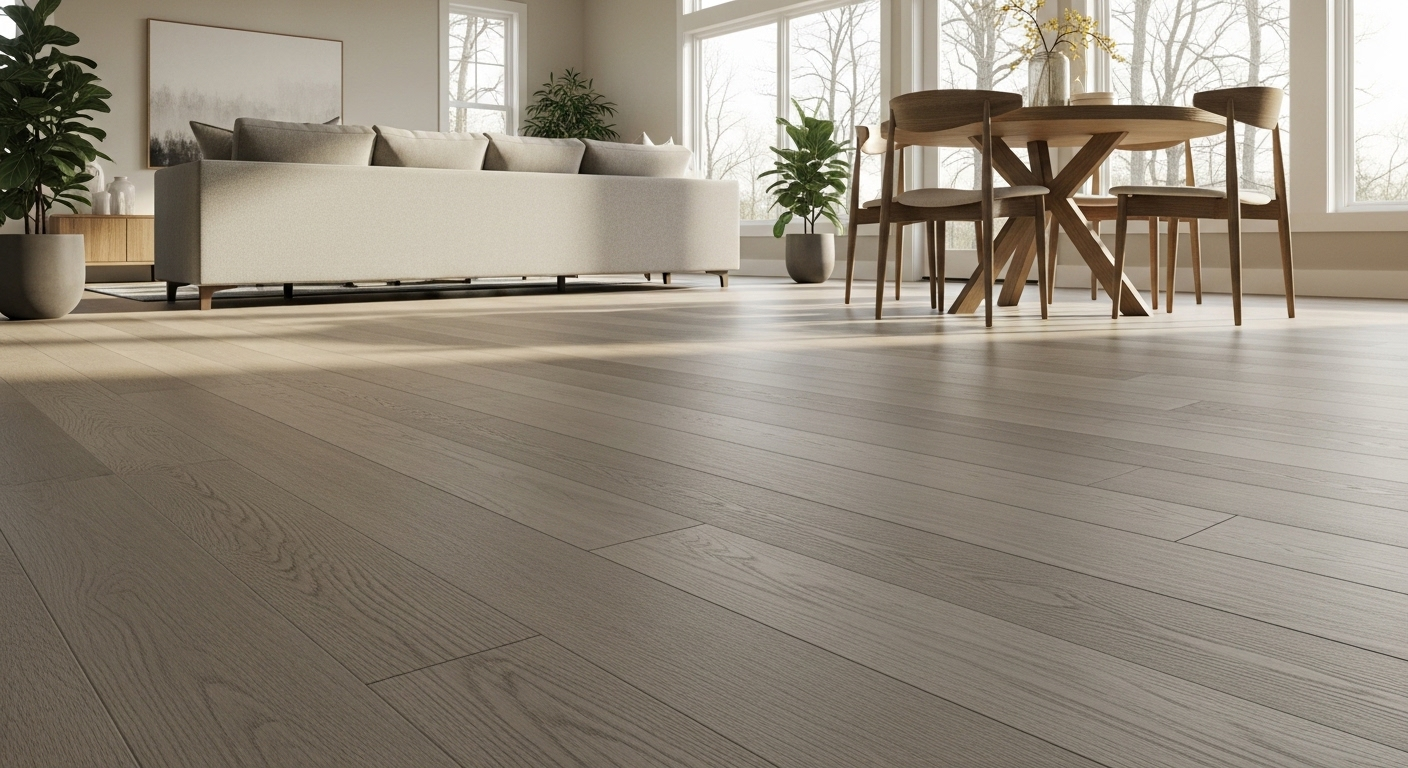
With more than a dozen popular wood species available for residential flooring, how do you know which one is actually the best hardwood flooring species for your specific home, lifestyle, and budget? Choosing the wrong species is one of the most common and costly mistakes homeowners make — and it is entirely avoidable with the right information.
The best hardwood flooring species for your home depends on several factors: the room’s traffic level, your household’s activity (pets, children, heavy furniture), your design preferences, your budget, and the local climate conditions in Delaware and Pennsylvania. Each species has a unique combination of hardness, grain pattern, color, and cost that makes it ideal for certain applications and less suitable for others.
In this complete guide, you will learn how the most popular hardwood flooring species compare across every factor that matters, which species professional installers recommend most often, and how to make the right choice for your specific home.
Continue reading to discover which best hardwood flooring species will serve your home for decades to come.
Not sure which wood species is right for your home? Get expert advice from Prime Epoxy Flooring — free consultation, no obligation.
Why Choosing the Best Hardwood Flooring Species Matters More Than You Think
Many homeowners focus on color and price when selecting hardwood flooring — and while both matter, they are secondary to species performance. The best hardwood flooring species for a high-traffic hallway is not the same as the best choice for a formal dining room or a home office.
The Janka hardness scale is the industry-standard measurement for wood hardness. It measures the force required to embed a steel ball halfway into a wood plank — the higher the number, the harder and more dent-resistant the wood. Understanding Janka ratings is essential for choosing the best hardwood flooring species for your specific application.
Here is why species selection matters beyond aesthetics:
- A species that is too soft for high-traffic areas will show dents, scratches, and wear within a few years
- A species that is too hard can be difficult to nail down and may crack during installation if not handled correctly
- Some species are more dimensionally stable than others, making them better suited for Delaware and Pennsylvania’s variable humidity conditions
- Species vary significantly in price, with domestic options like oak costing $3–$6 per square foot and exotic species reaching $9–$16 per square foot
At Prime Epoxy Flooring, we help homeowners across Delaware and Pennsylvania select the best hardwood flooring species for their specific conditions — not just the most popular or the most affordable option.
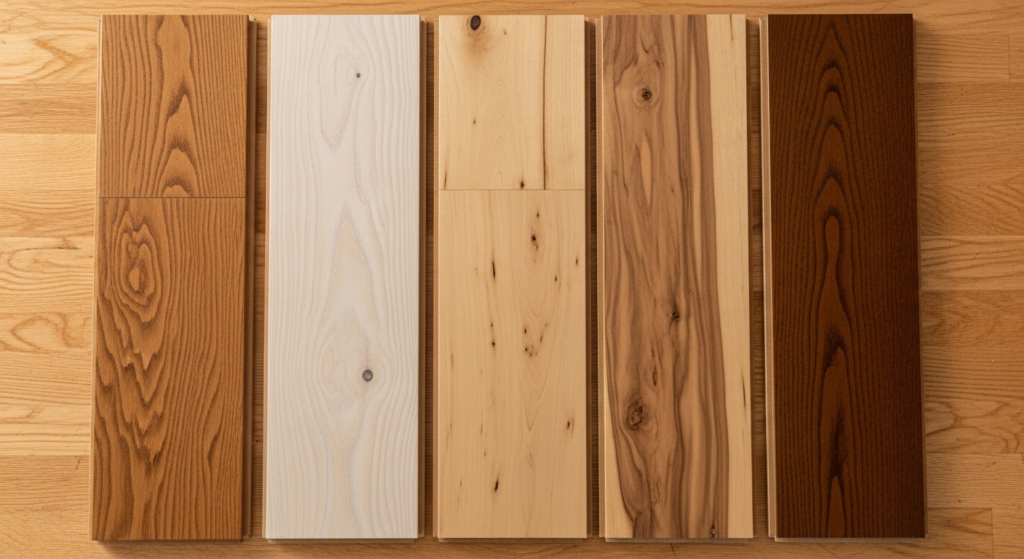
The Janka Hardness Scale: Your Essential Guide to the Best Hardwood Flooring Species
The Janka hardness rating is the single most important technical specification when evaluating the best hardwood flooring species for any application. Here is how the most popular species compare:
| Wood Species | Janka Rating | Hardness Level | Best Application | Avg. Material Cost |
|---|---|---|---|---|
| Brazilian Cherry (Jatoba) | 2,350 | Very Hard | High-traffic commercial | $8–$14/sq ft |
| Hickory | 1,820 | Very Hard | High-traffic residential | $5–$8/sq ft |
| Hard Maple | 1,450 | Hard | Kitchens, gyms, studios | $4–$7/sq ft |
| White Oak | 1,360 | Hard | Living rooms, bedrooms | $4–$6/sq ft |
| Red Oak | 1,290 | Hard | All residential areas | $3–$5/sq ft |
| Walnut | 1,010 | Moderate | Bedrooms, low-traffic areas | $6–$10/sq ft |
| Cherry | 950 | Moderate | Formal rooms, bedrooms | $5–$9/sq ft |
| Pine (Heart) | 870 | Soft | Rustic, low-traffic areas | $3–$6/sq ft |
This table gives you an immediate framework for evaluating the best hardwood flooring species for your specific needs. A Janka rating above 1,200 is generally recommended for high-traffic residential areas. Ratings below 1,000 are better suited for low-traffic rooms or decorative applications.
The Best Hardwood Flooring Species Reviewed: A Complete Comparison
Red Oak: The Most Popular Best Hardwood Flooring Species in America
Red oak is consistently the best-selling hardwood flooring species in the United States, and for good reason. With a Janka rating of 1,290, it offers excellent durability for most residential applications while remaining one of the most affordable options on the market.
Key characteristics of red oak:
- Warm reddish-brown tones with prominent grain patterns
- Janka rating of 1,290 — suitable for all above-grade residential areas
- Accepts stain exceptionally well, offering wide design flexibility
- Available in a wide range of widths, grades, and finishes
- Material cost: $3–$5 per square foot
Best applications: Living rooms, bedrooms, hallways, dining rooms, and staircases in homes with moderate to high foot traffic.
Limitations: The prominent grain pattern and reddish undertones do not suit every design aesthetic. It is also slightly softer than white oak, making it marginally less resistant to dents in very high-traffic areas.
Red oak is one of the most frequently installed species by Prime Epoxy Flooring across Wilmington, DE and Newark, DE, where its combination of affordability, durability, and design flexibility makes it a consistent top choice.
White Oak: The Best Hardwood Flooring Species for Modern Design
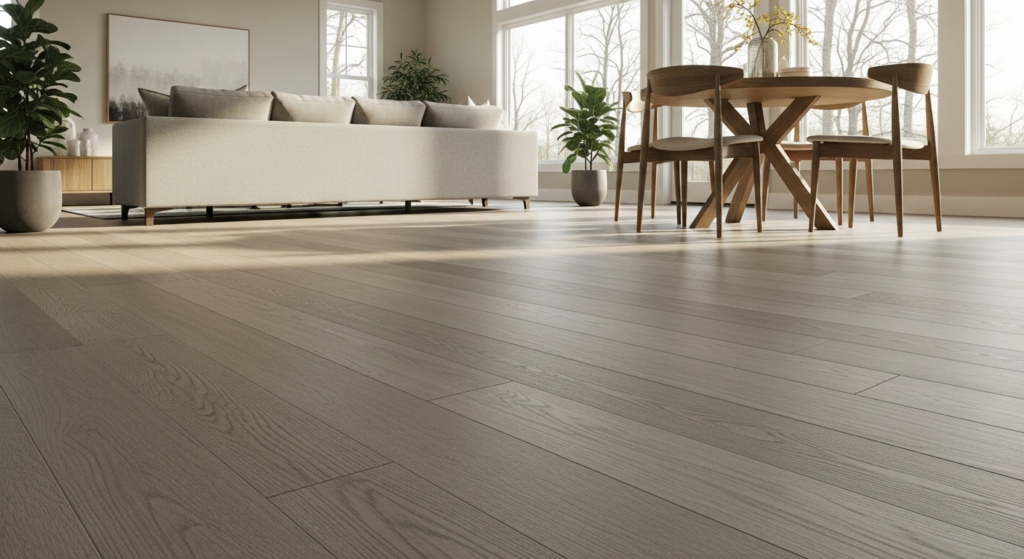
White oak has surged in popularity over the past five years and is now widely considered the best hardwood flooring species for contemporary and transitional interior design. With a Janka rating of 1,360 — slightly harder than red oak — it offers excellent durability alongside a more neutral, versatile aesthetic.
Key characteristics of white oak:
- Cool gray-brown tones with a tighter, more subtle grain pattern than red oak
- Janka rating of 1,360 — excellent for all residential applications
- Responds beautifully to wire-brushing and matte finishes, which are dominant trends in 2026
- More dimensionally stable than red oak, making it a better choice for Delaware and Pennsylvania’s variable humidity
- Material cost: $4–$6 per square foot
Best applications: Open-plan living areas, master bedrooms, kitchens, and any space where a modern or Scandinavian aesthetic is desired.
Limitations: Slightly more expensive than red oak. The neutral tones that make it so versatile can also make it appear flat in rooms with limited natural light.
White oak is currently the most requested best hardwood flooring species among homeowners in King of Prussia, PA, Media, PA, and Greenville, DE, where modern and transitional home designs are prevalent.
Hard Maple: The Best Hardwood Flooring Species for Durability
If durability is your primary concern, hard maple is one of the best hardwood flooring species available for residential use. With a Janka rating of 1,450, it is significantly harder than both red and white oak, making it exceptionally resistant to dents and scratches in high-traffic environments.
Key characteristics of hard maple:
- Light, creamy white to pale golden tones with a fine, uniform grain
- Janka rating of 1,450 — one of the hardest domestic species available
- Extremely smooth surface that is easy to clean and maintain
- The same species used for professional basketball courts and bowling alleys
- Material cost: $4–$7 per square foot
Best applications: Kitchens, hallways, entryways, homes with large dogs, and any high-traffic area where maximum scratch resistance is a priority.
Limitations: Hard maple is notoriously difficult to stain evenly due to its dense, closed grain. It is best used with natural or light finishes. Its light color also shows dirt and pet hair more readily than darker species.
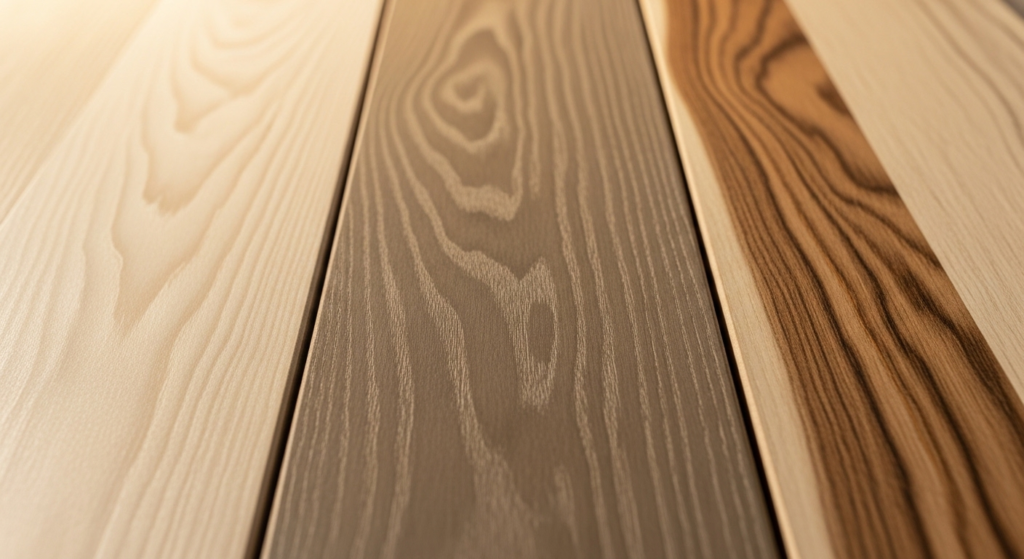
Hickory: The Best Hardwood Flooring Species for Extreme Durability
Hickory is the hardest domestic hardwood species commonly used for residential flooring, with a Janka rating of 1,820. It is the best hardwood flooring species for homeowners who need maximum durability and want a bold, distinctive aesthetic.
Key characteristics of hickory:
- Dramatic color variation ranging from creamy white to deep brown within a single plank
- Janka rating of 1,820 — the hardest widely available domestic species
- Highly resistant to dents, scratches, and heavy foot traffic
- Bold, rustic grain pattern with significant natural character
- Material cost: $5–$8 per square foot
Best applications: High-traffic hallways, mudrooms, homes with multiple large dogs, rustic and farmhouse-style interiors, and any space where maximum durability is the top priority.
Limitations: The dramatic color variation and bold grain pattern are not suited to minimalist or contemporary design aesthetics. Hickory is also harder to work with during installation, which can increase labor costs slightly.
For homeowners in Middletown, DE, Bear, DE, and Smyrna, DE who have active households with children and pets, hickory is frequently the best hardwood flooring species recommendation from our installation team.
Walnut: The Best Hardwood Flooring Species for Luxury Aesthetics
American black walnut is widely regarded as the most beautiful domestic hardwood species, and it is the best hardwood flooring species for homeowners who prioritize aesthetics and are willing to accept a moderate reduction in hardness.
Key characteristics of walnut:
- Rich, deep chocolate brown tones with a straight, elegant grain pattern
- Janka rating of 1,010 — softer than oak and maple, but still suitable for most residential applications
- Develops a beautiful patina over time that adds character and depth
- One of the most sought-after species for luxury residential and commercial interiors
- Material cost: $6–$10 per square foot
Best applications: Master bedrooms, home offices, formal living rooms, dining rooms, and any space where visual impact and luxury aesthetics are the primary goal.
Limitations: Walnut’s lower Janka rating makes it less suitable for high-traffic areas or homes with large dogs. It is also one of the more expensive domestic species, with material costs starting at $6 per square foot.
Cherry: A Distinctive Best Hardwood Flooring Species for Traditional Interiors
American cherry is one of the most distinctive best hardwood flooring species options for homeowners who prefer traditional or transitional interior design. Its warm reddish tones and smooth grain create an elegant, refined appearance that improves with age.
Key characteristics of cherry:
- Warm reddish-brown tones that deepen and enrich over time with light exposure
- Janka rating of 950 — softer than oak, best suited for low to moderate traffic areas
- Smooth, fine grain with minimal variation — creates a clean, formal appearance
- Material cost: $5–$9 per square foot
Best applications: Formal dining rooms, master bedrooms, home libraries, and traditional-style homes where the floor’s evolving patina is considered a feature rather than a flaw.
Limitations: Cherry’s relatively low Janka rating limits its suitability for high-traffic areas. Its tendency to darken significantly with light exposure means the floor’s appearance will change noticeably over the first few years.
Exotic Species: Premium Best Hardwood Flooring Species Options
For homeowners seeking the ultimate in hardness, uniqueness, or visual impact, exotic species represent the premium tier of best hardwood flooring species options.
Brazilian Cherry (Jatoba): Janka rating of 2,350 — nearly twice as hard as red oak. Deep reddish-brown tones that darken dramatically over time. Material cost: $8–$14 per square foot.
Teak: Janka rating of 1,155. Natural oils make it exceptionally resistant to moisture and insects. Warm golden-brown tones. Material cost: $9–$16 per square foot.
Tigerwood: Janka rating of 1,850. Dramatic striped grain pattern in orange-brown tones. Material cost: $7–$12 per square foot.
Limitations of exotic species: Higher cost, longer lead times, potential sustainability concerns, and in some cases, more significant color change over time. Always verify FSC certification when purchasing exotic species.
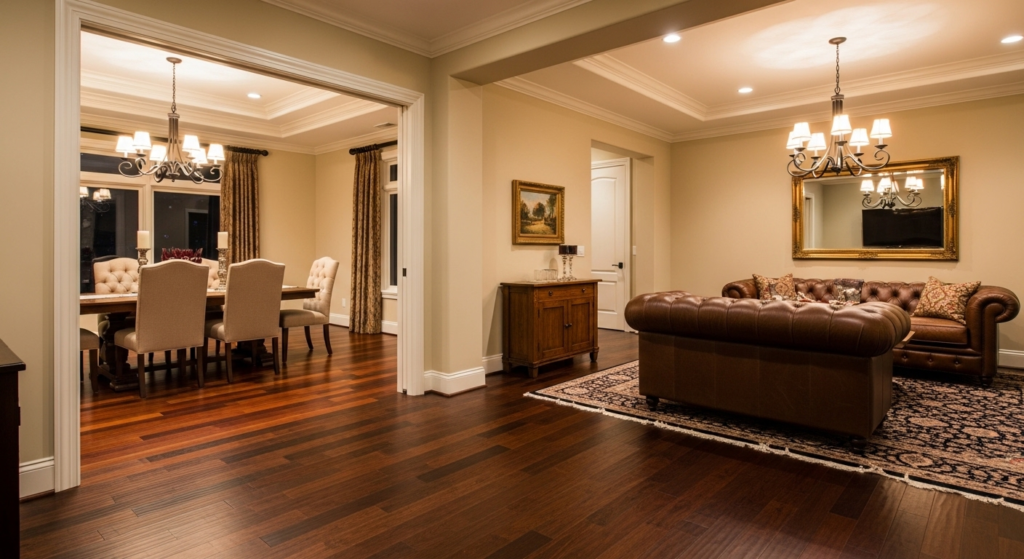
How to Choose the Best Hardwood Flooring Species for Your Specific Home
Selecting the best hardwood flooring species requires matching the product to your specific conditions. Here is a practical decision framework:
Step 1: Assess Your Traffic Level
High traffic (hallways, entryways, kitchens, homes with pets): Choose a species with a Janka rating above 1,400. Best options: hickory (1,820), hard maple (1,450), white oak (1,360).
Moderate traffic (living rooms, dining rooms, open-plan areas): A Janka rating of 1,200–1,400 is appropriate. Best options: white oak (1,360), red oak (1,290).
Low traffic (bedrooms, home offices, formal rooms): A Janka rating below 1,200 is acceptable. Best options: walnut (1,010), cherry (950).
Step 2: Consider Your Design Aesthetic
Modern and contemporary: White oak with a matte or wire-brushed finish is the best hardwood flooring species choice for clean, minimalist interiors.
Traditional and transitional: Red oak, cherry, or walnut deliver the warmth and character that complement traditional design.
Rustic and farmhouse: Hickory’s dramatic color variation and bold grain make it the best hardwood flooring species for rustic aesthetics.
Luxury and formal: Walnut or Brazilian cherry create the visual impact appropriate for high-end interiors.
Step 3: Factor in Your Budget
Budget-conscious: Red oak offers the best combination of durability, beauty, and affordability among the best hardwood flooring species options.
Mid-range: White oak, hard maple, and hickory deliver excellent performance at a moderate price premium over red oak.
Premium: Walnut, cherry, and exotic species command higher prices but deliver distinctive aesthetics that justify the investment in the right context.
Step 4: Consider Delaware and Pennsylvania’s Climate
Delaware and Pennsylvania experience significant seasonal humidity swings — hot, humid summers and cold, dry winters. This climate variability affects all wood species, but some handle it better than others.
White oak is particularly well-suited to this region because of its superior dimensional stability. Red oak and hickory also perform well. Walnut and cherry require more careful humidity management to prevent gapping in winter.
For homes in Rehoboth Beach, DE and Edgemoor, DE — where coastal humidity is a year-round factor — engineered versions of the best hardwood flooring species are often recommended over solid hardwood. Explore our hardwood and engineered wood flooring services for more information.
Best Hardwood Flooring Species by Room: A Practical Room-by-Room Guide
Here is the best hardwood flooring species recommendation for each room type:
Living Room: White oak or red oak — both offer the right balance of durability, beauty, and design versatility for the home’s most visible space.
Kitchen: Hard maple or white oak — both handle moderate moisture exposure and foot traffic well. Engineered versions are recommended for kitchens with concrete subfloors.
Master Bedroom: Walnut or cherry — lower traffic levels allow for softer, more visually striking species that create a luxurious atmosphere.
Hallways and Entryways: Hickory or hard maple — maximum hardness is essential in these high-impact transition areas.
Home Office: Walnut or white oak — both create a professional, refined environment appropriate for a workspace.
Stairs: Red oak, white oak, or hickory — durability is paramount on stairs, where concentrated foot traffic creates significant wear. Prime Epoxy Flooring offers dedicated stair flooring services for homeowners who want a cohesive species throughout their home.
Basement: Engineered versions of any species — solid hardwood of any species is not recommended for below-grade installations due to moisture risk.
Get Expert Help Choosing the Best Hardwood Flooring Species for Your Home
The best hardwood flooring species decision is one of the most important choices in any flooring project. The team at Prime Epoxy Flooring has helped hundreds of homeowners across Delaware and Pennsylvania select the right species for their specific conditions, lifestyle, and design goals. Schedule your free in-home consultation today — we will assess your space and give you an honest, expert recommendation.
Real Customer Stories: Choosing the Best Hardwood Flooring Species in Delaware and Pennsylvania
Hearing from homeowners who have navigated the best hardwood flooring species decision firsthand is invaluable. Here is what customers of Prime Epoxy Flooring have shared:
“We were debating between white oak and walnut for our open-plan living and dining area. Prime Epoxy Flooring helped us understand that white oak was the better choice for our lifestyle — we have two dogs and three kids. The floors are absolutely beautiful and have held up perfectly.” — Thomas B., Wilmington, DE
“I wanted hickory for our mudroom and hallway because I knew we needed maximum durability. Prime Epoxy Flooring sourced a beautiful wide-plank hickory and the installation was flawless. Two years later, the floors look as good as the day they were installed.” — Michelle A., Norristown, PA
“We chose walnut for our master bedroom and home office. The color and grain are stunning — it completely transformed both rooms. Prime Epoxy Flooring’s team was knowledgeable, professional, and delivered exactly what they promised.” — Steven C., Broomall, PA
You can verify these reviews and find our location on Google Maps. Follow our latest projects on Instagram and Facebook.
Common Mistakes Homeowners Make When Choosing the Best Hardwood Flooring Species
Avoiding these mistakes will save you money, frustration, and the cost of premature replacement:
Choosing species based on color alone. Color is important, but hardness, grain stability, and dimensional performance are equally critical. Many homeowners choose walnut or cherry for their beauty and then regret the decision when the floors show wear in high-traffic areas.
Ignoring the Janka hardness rating. The Janka rating is the most reliable predictor of how a species will perform in your specific application. Always check the rating before making a final decision on the best hardwood flooring species for your home.
Selecting an exotic species without verifying sustainability. Exotic species can be beautiful and extremely durable, but always verify FSC certification to ensure the wood was sourced responsibly.
Choosing a species that does not suit the local climate. Delaware and Pennsylvania’s humidity swings require species with good dimensional stability. White oak and hickory handle these conditions better than cherry or walnut, which require more careful humidity management.
Overlooking the refinishing implications of species choice. Some species — particularly hard maple — are difficult to stain and refinish evenly. If you plan to change the floor’s color in the future, choose a species that accepts stain well, such as red oak or white oak.
Not considering the full cost of ownership. A more expensive species that lasts 80 years with multiple refinishing cycles may be more cost-effective than a cheaper species that requires replacement in 20 years. Always evaluate the best hardwood flooring species decision in terms of total lifetime cost, not just upfront price.
Best Hardwood Flooring Species and Refinishing: What You Need to Know
Regardless of which best hardwood flooring species you choose, professional refinishing is the key to maximizing its lifespan and protecting your investment. Over time, all hardwood floors — regardless of species — will show surface wear, scratches, and finish degradation. Professional refinishing removes this damage and restores the floor to like-new condition.
The refinishing process involves:
- Sanding the surface to remove the existing finish and surface damage
- Applying stain if a color change is desired
- Applying multiple coats of polyurethane or oil-based finish
- Buffing between coats for a smooth, durable result
The best hardwood flooring species for refinishing are those with open grain structures that accept stain evenly — red oak, white oak, and hickory are all excellent candidates. Hard maple and cherry are more challenging to refinish due to their dense, closed grain structures.
Prime Epoxy Flooring offers professional sanding and refinishing services for all hardwood species across Delaware and Pennsylvania. Whether your floors are red oak, white oak, walnut, hickory, or an exotic species, our team has the expertise to restore them beautifully.
Best Hardwood Flooring Species vs. Alternative Flooring Options
If none of the best hardwood flooring species options fit your budget or application requirements, there are strong alternatives worth considering:
Luxury Vinyl Plank (LVP): Offers the visual appearance of wood with 100% waterproof performance. Ideal for areas where no hardwood species is appropriate — bathrooms, laundry rooms, and high-moisture basements. Prime Epoxy Flooring installs LVP across Greenville, DE, King of Prussia, PA, Media, PA, Norristown, PA, Broomall, PA, and Glen Mills, PA.
Laminate Flooring: A budget-friendly option that mimics the look of wood. Not refinishable, but durable and easy to maintain. Explore our laminate flooring services for more information.
Tile Flooring: The most durable and moisture-resistant option for kitchens, bathrooms, and entryways. Prime Epoxy Flooring installs tile across Greenville, DE, Media, PA, Glen Mills, PA, Norristown, PA, King of Prussia, PA, and Broomall, PA.
Best Hardwood Flooring Species
What is the most durable hardwood flooring species? Hickory is the most durable domestic hardwood flooring species, with a Janka rating of 1,820. For maximum durability, Brazilian cherry (Jatoba) at 2,350 is the hardest widely available option. Both species are excellent choices for high-traffic residential areas.
What is the best hardwood flooring species for homes with dogs? Hickory and hard maple are the best hardwood flooring species for homes with dogs. Both have Janka ratings above 1,400, making them highly resistant to scratches from pet claws. White oak is also a strong choice, offering a good balance of hardness and design versatility.
Is white oak or red oak better for hardwood floors? White oak is generally considered the better choice for most modern applications. It is slightly harder than red oak (1,360 vs. 1,290 Janka), more dimensionally stable, and offers a more neutral aesthetic that suits contemporary design trends. Red oak is more affordable and accepts stain more evenly.
What is the most expensive hardwood flooring species? Exotic species like teak ($9–$16/sq ft) and Brazilian cherry ($8–$14/sq ft) are among the most expensive hardwood flooring options. Among domestic species, walnut ($6–$10/sq ft) commands the highest prices due to its visual appeal and limited supply.
Which hardwood flooring species is best for resale value? White oak and red oak are consistently the best hardwood flooring species for resale value because they appeal to the broadest range of buyers. Walnut adds significant value in luxury markets. Exotic species can add value but may not appeal to all buyers.
FAQ
Q: What is the best hardwood flooring species for high-traffic areas? A: Hickory (Janka 1,820) and hard maple (Janka 1,450) are the best hardwood flooring species for high-traffic areas. Both offer exceptional resistance to dents and scratches. White oak (Janka 1,360) is also an excellent choice, offering strong durability with greater design versatility.
Q: What is the best hardwood flooring species for a modern home? A: White oak is widely considered the best hardwood flooring species for modern and contemporary homes in 2026. Its neutral gray-brown tones, tight grain pattern, and compatibility with matte and wire-brushed finishes make it the dominant choice for modern interior design.
Q: How does the Janka hardness rating affect my choice of hardwood flooring species? A: The Janka hardness rating measures a wood species’ resistance to denting and surface wear. Higher ratings indicate harder, more durable wood. For high-traffic areas, choose a species with a Janka rating above 1,200. For low-traffic rooms, species with lower ratings like walnut or cherry are appropriate.
Q: What is the most affordable best hardwood flooring species? A: Red oak is consistently the most affordable best hardwood flooring species, with material costs starting at $3 per square foot. It offers a Janka rating of 1,290, excellent stain acceptance, and wide availability — making it the best value option for most residential applications.
Q: Can I install any hardwood flooring species in a basement? A: No solid hardwood species is recommended for basement installation due to moisture risk. However, engineered versions of virtually any best hardwood flooring species — including oak, maple, hickory, and walnut — can be installed in basements with proper moisture mitigation. Contact Prime Epoxy Flooring for a professional assessment of your basement conditions.
Conclusion: Choosing the Best Hardwood Flooring Species for Your Delaware or Pennsylvania Home
Selecting the best hardwood flooring species is one of the most important decisions in any flooring project — and it requires balancing hardness, aesthetics, budget, and local climate conditions. Here is a summary of what you have learned:
Red oak remains the best hardwood flooring species for value and versatility. White oak is the best choice for modern design and dimensional stability. Hard maple delivers maximum durability for high-traffic areas. Hickory is the best hardwood flooring species for extreme durability and rustic aesthetics. Walnut and cherry are the premium choices for luxury and formal interiors. Exotic species offer unmatched hardness and visual impact at a higher price point.
The best hardwood flooring species for your home is the one that matches your specific traffic level, design aesthetic, budget, and the climate conditions of Delaware and Pennsylvania. With the right species and professional installation, your hardwood floors will serve your home beautifully for decades.
At Prime Epoxy Flooring, we have helped hundreds of homeowners across Wilmington, Newark, Middletown, Bear, Smyrna, Townsend, Edgemoor, Rehoboth Beach, King of Prussia, Media, Norristown, Glen Mills, Broomall, and Greenville choose and install the best hardwood flooring species for their specific homes. Our team provides honest, expert guidance — not sales pressure — so you can invest with complete confidence.
CTA (Final): Ready to choose the best hardwood flooring species for your home in Delaware or Pennsylvania? Contact Prime Epoxy Flooring today for your free, no-obligation consultation. Call us at +1 (302) 600-2835, email info@primeepoxyflooring.
Company Information
Prime Epoxy Flooring 300 Cassidy Dr Ste 305, Wilmington, DE 19804, United States Phone: +1 (302) 600-2835 Email: info@primeepoxyflooring.